
Ronald Drever: Scottish experimental physicist and pioneer of laser interferometry
Ronald W. P. Drever (1931–2017) was a Scottish experimental physicist, co‑founder of LIGO and co‑inventor of the Pound–Drever–Hall laser stabilization method, whose work enabled the first observation of gravitational waves.
Ronald W. P. Drever (born October 1931, died 7 March 2017) was a Scottish experimental physicist known for innovations in precision optics and interferometry. Over a long career he combined hands‑on instrument design with conceptual advances that helped turn gravitational‑wave detection from a theoretical idea into an experimental reality. Biographical summaries and remembrances provide more detail on his life and work here.
Image gallery
4 Images


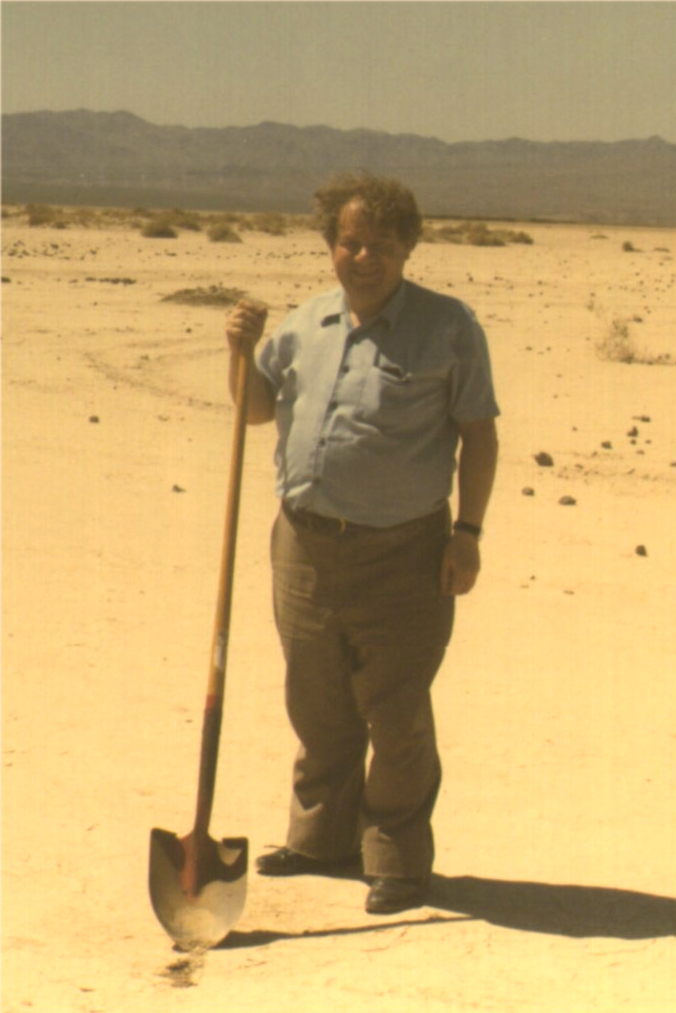
Career and institutional affiliations
Drever spent much of his later career at the California Institute of Technology, where he was appointed Professor Emeritus. He was one of the principal founders of the project that became the Laser Interferometer Gravitational‑Wave Observatory (LIGO), collaborating with other experimentalists and theorists to design kilometre‑scale interferometers sensitive enough to measure minute distortions of spacetime.
Key technical contributions
Among Drever's most widely used technical achievements is the Pound–Drever–Hall method, a laser frequency stabilization and cavity‑locking technique he co‑developed. The Pound–Drever–Hall (PDH) approach allows a laser's frequency to be held to the resonance of a stable optical cavity with very high precision, a capability essential to many precision experiments and metrology applications.
- Stabilizing lasers to optical cavities for long‑term, low‑noise operation.
- Reducing frequency noise in interferometric detectors.
- Enabling high‑resolution spectroscopy and improvements in optical clocks.
Role in gravitational‑wave detection
Drever's experimental techniques and prototype instruments were integral to the chain of developments that culminated in the firstdirect observation of gravitational waves in September 2015. That event, reported by the LIGO collaboration, validated decades of theoretical and experimental work and relied on methods such as PDH locking and advanced interferometric readout to reach the required sensitivity (first detection).
Recognition, legacy and later life
Drever was widely respected within the physics community for his ingenuity and practical skill in building sensitive optical systems. He was not among the Nobel Prize laureates named in 2017 for the detection of gravitational waves, a decision that prompted public discussion about attribution in large collaborations. Drever died in Edinburgh, Scotland, from complications related to dementia on 7 March 2017. Obituaries and institutional statements about his passing were published from his home city and from institutions where he worked (Edinburgh).
Today his methods remain standard tools in laboratories around the world; the PDH technique and the interferometric concepts he helped develop continue to underpin precision measurement in physics, astronomy and timekeeping.
Related articles
Author
AlegsaOnline.com Ronald Drever: Scottish experimental physicist and pioneer of laser interferometry Leandro Alegsa
URL: https://en.alegsaonline.com/art/83983
Sources
- telegraph.co.uk : "British scientist who played key role in gravitational waves research is suffering from dementia"
- newyorker.com : "Gravitational Waves Exist: The Inside Story of How Scientists Finally Found Them"
- worldcat.org : 0028-792X
- journals.aps.org : "Observation of Gravitational Waves from a Binary Black Hole Merger"
- arxiv.org : 1602.03837
- ui.adsabs.harvard.edu : 2016PhRvL.116f1102A
- doi.org : 10.1103/PhysRevLett.116.061102
- pubmed.ncbi.nlm.nih.gov : 26918975
- skyandtelescope.com : "Gravitational Wave Detection Heralds New Era of Science"
- nature.com : "Einstein's gravitational waves found at last"
- doi.org : 10.1038/nature.2016.19361
- doi.org : 10.1126/science.aah7350
- worldcat.org : 0036-8075
- bbc.com : Gravitational waves pioneer Ronald Drever dies