
Repo Man (1984 film)
A cult 1984 independent black comedy with science fiction elements, written and directed by Alex Cox, notable for its punk-rock soundtrack, satirical tone, and depiction of Los Angeles repossession culture.
Repo Man is a 1984 independent American film written and directed by Alex Cox. It stars Emilio Estevez and Harry Dean Stanton and blends elements of black comedy, science fiction, and social satire. Made on a modest budget, the movie quickly found an audience for its unusual tone and offbeat mixture of genres.
Image gallery
1 Image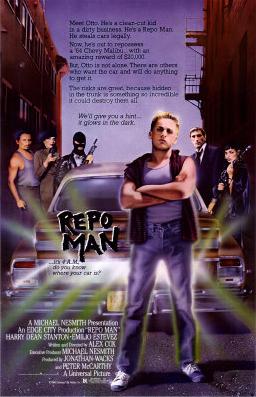
Overview and premise
The story follows a young punk recruited into the repossession business and his grizzled mentor as they recover automobiles for a moneyed company. Their routine work becomes strange and dangerous when one repossession turns up a car with mysterious cargo that attracts attention from shadowy government agents and fringe figures. The plot oscillates between comic episodes about blue-collar life and surreal hints of otherworldly or paranoid forces.
Characters and style
Central performances emphasize character over polish: the veteran repo man offers laconic, world-weary observations while the newcomer provides a street-level viewpoint and sardonic narration. The film favors satirical dialogue, abrupt tonal shifts, and moments of absurdity rather than straightforward realism. Its depiction of Los Angeles includes both the banalities of work and the fringes of subculture, reflecting anxieties about consumerism and authority.
Production, influences and themes
Produced as an independent feature, Repo Man was influenced by punk counterculture and by low-budget genre movies. Themes include alienation, corporate and governmental power, and the commodification of everyday life. Director Cox mixes political commentary with pop-culture references and visual humor, creating a film that critics later recognized as distinctive for its era.
Soundtrack and cultural impact
The soundtrack played a major role in the film's identity, drawing from the 1980s punk scene and underground rock to underline its rebellious tone. Music is used to set mood, define characters, and link the movie to contemporary youth culture.
- Prominent punk and alternative tracks help establish atmosphere and pace (examples and scene choices).
- The score and songs contributed to the movie's appeal among subcultural audiences and helped secure its status as a cult favorite (soundtrack note).
- Its musical choices influenced later independent filmmakers who paired specific subcultural sounds with on-screen action (influence).
Reception and legacy
Upon release the film polarized viewers but attracted strong support from critics and musicians who appreciated its originality. Over time it gained a devoted following and is often cited as a landmark of 1980s American independent cinema. Film historians and fans emphasize its genre-blending audacity and its snapshot of punk-era Los Angeles. The movie continues to be discussed for its cultural commentary and its unconventional approach to storytelling (further reading).
Notable facts include its economical production, memorable central performances, and a script that balances satire, humor, and a lingering sense of odd mystery. While the plot contains speculative elements, the film is best remembered for tone, soundtrack, and its lasting place in cult-film history.
Related articles
Author
AlegsaOnline.com Repo Man (1984 film) Leandro Alegsa
URL: https://en.alegsaonline.com/art/82210