
Requiem for a Dream — 2000 film by Darren Aronofsky
A 2000 American psychological drama directed by Darren Aronofsky about four characters whose drug addictions unravel their lives; notable for its editing, score and stark, experimental visual style.
Overview
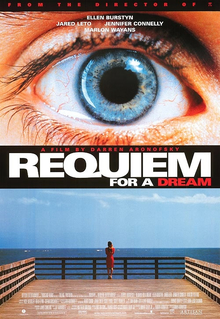
Requiem for a Dream is a 2000 American psychological drama directed by Darren Aronofsky. The film adapts the novel by Hubert Selby Jr. and follows four principal characters whose lives are destroyed by different forms of substance dependence. The principal cast includes Ellen Burstyn, Jared Leto, Jennifer Connelly and Marlon Wayans. Its action is set among communities in Brooklyn and the wider context of New York City, where ordinary ambitions become entwined with drug addiction and social isolation.
Image gallery
3 Images

Production and adaptation
The screenplay condenses and refracts elements from the source novel to emphasise subjective experience and the spiral of dependence. Aronofsky worked closely with a small production crew to create an intimate, sometimes claustrophobic atmosphere. The film was produced within the independent cinema sector, and its economical approach to location, casting and camera work contributed to the raw, immediate feeling of the finished work.
Visual style and editing
The film is widely noted for its stark visual language: rapid montages, extreme close-ups, split screens and a rhythmic editing style that compresses time and intensifies emotional impact. Repeated motifs and escalating montage sequences are deployed to chart the characters' decline. Many viewers and critics have singled out the editing as central to how the film communicates craving and disintegration.
Music and sound
A distinctive, driving musical score underpins the film’s relentless tone. The music is used aggressively to heighten tension and to bridge the film's episodic structure. Sound design and the interplay of music with montage play a major role in shaping the audience's emotional response.
Performances
The ensemble performances are frequently cited in discussions of the film. Ellen Burstyn's portrayal of an ageing mother seeking validation has been singled out for its emotional intensity. The younger actors present intertwined stories of hope, schemes and addiction, and the cast's commitment to difficult material contributes to the film's impact.
Themes
Requiem for a Dream examines addiction as a multifaceted phenomenon: medical, psychological and social. It explores how desire, fantasy and economic pressure can feed compulsive behaviour. The film avoids moralising in simple terms, instead presenting the personal and communal costs of dependency and the erosion of agency that can follow prolonged substance use.
Reception and legacy
On release the film provoked strong reactions: praise for its performances, editing and formal daring, alongside criticism for its uncompromising bleakness. Its aesthetic — especially the editing motifs and the score — has influenced subsequent films and has been widely referenced in trailers and popular culture. The movie remains a frequent subject of study within discussions of late-20th-century and early-21st-century independent cinema.
Key features
- Adaptation of a character-driven novel that foregrounds tragedy and decline.
- Distinctive montage and editing techniques that dramatise time, craving and collapse.
- Memorable musical scoring and sound design that intensify emotional effect.
- A setting grounded in Brooklyn and New York City that situates individual struggles within broader social realities.
For readers seeking more detail, consult critical essays and production histories that discuss the film’s formal experiments, casting choices and place within independent filmmaking. The film continues to prompt debate about representation, ethics and the aesthetics of depicting addiction, and it remains an influential, often-discussed work in contemporary cinema studies.
Related articles
Author
AlegsaOnline.com Requiem for a Dream — 2000 film by Darren Aronofsky Leandro Alegsa
URL: https://en.alegsaonline.com/art/82261