
Reichswehr: Germany's interwar armed forces (1919–1935)
The Reichswehr was the limited German military established after World War I, constrained by the Treaty of Versailles, active from 1919 until its reformation as the Wehrmacht in 1935.
Overview
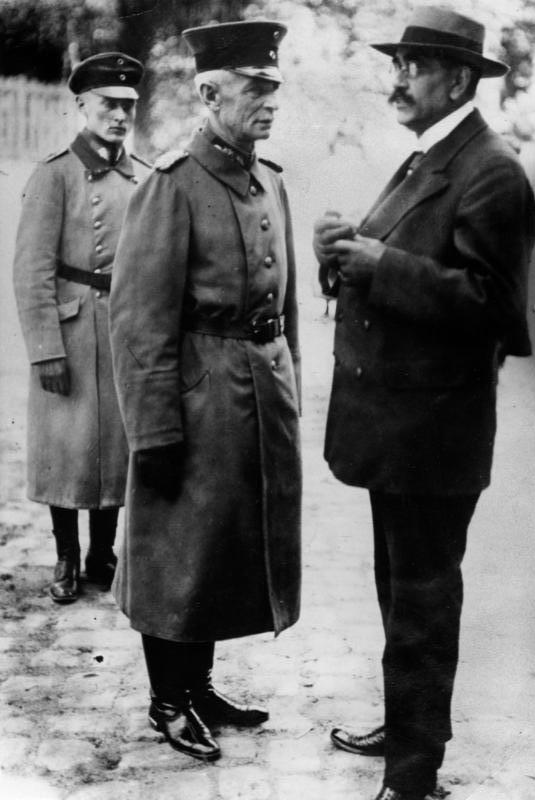
The Reichswehr was the official name for the German armed force during the Weimar Republic era. Formed in the aftermath of World War I, it existed from 1919 until 1935. It replaced the imperial army and preceded the later Wehrmacht. The Reichswehr's size and equipment were tightly restricted by the Treaty of Versailles, and it operated as a professional volunteer force rather than a mass conscript army.
Image gallery
7 Images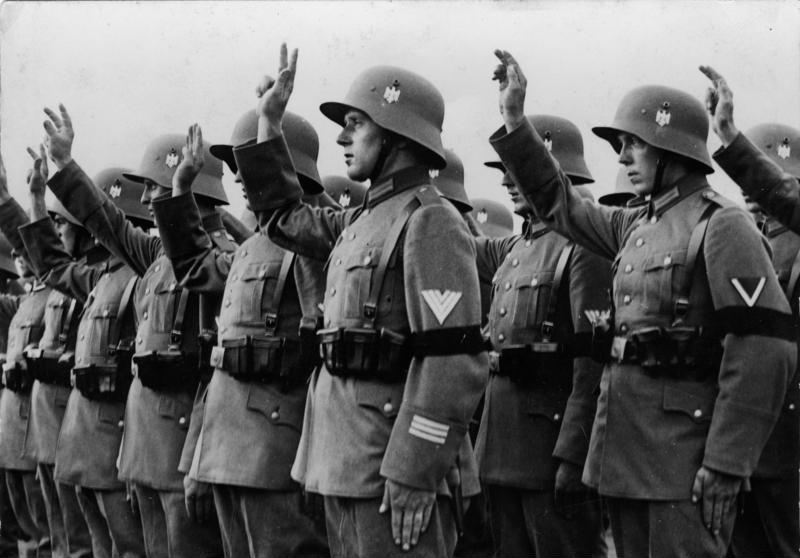




Organization and characteristics
Formally the Reichswehr comprised land and sea branches, often referred to as the Reichsheer (army) and the Reichsmarine (navy). It emphasized a compact, well-trained officer corps and internal cohesion. Political oversight was exercised by civilian governments, but military leaders retained significant autonomy in administration and training.
Restrictions and adaptations
The postwar peace settlement limited personnel numbers and prohibited many categories of heavy weaponry and aircraft. Conscription was banned and the army was capped at a modest size, which shaped doctrine and force structure. To preserve professional capabilities, the Reichswehr developed administrative workarounds and staff institutions that served many functions of a general staff in reduced form.
Political role and legacy
During the turbulent 1920s the Reichswehr played an influential role in maintaining internal order and sometimes intervened in politics. It fought left-wing uprisings, and its relationship with paramilitary groups and right-wing movements affected republican stability. Elements of the Reichswehr later contributed officers and organizational experience to the rearmament program that produced the recreation of Germany's armed forces in 1935 and the subsequent Wehrmacht. After World War II, Germany's postwar military was reconstituted as the Bundeswehr.
Notable facts and distinctions
- The Reichswehr was created in 1919 as the successor to the imperial military establishment; see its founding context in 1919: post‑World War I.
- Its formal end is associated with the open rearmament and expansion that began under the Nazi regime, culminating by 1935: 1935.
- Some of its covert activities and foreign training arrangements helped preserve military expertise despite treaty limits; those developments involved discreet contacts abroad: see historical summaries at sources on German armed forces and overviews of interwar military policy here.
- It existed until the Allied occupation and postwar reorganization that led to the modern formation in 1946: 1946.
The Reichswehr is studied both for its role in the fragile Weimar state and as a transitional institution that bridged imperial traditions and the large-scale militarization that followed under the Nazis. Its constraints, adaptations, and organizational culture had long-term effects on German military development.
Related articles
Author
AlegsaOnline.com Reichswehr: Germany's interwar armed forces (1919–1935) Leandro Alegsa
URL: https://en.alegsaonline.com/art/81951