
Reed (musical instrument)
A reed is a thin vibrating strip used to generate sound in many wind instruments. Covers types (single, double, free), materials, how reeds work, history, care and distinctions between reed families.
A reed is a thin, flexible strip that vibrates to create the initial sound in many wind instruments. In single-reed systems the reed is mounted on a mouthpiece; in double-reed systems two blades vibrate against each other without a separate mouthpiece. The vibrating motion of a reed modulates the air column inside the instrument and, together with the bore and fingerings, produces pitched musical notes. Reed-driven instruments are commonly grouped in the woodwind family, a historical category that reflects their early construction from wood even though modern instruments may be made of metal, resin, or other materials.
Image gallery
4 Images

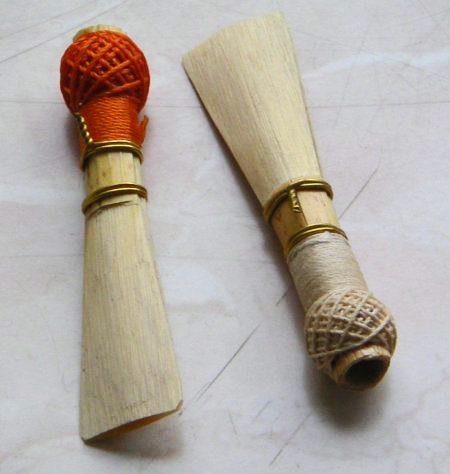

Types and common instruments
- Single reeds: A single cane or synthetic reed is fastened to a mouthpiece with a ligature. Typical examples include the saxophone and the clarinet.
- Double reeds: Two narrow blades of cane are bound together and inserted directly into the instrument's bocal or staple. The oboe and bassoon families use double reeds.
- Free reeds: These are small metal tongues that vibrate through slots and do not close against another blade; they are used in instruments such as the harmonica or accordion and are mechanically different from the cane reeds.
Materials and construction
Natural reeds are traditionally made from cane (commonly Arundo donax), which is cut, shaped, and graded by thickness and strength. Synthetic reeds, produced from plastics or composites, offer greater stability across humidity and temperature changes and are sometimes recommended for beginners or outdoor playing. In addition to cane and synthetic options, some experimental or historical instruments use metal components; references to metal reeds and plastic reeds reflect this variety.
How reeds produce sound
The musician's embouchure (mouth position and facial support) and the airstream directed into the mouthpiece or directly onto the reed set the reed vibrating. Those vibrations interrupt and shape the airflow, creating pressure waves that travel along the instrument's bore. The instrument's length, bore shape and tone holes then select which harmonics and pitches are reinforced to produce musical notes — a process discussed in basic acoustics texts.
History, development and practice
Reed instruments have ancient roots: early reed pipes and paired-reed pipes appear in many cultures. Over centuries they evolved into diverse forms such as shawms, baroque oboes, clarinets and saxophones. Advances in manufacturing and mouthpiece design in the 18th and 19th centuries expanded dynamic range and chromatic capability. Today both handcrafted and mass-produced reeds coexist; many players fine-tune reeds by scraping or adjusting profiles to achieve desired response and tone.
Care, uses and distinctions
Reeds are sensitive to moisture and temperature. Players commonly rotate reeds, soak them briefly before playing, and replace cane reeds regularly since wear and cracking degrade response. Choosing a reed involves matching instrument, mouthpiece, repertoire and personal technique. A useful distinction is between single- and double-reed mechanisms versus free reeds: though all are called "reeds," their physics and playing techniques differ significantly. For illustrated overviews and maker resources see instrument-specific guides or manufacturer documentation.
Related articles
Author
AlegsaOnline.com Reed (musical instrument) Leandro Alegsa
URL: https://en.alegsaonline.com/art/81775