
Bactria: A historical region of Central Asia
Bactria is an ancient region centered on Balkh in northern Afghanistan, notable for its role as a crossroads of Iranian, Hellenistic and Central Asian cultures and as a corridor of Silk Road trade.
Overview
Bactria is a historic region of Central Asia situated around the city historically known as Bactra (modern Balkh). It occupies a fertile zone north of the Hindu Kush and south of the Amu Darya river in what is now northern Afghanistan. In ancient and medieval sources the name denotes both a political territory and a cultural landscape that linked the Iranian plateau to the steppes and the Indian subcontinent. The region is often described in studies of regional geography and broader surveys of Asia.
Image gallery
10 Images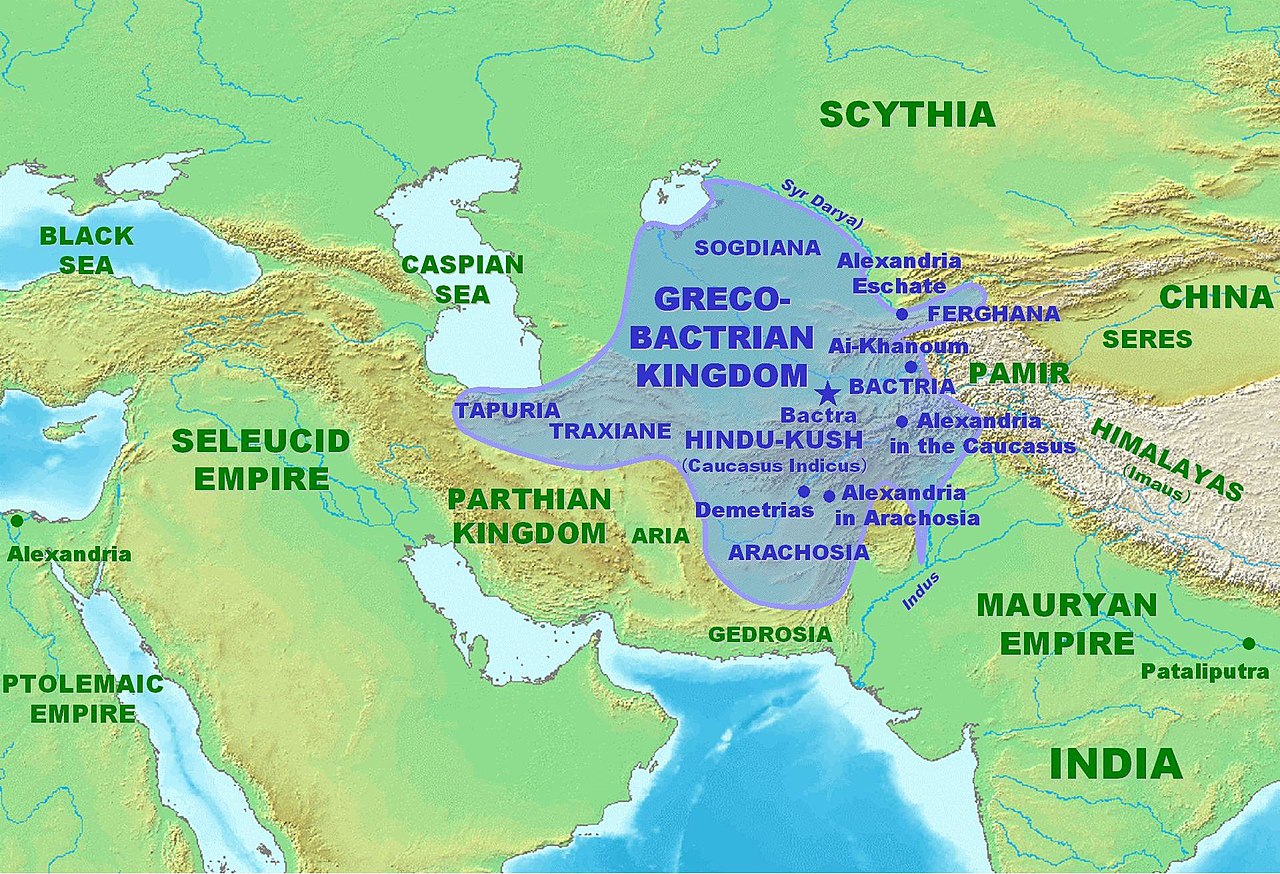


Geography and settlement
Bactria's core lay near the city of Balkh, a long-lived urban center remembered in classical and Islamic writings as a major node of agriculture, craft production and learning. The plain benefited from river irrigation fed by mountain run-off; the Hindu Kush mountains to the south formed a climatic barrier while the Amu Darya to the north provided a natural frontier. Modern descriptions place the heartland within Balkh-centered districts of northern Afghanistan.
Historical development
Bactria appears in the records of several large empires and in travelers' accounts. It formed part of Iranian imperial spheres, later experienced Hellenistic influence after Alexander’s campaigns, and became the base for Greco-Bactrian polities that blended Greek and local traditions. Successive eras saw interaction with Central Asian nomads and later the rise of regional powers that channeled trade to and from India.
Culture, religion and economy
The region is known for cultural syncretism: Hellenistic art motifs mixed with Iranian and Indian themes, while religious life included Iranian practices and, over time, Buddhism and other faiths. Some antiquity writers and modern scholars have associated the area with early Iranian religious figures; for example, the prophet Zoroaster is sometimes linked to regions near Bactria in tradition. Economically, Bactria was an important stop on routes that later formed parts of the Silk Road, exporting textiles, metals and agricultural produce and importing luxury goods and ideas.
Notable features and legacy
- Strategic frontier between mountain, steppe and riverine zones, north of the Hindu Kush.
- Bounded by the Amu Darya (Oxus) to the north, an important natural landmark (Amu Darya).
- Center on the historic city now identified with Balkh and located within northern Afghanistan.
Today Bactria is studied by historians, archaeologists and regional specialists as a crucial meeting-point in Eurasian history: a place where languages, religions and artistic traditions met and transformed one another.
Tags
Related articles
Author
AlegsaOnline.com Bactria: A historical region of Central Asia Leandro Alegsa
URL: https://en.alegsaonline.com/art/8151