
Punjab States Agency (British India)
A British colonial political agency that managed relations with about forty princely states in the Punjab region; created in the 1930s, reorganized in 1936, and dissolved after Indian independence in 1947.
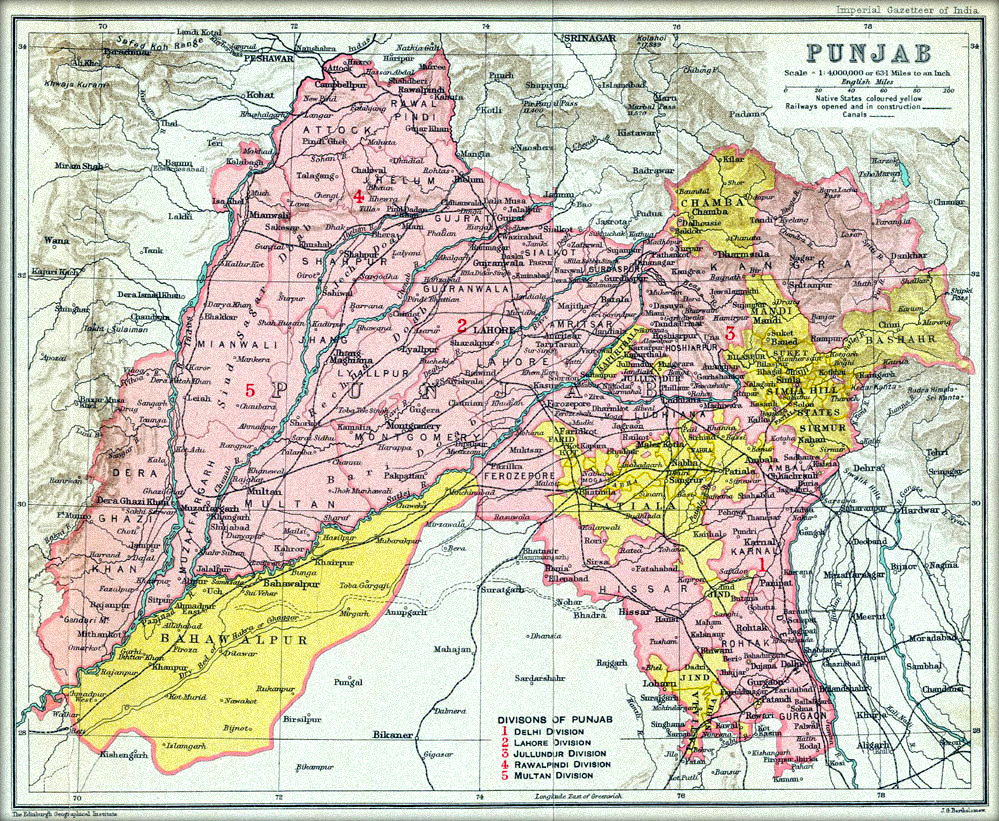
The Punjab States Agency was a colonial administrative grouping established in the 1930s to supervise a collection of semi-autonomous princely states under the suzerainty of the British Indian Empire. It brought together roughly forty native states that had previously been handled by the provincial authorities of the Punjab province and other residencies. The agency served as an intermediary between the Crown and local rulers in the northwestern part of India, coordinating political, legal and diplomatic matters.
Image gallery
7 Images


Structure and characteristics
The entities within the agency ranged from larger, salaried princely courts to small hill principalities. Some rulers enjoyed gun-salutes and ceremonial precedence while others held limited autonomy. The agency was modelled on earlier groupings such as the Central India and Rajputana agencies and employed Political Agents or Residents who acted as the senior British representatives responsible for liaison and oversight.
Functions and duties
- Maintaining formal relations between British authorities and native rulers, including succession and treaty questions.
- Advising on internal administration, law and finance where British interest or treaty obligations required intervention.
- Arbitrating disputes between states and coordinating defence, communications and infrastructure where relevant.
In 1936 several of the Himalayan and sub-Himalayan territories were reorganized into the separate Punjab Hill States agency, reflecting geographical and administrative differences. The remaining states continued under the Punjab States Agency until the end of colonial rule.
Decline and legacy
With the British withdrawal in 1947, the princely states faced decisions about accession. Most rulers signed Instruments of Accession to join the newly independent Union of India, while others chose to join the Dominion of Pakistan or negotiate alternative arrangements. Several former Punjab states were later merged into post‑colonial administrative units (for example the Patiala states and adjacent principalities were consolidated into unions such as PEPSU), and many smaller hill states were integrated into neighboring provinces and states.
Today the Punjab States Agency is studied as part of the broader system of indirect colonial rule: an administrative device that balanced British strategic interests with the autonomy of traditional local powers. Its history illuminates how imperial governance adapted regional structures and how those arrangements affected the political map at independence, when a majority of the princely states and individual states made sovereign choices in a turbulent transition from colonial rule in the northwest region.
For contemporary reference and archival sources, see governmental and historical records linked through institutional portals and catalogs (region overview, imperial context, provincial files).
Related articles
Author
AlegsaOnline.com Punjab States Agency (British India) Leandro Alegsa
URL: https://en.alegsaonline.com/art/80074