
Punjab Hill States Agency (British India)
Colonial administrative unit formed in 1936 overseeing princely hill states in today’s Himachal Pradesh and Uttarakhand; traces origins to the Simla Hill States and the 1901 Punjab States Agency.
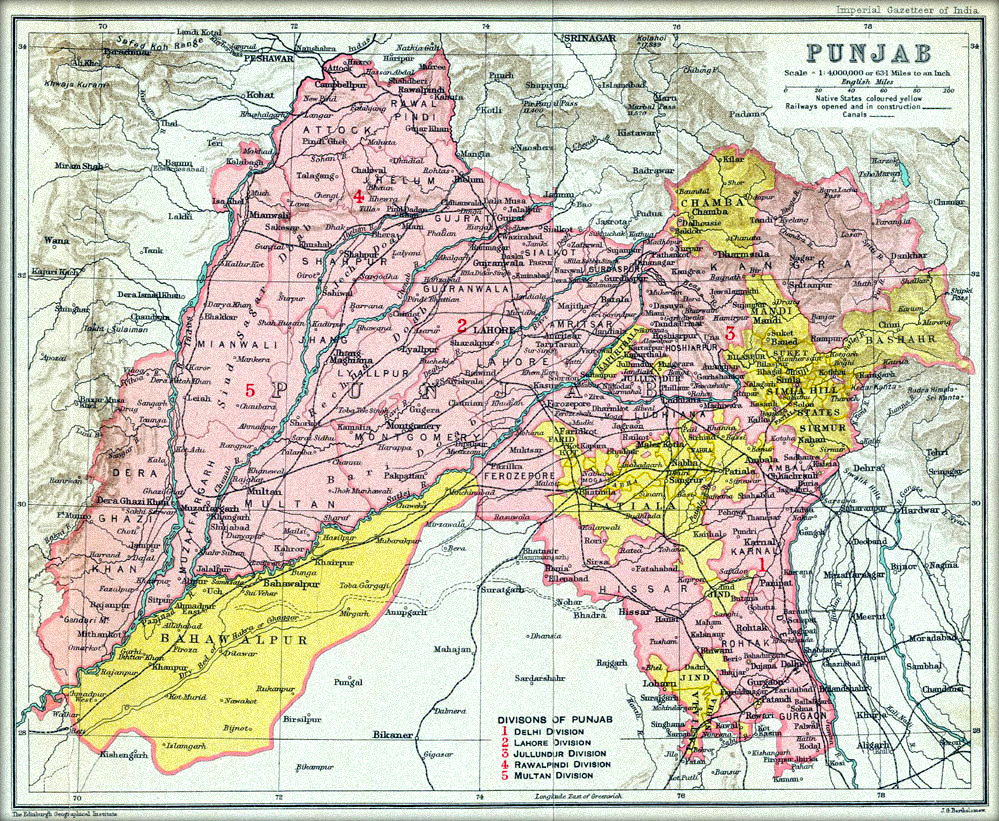
The Punjab Hill States Agency was a British Indian administrative grouping established in 1936 to manage several small, semi-autonomous princely states in the Himalaya. The agency covered areas that today lie largely within the Indian states of Himachal Pradesh and Uttarakhand. It was one of several Agencies and residencies used by the colonial government to conduct relations with rulers who retained internal authority while accepting British suzerainty. For an overview of its status within imperial administration see British administrative unit.
Image gallery
8 Images


Historical background
The political identity of these hill territories developed over the 19th and early 20th centuries. Following the Anglo‑Nepalese War (1814–1816), many small hill principalities that had previously resisted outside control came under British influence and were collectively known as the Simla Hill States. In 1901 the British created the Punjab States Agency to centralize dealings with a range of principalities; three and a half decades later the predominantly hilly parts were reorganized as the Punjab Hill States Agency to reflect their distinct geography and administrative needs. The split isolated upland princely matters from the plains administration of the province of Punjab, while a few territories—most notably Tehri‑Garhwal—had separate links to the United Provinces.
Administration and composition
The agency brought together a number of chiefly Himalayan principalities of widely varying sizes and resources. Their rulers held different hereditary titles and maintained local courts, law codes and revenue systems under subsidiary alliances or treaties with the Crown. British oversight was exercised through a Political Agent based at a regional centre, who supervised diplomatic relations, succession issues and major legal or land disputes.
- Examples of hill principalities included several well‑known states (for example Chamba, Mandi and Bilaspur) alongside smaller talukas and jagirs.
- Geography ranged from river valleys to high slopes, shaping each state’s economy and communications.
- Some territories, like Tehri‑Garhwal, had unique administrative links and legal arrangements.
Integration and legacy
After Indian independence in 1947 the princely states of the agency acceded to the new Government of India. Most rulers agreed to merge their territories into what became the modern state of Himachal Pradesh; Tehri‑Garhwal acceded to the province of Uttar Pradesh and later became part of the state of Uttarakhand when it was created in 2000. The process involved political negotiation, the abolition of many princely privileges, and the integration of diverse hill jurisdictions into standard provincial and state administrative systems.
Today the former Punjab Hill States Agency is of interest to historians, anthropologists and visitors for its legacy of distinct hill cultures, architecture and legal records. Studies of the agency illuminate broader themes of indirect rule, frontier governance and the political geography of the colonial Himalaya. For further archival and contextual material consult resources on the hilly regions and the earlier Punjab States Agency as well as general works on British rule in the Punjab province and hill administration.
Related articles
Author
AlegsaOnline.com Punjab Hill States Agency (British India) Leandro Alegsa
URL: https://en.alegsaonline.com/art/80070