
Queen's Privy Council for Canada
The Queen's Privy Council for Canada is a formal advisory body to the Canadian monarch whose active component is the cabinet; membership is largely lifetime and ceremonial, with constitutional and historical roles.
The Queen's Privy Council for Canada is the formal body created to advise the Canadian sovereign. In practice its advice is delivered through an active inner group, the cabinet, but the Privy Council itself is a broader, mostly ceremonial assembly of current and former officials. When the reigning monarch is male the institution is styled the King's Privy Council for Canada. Its French name is Conseil privé de la Reine pour le Canada.
Image gallery
4 Images
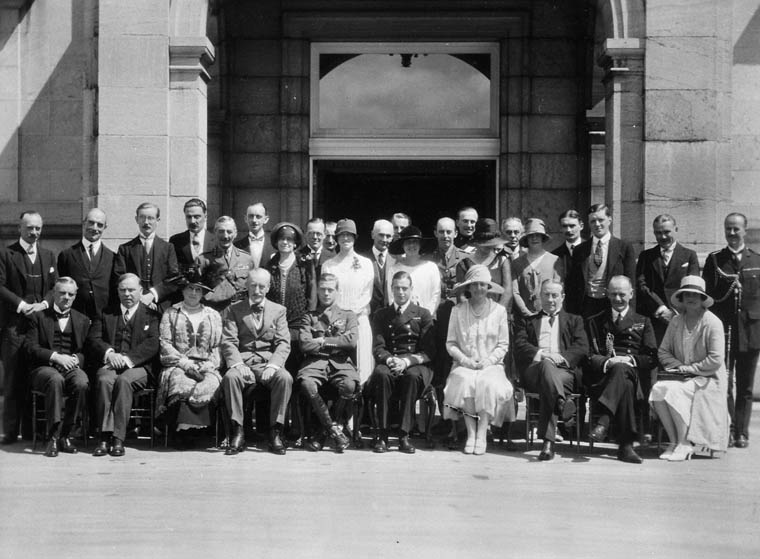


Role and composition
Constitutionally the Privy Council exists to provide the Crown—represented in Canada by the Governor General—with advice on public affairs. By long-standing convention, the sovereign or Governor General acts on the advice of ministers who sit in the cabinet, the executive committee of the Privy Council. The cabinet is made up of serving ministers, usually members of Parliament, who are responsible for government departments and decisions; information about the cabinet and its functions can be found through official sources such as the Privy Council Office and government publications (cabinet).
Members of the Privy Council are known as Privy Councillors. Appointments are made by the Governor General on the recommendation of the Prime Minister. Once sworn in, Privy Councillors retain the appointment for life, although most take no active part after leaving ministerial office. The broader membership therefore includes serving and former ministers, senior parliamentary figures, and occasionally others who have been honoured for public service.
Functions, powers and practical effect
Although the Privy Council as a whole is a large and largely ceremonial body, its existence underpins several important constitutional and administrative practices. Orders in Council—formal instruments signed by the Governor General on ministerial advice—are issued in the name of the Crown with the authority of the Privy Council. The Privy Council Office serves as the non-partisan secretariat supporting the prime minister and cabinet, helping coordinate policy and government business. Many of the substantive powers and day-to-day decisions are exercised by the cabinet rather than by the wider Privy Council.
- Lifetime membership: appointments rarely revoked and confer the honorific status of Privy Councillor.
- Advisory function: formal advisory role to the Crown, exercised in practice by cabinet ministers.
- Administrative support: the Privy Council Office and related bodies assist government operations.
History and notable features
The institution traces its origins to the British Privy Council but developed distinct Canadian conventions as responsible government and federal institutions evolved. Over time its practical role narrowed to the cabinet while ceremonial aspects and honours persisted. Certain office-holders, such as some prime ministers and chief justices, are traditionally styled with higher honorifics and commonly hold Privy Council membership.
Although rarely active as a full body, the Privy Council remains a key element of Canada’s constitutional architecture: it links the Crown to democratic government and preserves formal procedures through which executive authority is exercised. For further background on constitutional practice and the Crown’s role see materials produced by government and scholarly sources on the Canadian Crown and executive institutions (monarch, government).
Related articles
Author
AlegsaOnline.com Queen's Privy Council for Canada Leandro Alegsa
URL: https://en.alegsaonline.com/art/80476
Sources
- pco-bcp.gc.ca : "Queen's Privy Council for Canada – Facts"
- thecanadianencyclopedia.ca : "Privy Council"