
Princely state (British India): semi-autonomous native polities under British paramountcy
Semi-autonomous native states in the British Indian Empire ruled by local monarchs under treaties of British paramountcy; varied greatly in size, titles, and historical outcomes after 1947.
A princely state was a political unit in South Asia during the period of British rule whose native ruler retained internal sovereignty under a subsidiary or treaty relationship with the British. Rather than being directly administered provinces of the British Indian administration, these territories were governed by local monarchs who accepted British Paramountcy and surrendered control of external relations and defence in exchange for recognition and protection. The arrangement made the inhabitants subjects of the local sovereign rather than direct subjects of the British Crown; passports and legal status often reflected this distinction with designations such as "British protected person." British Indian Empire officials negotiated the treaties that defined these relationships and established the formal limits of sovereignty.
Image gallery
10 Images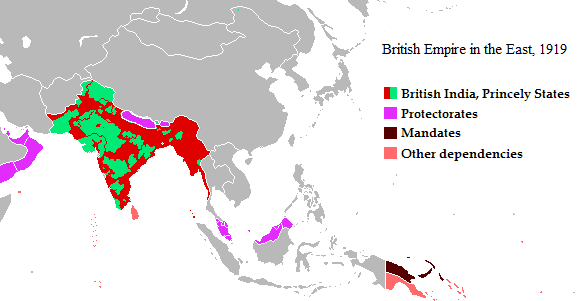




Characteristics and governance
Princely states varied enormously in area, population, resources and administrative sophistication. A handful were large, well-organized states with modern administrations and standing armies, while many others were small principalities, jagirs or estates centered on a town or a few villages. Local rulers retained control over internal matters such as law, taxation, land tenure and succession, but British Residents, Agents or Political Officers exercised influence and could intervene under the terms of treaties or when the British considered it necessary for 'good government'. Diplomatic and military matters were normally reserved to the British, preventing independent foreign relations.
- Common royal titles included raja, maharaja, nawab and nizam, reflecting diverse religious and regional traditions.
- Prestige distinctions such as gun-salute ranks and formal classes marked the hierarchy among rulers.
- British interference in internal affairs could and did occur despite treaty language promising non-interference, producing frequent tensions.
Historical background and scope
The system developed as the East India Company and later the British Crown extended their influence across the subcontinent through conquest, diplomacy and alliance. By the middle of the 19th century a network of treaties and subsidiary alliances bound hundreds of native states into a British-led political order. At the time of Indian independence in 1947 there were several hundred princely states of varying importance; historical counts often cite roughly five to six hundred entities, with about a hundred or so classed as first‑rank states by protocol and administration. Examples of larger and better-known states included Hyderabad, Mysore, Jammu and Kashmir, and Baroda; the Nawab of Awadh is a frequently cited example of a major Muslim-ruled principality (Awadh).
Accession and integration after 1947
When British rule ended, princely states were asked to accede to one of the two new dominions or to remain independent, a choice constrained by geography, demography and political realities. Most rulers signed Instruments of Accession that transferred defence, communications and foreign affairs to either India or Pakistan; a few cases produced protracted negotiation or conflict, most notably the disputed status of Jammu and Kashmir. The newly independent governments undertook political integration programs to merge these territories into single national administrations. In India, this process involved diplomacy, legal measures and, in some instances, force and reorganization under leaders responsible for accession and consolidation.
Later developments and legacy
After integration, former rulers in India were generally allowed titular privileges and financial allowances (privy purses) for a transitional period; these recognitions were later abolished in the 20th century. The legacy of princely states survives in administrative boundaries, legal titles, palace architecture, archives, and regional identities. Many former royal families remain prominent in public life, and their former courts and forts are important cultural and tourist sites. The history of princely states illustrates complex interactions between indigenous sovereignty, colonial power, and the formation of modern South Asian states.
For further reading and primary documentation, consult specialist histories and archival treaties that outline the specific terms of subsidiary alliances, the instruments of accession, and the political correspondence of the period. These resources provide greater detail on how individual polities negotiated autonomy, responded to British intervention, and adapted to the transitions of the mid-20th century.
Related articles
Author
AlegsaOnline.com Princely state (British India): semi-autonomous native polities under British paramountcy Leandro Alegsa
URL: https://en.alegsaonline.com/art/79187