
Reader's Digest: overview, formats, history and global reach
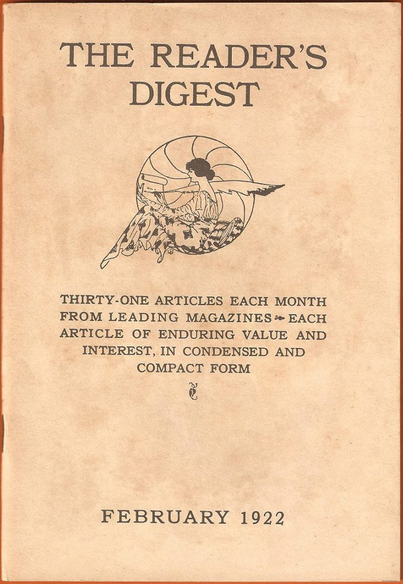
Reader's Digest is a general-interest family magazine founded in 1922, known for its compact format, multiple international editions and accessible formats including Braille, audio and digital versions.
Overview
Reader's Digest is a long-running general-interest family magazine that has been published for decades and distributed internationally. It presents a mixture of condensed articles, personal stories, practical advice and curated features aimed at a broad audience. The magazine has been produced in numerous national editions and is known for a small, pocketable page size that distinguishes it from many other American publications. For more about the magazine's scope see official information.
Image gallery
3 Images

Formats and editions
The title appears in dozens of national editions and many languages, with a reported presence in more than 70 countries and additional readership beyond its home market. It is available in multiple accessible formats: a Braille edition for readers with vision impairment, a digital edition for online reading, an audio version and a large-print edition intended for readers who prefer larger type. Examples of these options include a Braille service (Braille edition), a digital product (digital edition), an audio edition (audio edition) and a large-type print edition.
- Multiple languages and localized editions
- Accessible formats: Braille, audio, large print
- Compact physical size compared with other magazines
Format, branding and size
Reader's Digest has historically been smaller than standard American magazines, roughly half the size in pages and dimensions, a design choice that emphasized convenience and portability. In the 2000s it experimented with short-lived brand lines and mottos: one campaign used the phrase "America in your pocket", adopted around 2005 (2005), and the brand later used "Life well shared" beginning in early 2008 (2008).
Origins and development
The magazine was founded by DeWitt Wallace and Lila Bell Wallace in 1922. For many decades its operations were based in the town of Chappaqua, New York before corporate offices and many editorial functions moved to New York City. Contemporary histories and company statements often reference the founders and these changes in headquarters; see the founding reference (1922) and notes about locations (Chappaqua, New York City).
Circulation, influence and later trends
At its peak Reader's Digest reported very large paid circulation figures and substantial global readership. Sales figures cited in public sources have placed its distribution in the millions of copies annually, making it one of the largest paid-circulation magazines by certain measures. However, print magazine markets have shifted, and in 2009 another long-established title overtook Reader's Digest as the top-selling consumer magazine in the U.S.; that change is often noted with reference to Better Homes and Gardens in 2009.
Reader's Digest remains notable for its influence on popular magazine publishing: its compact, curated style, emphasis on uplifting or practical content, and broad international reach helped define a familiar format for general-interest periodicals. For further background and current offerings consult editorial and subscription pages (magazine comparisons).
Readers seeking specific editions or formats can follow the magazine's listed services and platforms (main site, digital, audio) to learn about availability in particular countries and languages, and about editions produced in large print or Braille (accessible editions).
Notes: links above point to organizational pages and references that provide additional historical detail and current subscription options. See also archival material and publisher statements for deep historical research (founding year).
Questions and answers
Q: What is Reader's Digest?
A: Reader's Digest is a family magazine for general interest.
Q: How often is Reader's Digest published?
A: Reader's Digest is published 10 times a year.
Q: How many editions and languages does Reader's Digest have?
A: Reader's Digest has 50 editions in 21 languages.
Q: In how many countries does Reader's Digest have additional readers?
A: Reader's Digest has an additional 40 million readers in more than 70 countries.
Q: What are the various formats in which Reader's Digest is published?
A: Reader's Digest is published in Braille, digital, audio, and a version in large type called Reader's Digest Large Print.
Q: What is the total sales of Reader's Digest?
A: The total sales of Reader's Digest is 17 million copies, making it the largest paid circulation magazine in the world.
Q: Who founded Reader's Digest and where is its headquarters located now?
A: Reader's Digest was founded by DeWitt Wallace and Lila Bell Wallace in 1922, and its headquarters was initially in Chappaqua, New York, but it is now in New York City.
Related articles
Author
AlegsaOnline.com Reader's Digest: overview, formats, history and global reach Leandro Alegsa
URL: https://en.alegsaonline.com/art/81441