
Psi (Greek letter Ψ, ψ)
Psi (Ψ, ψ) is the 23rd Greek letter, pronounced /ps/. It represents the 'ps' sound, has numeric value 700, and appears widely as a symbol in mathematics, physics, psychology and derived alphabets.
Psi (uppercase Ψ, lowercase ψ) is the 23rd letter of the Greek alphabet. Its conventional pronunciation corresponds to the consonant cluster /ps/ found at the end of English words such as "lapse" or "opsis." In the system of Greek numerals psi has the value 700. The letter is part of both the Greek alphabet and modern usage across scientific and scholarly fields.
Image gallery
1 Image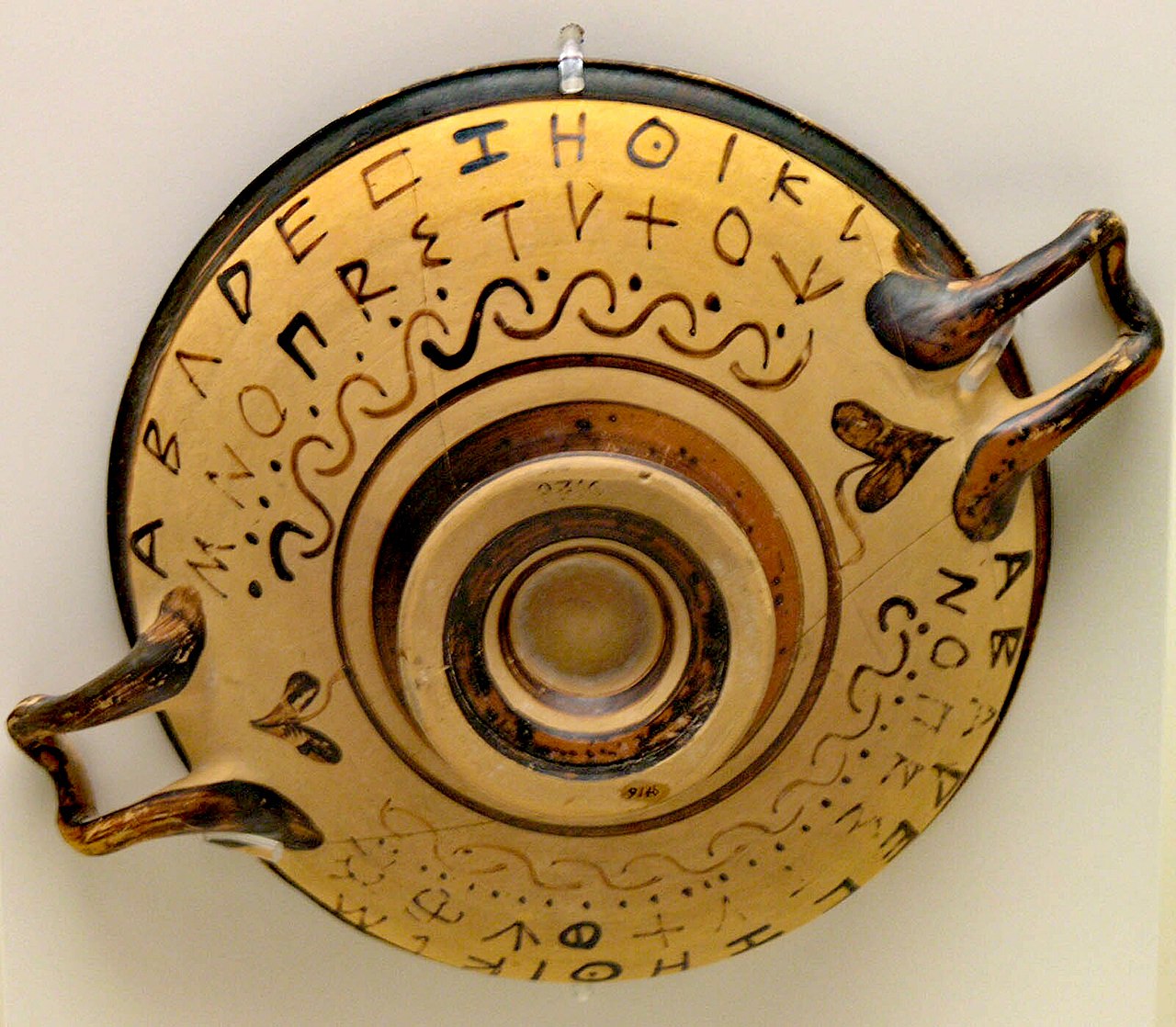
Origins and name
The exact early history of psi is tied to the development of Greek writing. Unlike several Greek letters that derive directly from Phoenician signs, psi represents a native Greek sound cluster and appears in classical inscriptions. Its conventional name in English, "psi," follows the Greek pronunciation and transliteration used to represent the two-consonant sequence.
Form and typography
Uppercase Ψ has a trident-like shape, while lowercase ψ usually shows a central vertical stroke with two curving branches. Typographers render the lowercase in a variety of forms for different typefaces and mathematical contexts; the two glyphs are visually distinct and carry different conventional uses.
Uses and meanings
Psi is employed in many disciplines. Common uses include:
- Science: In quantum mechanics the symbol Ψ commonly denotes the wavefunction that describes a system's quantum state.
- Mathematics and analysis: The lowercase ψ names the digamma or polygamma functions and related special functions; it also appears in identities connected to the gamma function and its derivatives.
- Logic and formal systems: Capital psi is sometimes used to denote sets of sentences or schematic collections in symbolic logic (logic usages).
- Number theory and constants: ψ is used for the reciprocal Fibonacci constant and figures in relations involving the Fibonacci sequence (Fibonacci material).
- Other fields: The glyph serves as an emblem for psychology (often as the initial letter of the Greek root) and was adopted into other alphabets such as the Cyrillic letter Ѱ.
Notable facts and distinctions
As part of the Greek numeral system, psi contributed the value 700 and therefore appears in historical inscriptions as a numeral marker. In modern notation its role varies by discipline: uppercase and lowercase forms are not interchangeable and are chosen to follow long-established conventions in physics, mathematics and other sciences (mathematics, Ancient and Modern Greek contexts).
For further reading on the Greek alphabet and individual letters, consult general alphabet histories and specialized texts on phonology, typography and scientific notation. See also resources that discuss the digamma/polygamma functions and constants associated with reciprocal Fibonacci sums.
Related articles
Author
AlegsaOnline.com Psi (Greek letter Ψ, ψ) Leandro Alegsa
URL: https://en.alegsaonline.com/art/79826