
Quadrivium: The Four Mathematical Arts in Medieval Liberal Education
The Quadrivium grouped arithmetic, geometry, music and astronomy as the mathematical stage of the medieval liberal arts, preparing students for advanced study and informing later scientific and artistic traditions.
The Quadrivium was the advanced stage of the classical liberal arts curriculum in medieval education. After basic training in language and logic known as the Trivium, students progressed to a four-part program that emphasized numerical, spatial and temporal reasoning. This course of study was a core element of medieval education leading toward the degree of Master of Arts and formed part of the broader liberal arts tradition.
Image gallery
3 Images
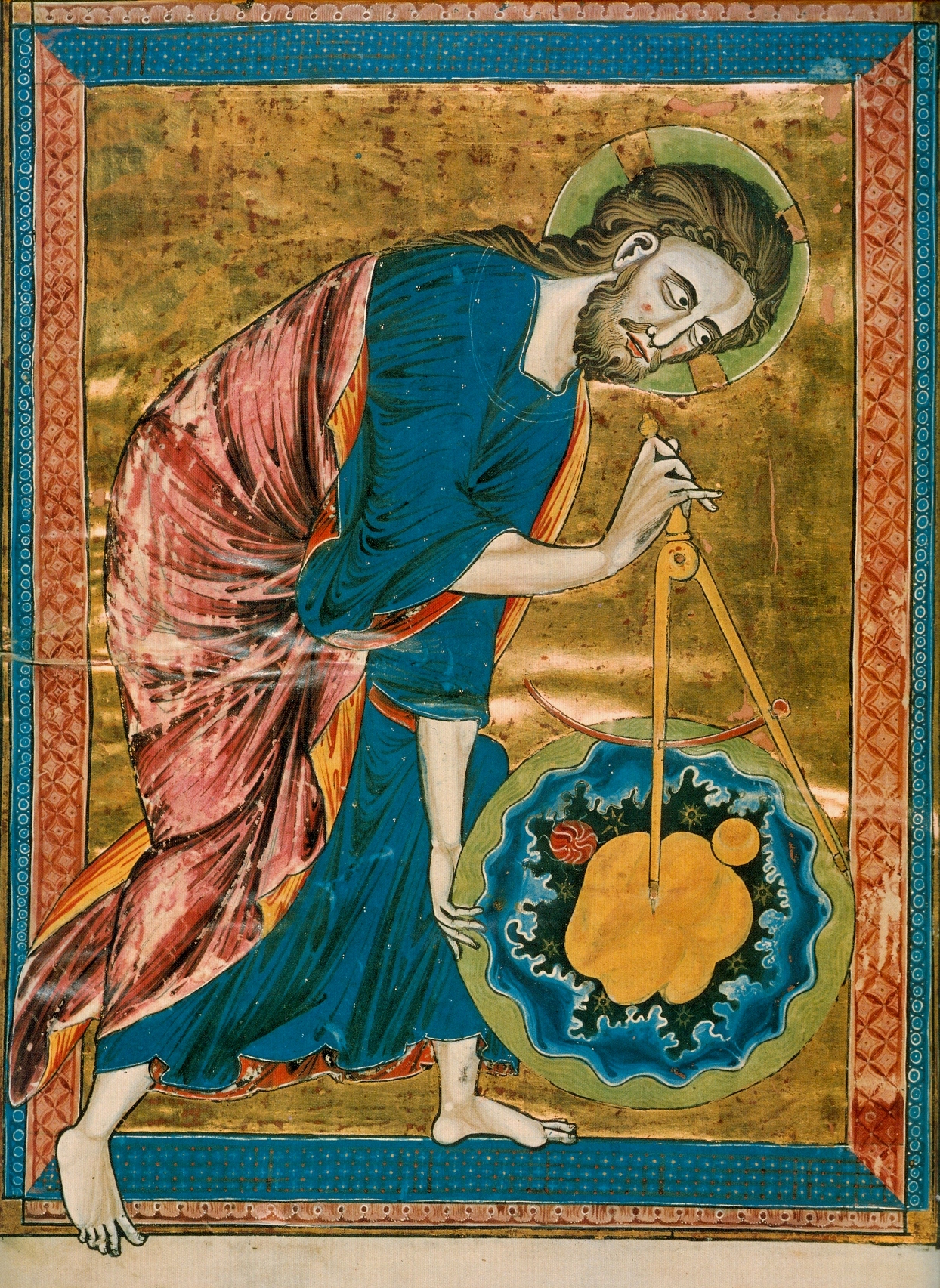

Subjects of the Quadrivium
The name quadrivium literally means "four ways". Each discipline was valued for its capacity to reveal order through calculation, measurement or proportion. In medieval practice the four parts were:
- Arithmetic — the study of numbers, their properties and relationships, often taught as a theoretical discipline as well as a practical skill.
- Geometry — the study of magnitudes, figures and spatial relationships, with applications from land measurement to architectural design.
- Music — understood in medieval curricula as the mathematical study of harmony and proportion in time (sometimes called musica theorica), concerned with ratios and acoustics as expressions of order.
- Astronomy — the mathematical study of the heavens, calendrical cycles and planetary motion, combining observation with geometrical and numerical models.
Origins and intellectual sources
The Quadrivium traces intellectual roots to classical thought and to the practical needs of later antique and medieval societies. Medieval authors and teachers treated the four subjects as a coherent mathematical program: the abstract study of number and pattern provided tools for computation and explanation in natural philosophy, architecture, navigation and timekeeping. Theoretical concerns about ratio and proportion linked the disciplines in a unified curriculum oriented toward both contemplation and utility, and the centrality of mathematics is evident in surviving syllabi and commentaries.
The organization of elementary and advanced liberal arts was influenced by ancient sources. Thinkers such as Plato articulated stages of education, and works like The Republic contributed to a long-standing ideal of ordered learning. Later compilations and encyclopedic treatises in late antiquity and the early Middle Ages helped transmit the quadrivial scheme to Western European teachers and institutions.
Teaching, language and social context
Instruction in the quadrivium normally took place where formal education concentrated: cathedral and monastic schools, and from the later medieval period, degree-conferring universities. Latin was the language of instruction and scholarship: many textbooks, lectures and scholarly exchanges were conducted in Latin, which functioned as the scholarly lingua franca across medieval Europe. Texts of sacred learning such as the Bible were also circulated in Latin, reinforcing the language's central role in learned culture.
Who taught and who studied the quadrivium reflected social patterns of the time. Education could be provided in a schoolhouse or by a private tutor, but many instructors were clerics and priests associated with religious institutions. Access to the full curriculum and to university study was largely restricted to men for much of the medieval period, while girls and women more commonly received instruction in homes, convents or in other informal settings.
Legacy and modern relevance
The quadrivium left a durable legacy. Its emphasis on number, proportion and measurement influenced the development of later mathematical thought, music theory and astronomical practice, and it helped shape the intellectual habits prized in scholarly life. Renaissance and early modern thinkers reworked quadrivial subjects as part of a revived interest in classical learning, and contemporary liberal education, particularly in systems like that of the United States, retains the spirit of combining quantitative, spatial and temporal disciplines even when the strict medieval division into Trivium and Quadrivium has disappeared.
For readers seeking introductory overviews and entry points to primary sources, standard discussions treat the quadrivium alongside broader histories of pedagogy, compilations of medieval curricula and surveys of the transmission of ancient mathematics. Such materials illuminate how arithmetic, geometry, music and astronomy were taught, contested and adapted across centuries of European intellectual life.
Questions and answers
Q: What is the Quadrivium?
A: The Quadrivium is a medieval education which led to the Master of Arts (MA) degree. It follows the Trivium in a liberal arts education and consists of four disciplines related to mathematics.
Q: What are the four disciplines that make up the Quadrivium?
A: The four disciplines that make up the Quadrivium are Arithmetic, Geometry, Music, and Astronomy.
Q: In what language was teaching done during this time period?
A: During this time period, teaching was done in Latin which educated pupils learnt at school or from a private tutor. Latin was also used as the lingua franca (universal language) of mediaeval Europe.
Q: Who could take part in universities during this time period?
A: During this time period, only boys were allowed to take part in universities since it was where quadrivium was taught. Girls had to receive their education at home if they wanted any form of schooling.
Q: How has liberal arts changed since then?
A: Since then, modern forms of liberal arts have been established in countries such as the United States where both sexes are taught although there are still some single-sex institutions around today.
Q: What did Plato outline for educational curriculum?
A: Plato outlined a curriculum consisting of primary and secondary parts with his work The Republic; with quadrivium being part of the secondary section.
Q: Was it possible to read anything other than Latin during this time period?
A: No, during this time period it was not possible to read anything other than Latin; even religious texts such as Bible could only be read in Latin.
Related articles
Author
AlegsaOnline.com Quadrivium: The Four Mathematical Arts in Medieval Liberal Education Leandro Alegsa
URL: https://en.alegsaonline.com/art/80357
Sources
- en.wikisource.org : New International Encyclopedia. 1905