
Professor's Cube (5×5×5 Rubik-style puzzle)
A 5×5×5 extension of the classic twisty cube, the Professor's Cube increases piece count and complexity; commonly solved by reduction into a 3×3 format and popular in speedcubing and puzzle collections.
Overview
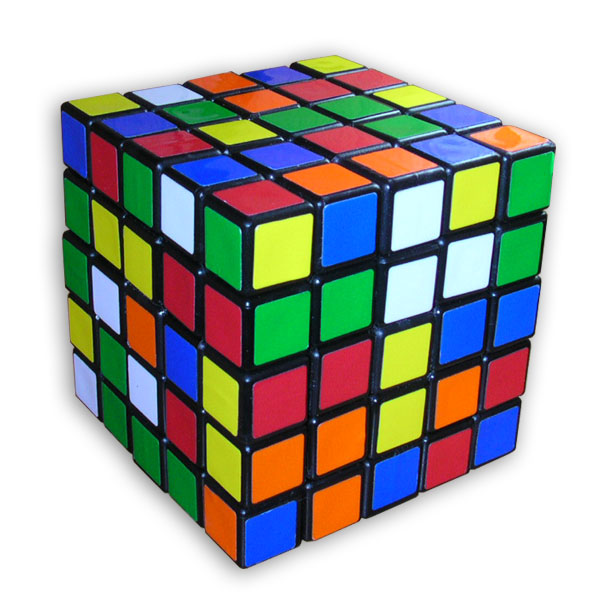
The Professor's Cube is a commercially produced 5×5×5 twisty puzzle and a direct extension of the original Rubik's Cube. It is often sold and discussed under the common name "Professor's Cube" and belongs to the family of NxNxN cubing puzzles, sharing concepts and mechanics with both the 3×3×3 classic and the 4×4×4 variant. The larger size increases the number of individual moving pieces and the range of possible configurations, making it both a collection item and a solver's challenge.
Image gallery
10 Images


Structure and characteristics
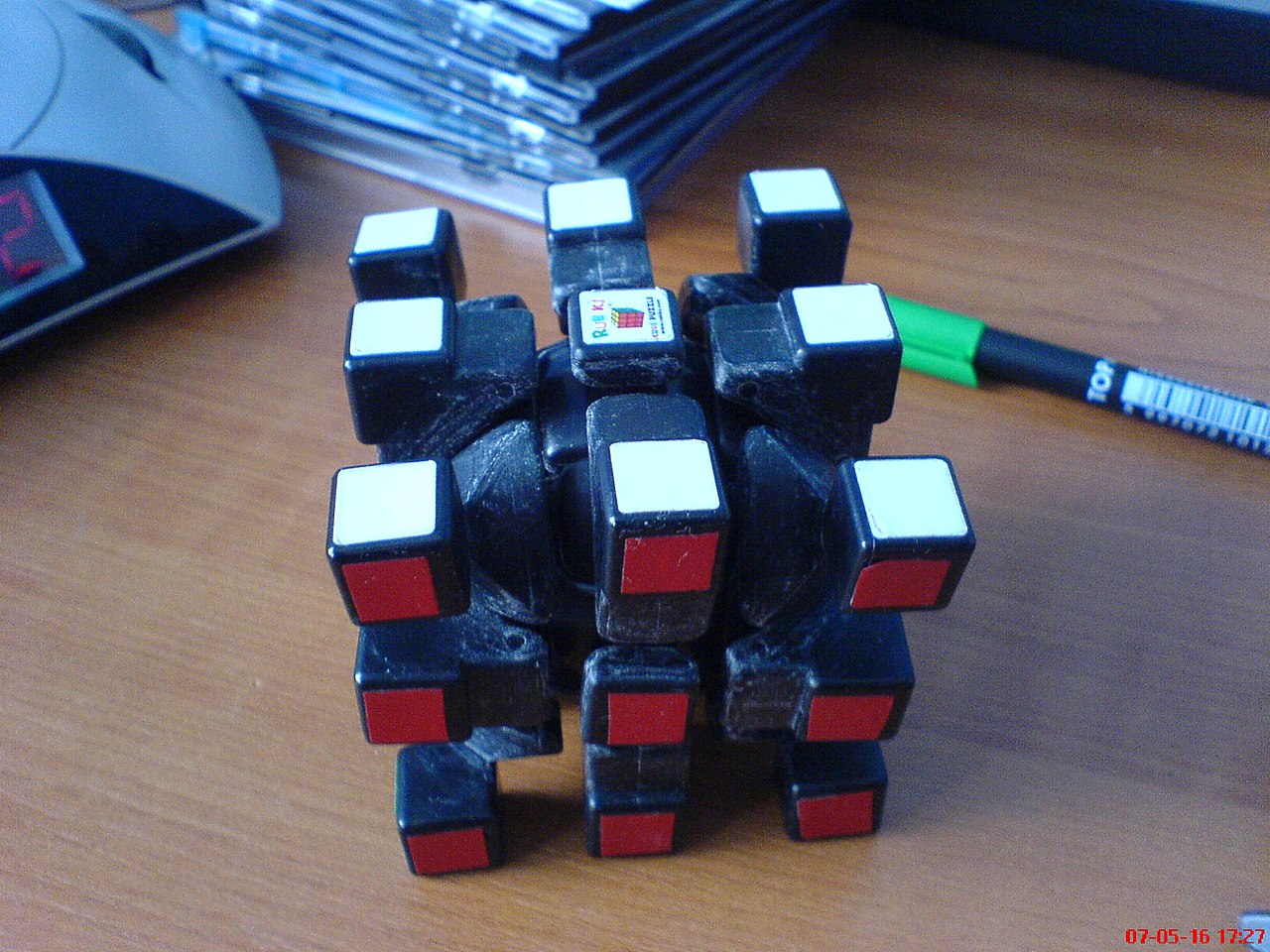
Mechanically, the 5×5×5 contains three basic types of visible pieces: center pieces that form the central block of each face, edge pieces that join two faces, and corner pieces that meet three faces. Compared with the 3×3, the centers on each face are made up of multiple smaller pieces, and each edge consists of several sub-pieces that must be assembled into a single effective edge before a final solution can be applied. The cube turns on internal axes and requires precise manufacture to reduce misalignment and popping (pieces coming free during rough handling).
Solving approaches
Most solvers use a reduction strategy: first solve the larger center blocks, then pair the matching edge sub-pieces to form unified edges, and finally treat the puzzle like a 3×3 by solving corners and whole edges. Variations on this theme include methods inspired by speedcubing practice—some named approaches focus on efficient center construction and early edge pairing to save moves. While even-order cubes (such as 4×4) introduce certain parity phenomena, the 5×5 behaves more like an odd-order cube in having fixed center orientations; however, incorrect pairing can still create situations that require special algorithms or careful undoing of earlier steps.
History and cultural place
The 5×5 design emerged as manufacturers and hobbyists extended the original concept into higher orders. It became a popular collectible and a competitive event within the broader cubing community, with many speedsolvers learning specific techniques to reduce solving time. The Professor's Cube also appears in puzzle literature and online tutorials aimed at both beginners stepping up from the 3×3 and seasoned cubers exploring more complex movement patterns.
Practical considerations and variations
- Difficulty: greater piece count means longer solve times and more opportunities for mistakes during pairing and center construction.
- Mechanics: higher-quality branded cubes often include features to prevent popping and to smooth turning; lubrication and tension adjustment are common maintenance steps.
- Learning curve: familiarity with the 3×3 and 4×4 techniques accelerates progress—many tutorials assume that background.
- Competition: timed 5×5 solves are part of many speedcubing meet formats and community records exist for fastest solves.
Further reading and resources
For general puzzle context and variations, readers can consult introductory pages on twisty puzzles, including the family of NxNxN cubes (more on mechanical puzzles) and the original 3×3 concept (Rubik's Cube overview). Detailed methods and algorithms for center building, edge pairing and advanced reduction techniques are available in tutorials and solver guides (method resources), which offer step-by-step instruction and practice sequences.
Related articles
Author
AlegsaOnline.com Professor's Cube (5×5×5 Rubik-style puzzle) Leandro Alegsa
URL: https://en.alegsaonline.com/art/79363