
Pattern: concept, recognition, types and applications
A pattern is an abstract model or recurring arrangement used to organize, interpret, or create structure across arts, science, technology and everyday life.
Overview
A pattern is a repeatable arrangement, structure or model that captures regularities in space, time, behavior or data. It can be an idea, a formal concept or a working model used to describe, predict, reproduce or explain phenomena. Patterns may be precise and rule-based, as in mathematical sequences and formal grammars, or informal and perceptual, noticed through sight, sound or touch. The process of determining whether an instance matches a known configuration is called pattern matching, which ranges from simple visual recognition by the human senses to complex algorithmic comparison.
Image gallery
10 Images




Characteristics and common types
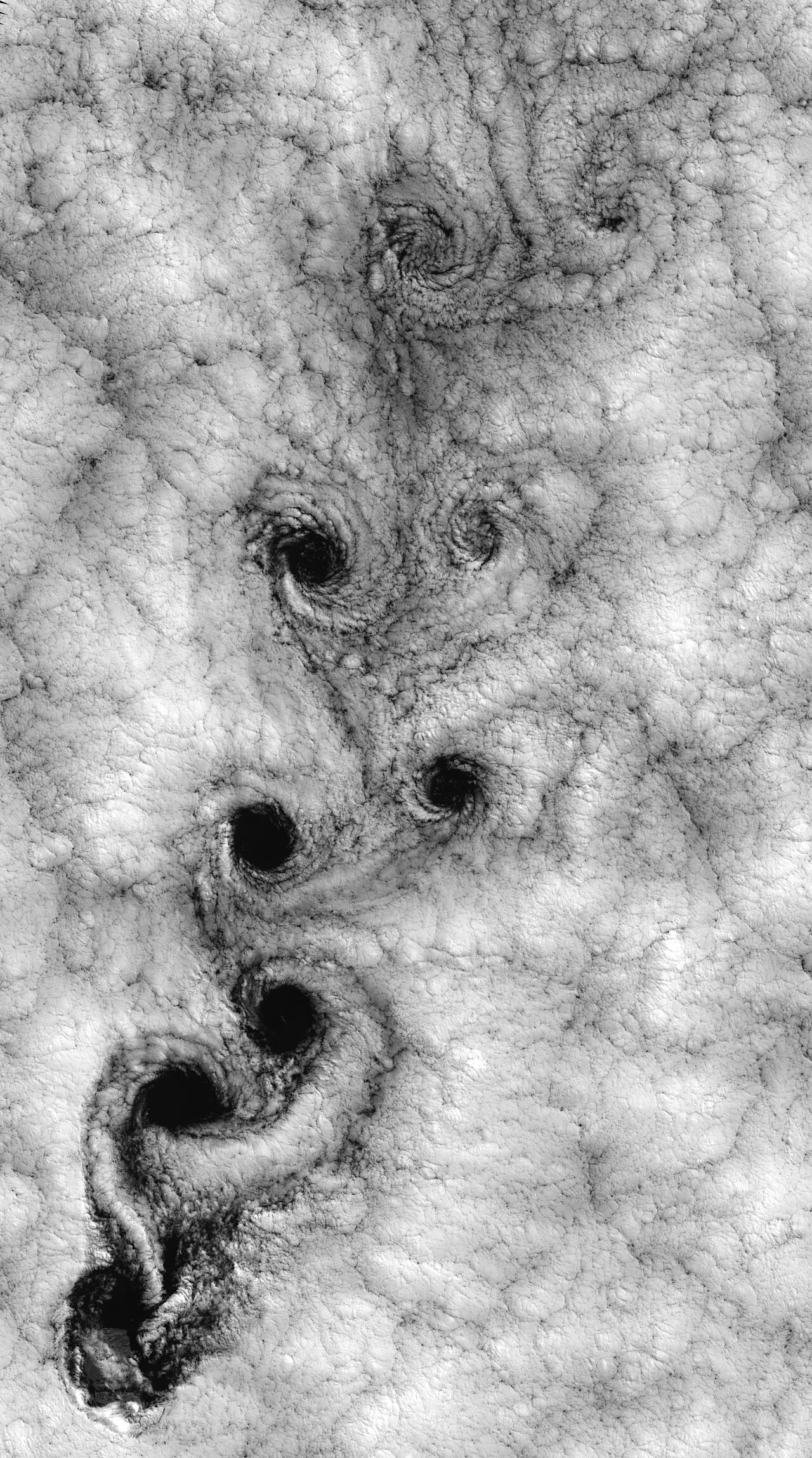
Common attributes of patterns include repetition, symmetry, periodicity, hierarchy and gradation. Visual patterns appear as tessellations, stripes, spots or motifs; temporal patterns occur in rhythms, cycles and sequences; and abstract patterns arise in mathematical series, fractals and logical templates. Biological examples encompass phyllotaxis, animal coat markings and branching structures, while social patterns include habits, norms and recurrent interactions. Repetition is a frequent source of recognizable structure, where similar elements recur across space or time (repetition).
Detection and methods
Methods for identifying patterns span human perception, statistical analysis and computational techniques. Visual inspection and domain expertise are often sufficient for simple motifs; statistical tools detect correlations and trends in noisy data; and machine learning models, including clustering and deep learning, extract complex, high-dimensional patterns. In computing, computer science provides formal languages, algorithms and data structures to represent and search for patterns efficiently. Pattern matching may be exact (e.g., string matching) or approximate (e.g., similarity measures), depending on the application.
Applications
- Design and architecture: repeated motifs and constructive templates help create functional and aesthetic systems; designers also rely on catalogs of design patterns to solve recurring problems.
- Science and medicine: identifying recurring signs, trends and signals assists diagnosis, ecological monitoring and hypothesis generation.
- Technology and data: search engines, image processing, anomaly detection and machine-learning systems use automated pattern discovery and matching to interpret large data sets.
- Arts and crafts: textiles, ceramics and music exploit rhythm, motif and variation to produce memorable works.
- Everyday life and social sciences: routines, economic cycles and cultural conventions are described as behavioral patterns that help explain collective outcomes.
Formalization and pattern languages
Some domains build systematic collections or languages of patterns. In software engineering, pattern catalogs document proven solutions and trade-offs; in urban design and architecture, pattern languages describe recurring architectural elements and their relations. The aim of formalization is to make patterns reusable and communicable across practitioners, turning tacit knowledge into sharable templates that can be adapted to new contexts.
Limitations, biases and apparent patterns
Not every perceived regularity is meaningful. Humans have a propensity to perceive patterns even when none exist, a tendency called pareidolia. Statistical noise, sampling bias and spurious correlations can mislead researchers and practitioners. In algorithmic contexts, overfitting produces models that match observed data but fail to generalize. Good practice distinguishes genuine structure from coincidence and assesses the stability and explanatory power of any discovered pattern.
Hierarchy and complexity
Patterns can be nested and multi-scale: simple motifs combine into larger structures, and stochastic patterns express tendencies rather than exact repetition. Fractals and self-similar forms illustrate how similar patterns reappear at different scales; hierarchical patterns organize information and function through repeated modules or rules.
Further reading and resources
For introductions and deeper material see collections of idea-oriented summaries, conceptual overviews at concept repositories, technical model descriptions, algorithmic notes on matching techniques, perceptual studies on the human senses, examples of repetition in art, computer science introductions, catalogs of design patterns and explanations of pareidolia.
Practical engagement with patterns involves observation, documentation and testing: record recurring configurations, attempt to reproduce them, measure variability, and consider alternative explanations. Across disciplines, the recognition and use of patterns remain a central cognitive and practical tool for simplifying complexity and enabling reuse.
Related articles
Author
AlegsaOnline.com Pattern: concept, recognition, types and applications Leandro Alegsa
URL: https://en.alegsaonline.com/art/75086