
President of Israel
Overview of the office of the President of Israel: role, powers, election, history, and how it differs from the Prime Minister in Israel's political system.
The President of Israel (Hebrew: Nasi Medinat Yisra'el or Nasi HaMedina) serves as the country's head of state. The office is largely ceremonial: day-to-day executive authority is exercised by the Prime Minister (see Prime Minister). The president represents the state at home and abroad, performs formal constitutional acts and is expected to act as a unifying, nonpartisan figure. The current incumbent is Isaac Herzog, who took office on 7 July 2021.
Image gallery
4 Images


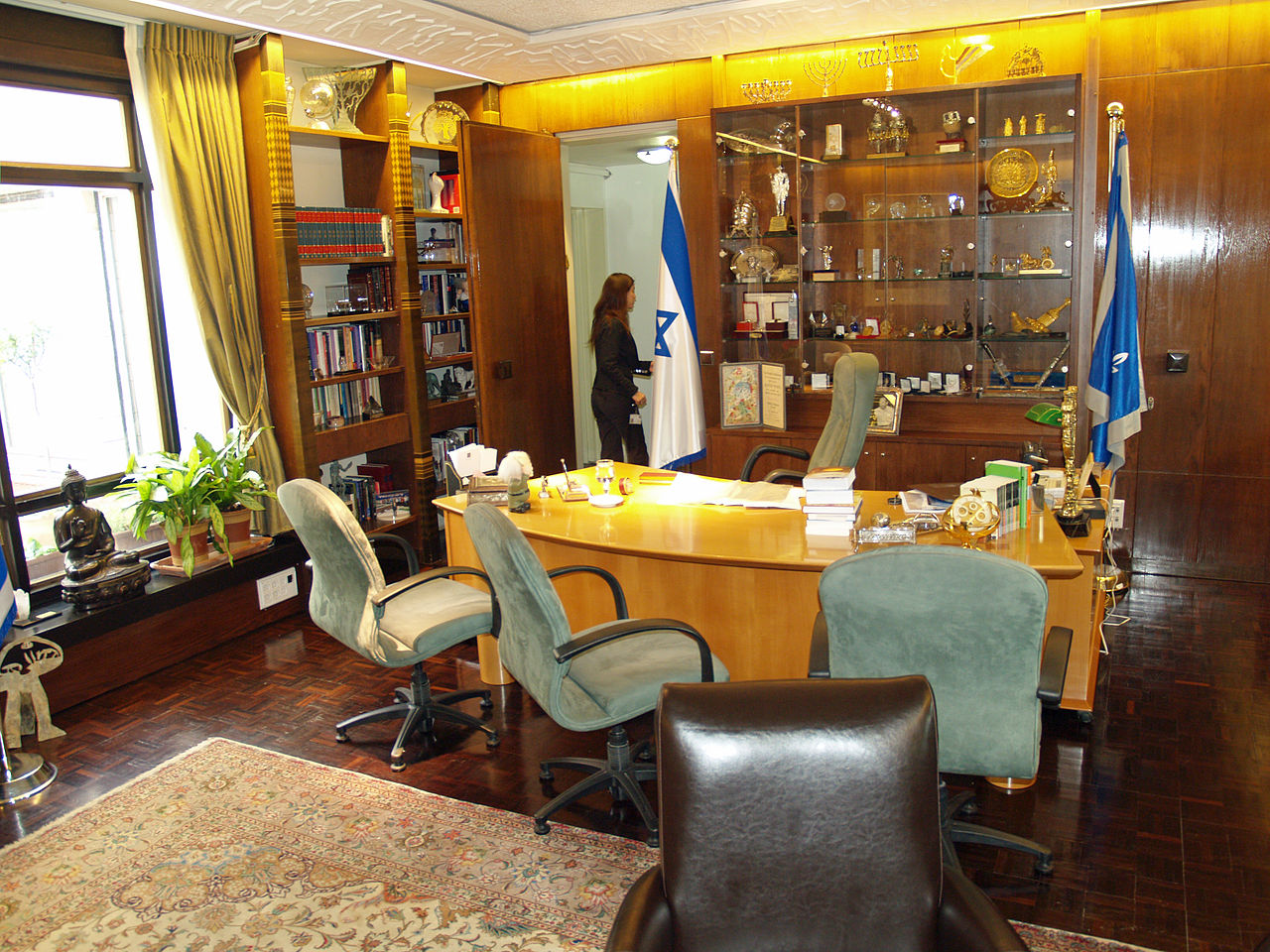
Constitutional basis and functions
Israel does not have a single written constitution; instead the authority and duties of the presidency are defined by Basic Laws and statutes. In practice the president performs formal and ceremonial functions: signing laws, receiving credentials from foreign envoys, conferring honors, and granting pardons or commuting sentences. One of the president’s most important constitutional duties is to consult with party leaders after Knesset elections and formally task a Knesset member with attempting to form a government.
Election, term and eligibility
The president is elected by the Knesset in a secret ballot and serves a single seven-year term. This single-term limit distinguishes the office from many other democracies and is intended to reinforce independence from short-term political pressures. Candidates are typically Israeli citizens with a record of public service; resignation, death or incapacity are handled by provisions that allow the Knesset to choose an acting or new president.
Typical duties and public role
- Representing the state at ceremonial events and official visits.
- Granting pardons and commuting sentences in individual cases.
- Signing bills into law after Knesset passage and promulgating statutes.
- Designating a Knesset member to try to form a government following elections.
- Receiving credentials from foreign ambassadors and accrediting envoys.
Although the office has limited executive power, presidents often use their moral authority to influence public debate, mediate disputes, and promote social causes. Many presidents have been former politicians, judges, or public figures who bring attention to national issues while remaining above daily party politics.
History and notable features
The presidency was established with the founding of the state in the late 1940s; the first president was Chaim Weizmann. Over time the role has remained ceremonial, but its functions at critical moments—such as the assignment of government-formation mandates—give it episodic constitutional significance. The president works with institutions such as the Knesset and represents Israel in dealings with other states and international organizations.
For readers seeking more detail: background on the office, its procedures and biographies of individual presidents can be found through parliamentary and governmental resources (head of state resources, state information). Historical context and comparisons with the role of the Prime Minister illuminate why the presidency is considered a stabilizing, ceremonial institution rather than the seat of executive government.
Related articles
Author
AlegsaOnline.com President of Israel Leandro Alegsa
URL: https://en.alegsaonline.com/art/78838
Sources
- jewishvirtuallibrary.org : "(Letter reprinted online) Offering the Presidency of Israel to Albert Einstein"
- jewishvirtuallibrary.org : "Albert Einstein on His Decision Not to Accept the Presidency of Israel"
- jpost.com : "Olmert backs Peres as next president"