
Chopin: Preludes, Op. 28 — overview, structure and significance
An accessible, expanded guide to Frédéric Chopin’s Preludes, Op. 28: composition, ordering by key, musical characteristics, notable numbers such as the “Raindrop,” performance practice and legacy.
Preludes, Op. 28 is a cycle of 24 short pieces for solo piano by Frédéric Chopin, composed mainly in 1837–1838 and published in early 1839. Written soon after the composer’s winter on Majorca with George Sand, the set condensed a wide expressive range into compact forms. Despite their brevity, the preludes have become central to the piano repertory and are frequently studied, recorded and performed.
Image gallery
5 Images



Origins and organisational idea
Chopin acknowledged the inspiration of earlier keyboard practice, and observers have long compared his project with Johann Sebastian Bach. Like Bach’s famous 24 preludes and fugues (the two books of 24 in The Well-Tempered Clavier), Chopin’s Op. 28 presents every major and minor key (major or minor key) in a single cycle. Rather than following Bach’s chromatic order, however, Chopin arranged the pieces around the circle of fifths: each major key is paired with its relative minor and the sequence moves by fifths. The first four examples show the opening pattern: C major, A minor, G major, E minor. The set closes with the penultimate and final preludes in F major and D minor, completing a balanced traversal of keys. For schematic commentary see a concise structural overview.
Musical characteristics
Although labelled "preludes," these pieces function as independent miniatures rather than introductions to other works. They vary widely in mood, tempo and technique: calm hymn-like chorales alternate with quick scherzandi, stormy outbursts and intimate nocturne-like songs. Chopin concentrated expressive gestures and harmonic invention into short spans, using devices such as repeated-note ostinatos, bell-like sonorities, sudden dynamic contrasts, delicate pedalling and chromatic inflections. This economy of means makes the cycle rewarding for repeated listening: individual preludes often reveal different interpretive possibilities at each hearing.
Notable preludes and motifs
- Prelude No. 15 in D-flat major — the so-called "Raindrop" (Raindrop Prelude) is famed for a recurring repeated note in the accompaniment that many listeners imagine as falling drops.
- Prelude No. 4 in E minor — notable for its resigned descending harmony and compact lament-like shape.
- Other numbers range from capricious to hymnlike; performers frequently select single preludes for encores or record the complete cycle on discs (recordings).
Performance, editions and reception
The preludes are performed both as complete cycles and as isolated pieces in recitals (concerts). Early critical reaction was mixed, with some contemporaries puzzled by the abrupt juxtapositions and compressed forms; later generations recognised the set’s unity and expressive innovation. Modern editions and critical scores supply variant readings and editorial notes that help performers decide matters of articulation, pedalling and ornamentation. The set has attracted myriad recordings and interpretive studies, and it also serves widely in teaching as examples of concentrated pianistic writing and harmonic economy.
Related works and legacy
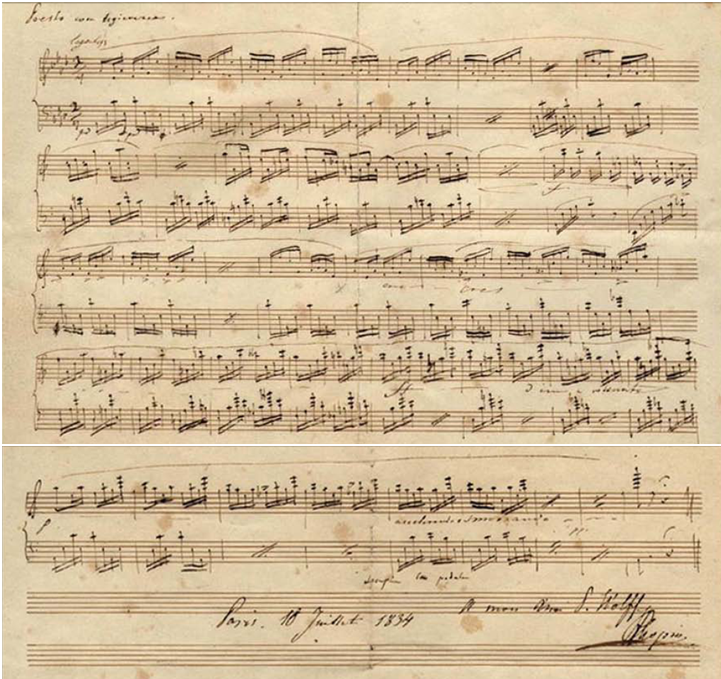
Chopin composed other standalone preludes beyond Op. 28. Notable among these are the later Op. 45 in C-sharp minor and an earlier single prelude in A-flat major from 1834. There is also a fragment in E-flat minor sometimes mentioned in discussions of unfinished material. The influence of Chopin’s preludes extends to subsequent Romantic composers and to twentieth-century miniature cycles: the idea that a composer could map a wide expressive world in short pieces helped expand the piano’s repertoire and idioms.
- Why the set endures: concentrated expression, innovative pianism and systematic key ordering.
- How to approach listening or study: follow the sequence to perceive tonal architecture, then hear individual preludes as self-contained narratives.
- Further resources: critical editions, historic and modern recordings, analytic studies and performance guides (structural overview).
For basic reference and further reading on the composer and context, see authoritative materials on Chopin, comparative studies of Bach and the repertory of keyboard preludes (Bach’s 24, The Well-Tempered Clavier). A practical listening approach is to pair score study with a selection of historic and contemporary performances (recordings) and live performance (concerts), noting editorial variants and interpretive choices documented in current editions (structural overview).
Related articles
Author
AlegsaOnline.com Chopin: Preludes, Op. 28 — overview, structure and significance Leandro Alegsa
URL: https://en.alegsaonline.com/art/78721