
Prayagraj: sacred confluence city in Uttar Pradesh, India
Prayagraj, formerly Allahabad or Prayag, is a historic and religious city in Uttar Pradesh, India, known for the Triveni Sangam and the Kumbh Mela, with long cultural and political significance.
Overview
Prayagraj, historically known as Prayag and until recently widely called Allahabad, is a major city in Uttar Pradesh in India. It sits at a celebrated river junction where the Ganges meets the Yamuna and a third, sacred stream traditionally identified as Saraswati. The meeting of these rivers forms the Triveni Sangam, a focal point of Hindu ritual life.
Image gallery
10 Images


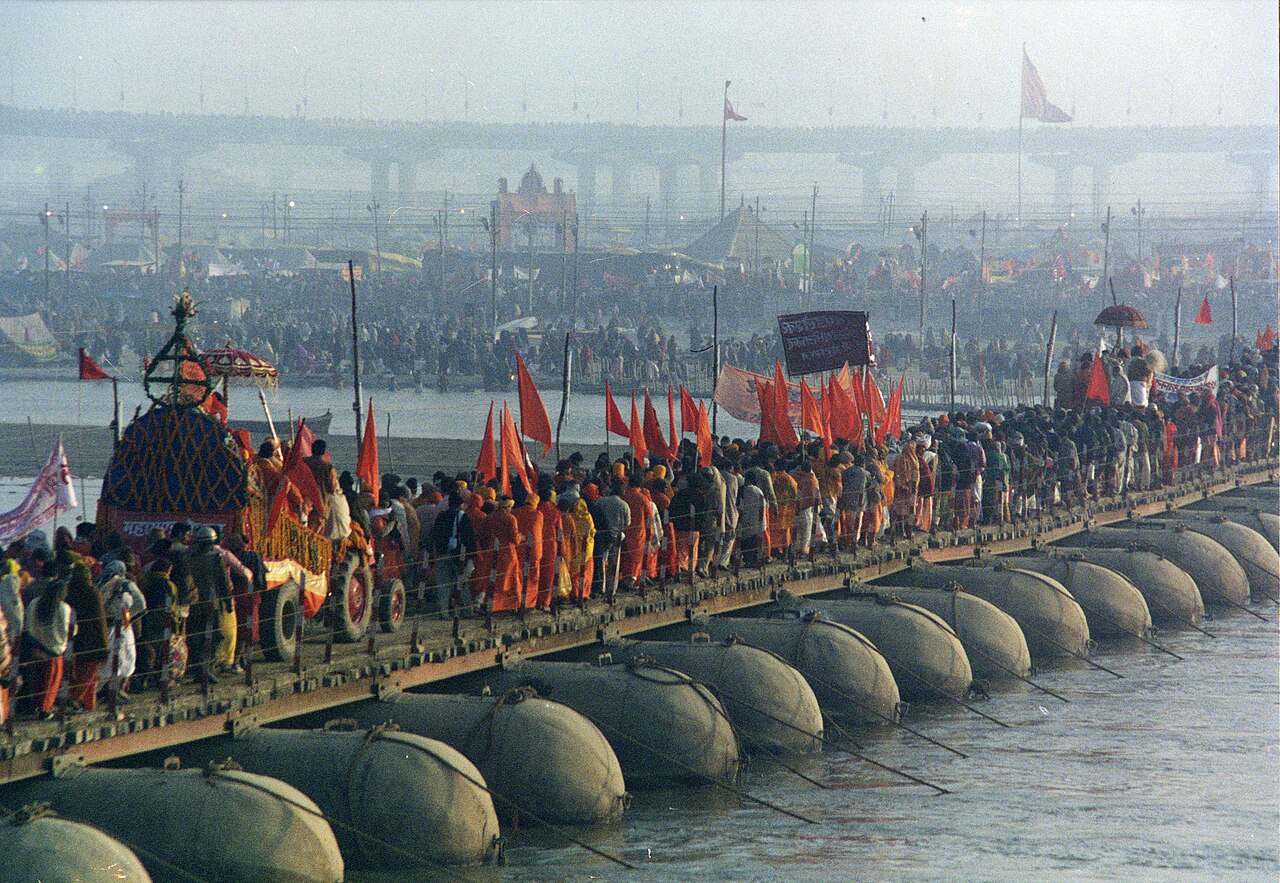


Geography and sacred confluence
The Triveni Sangam is both a physical and symbolic landmark. Pilgrims travel to bathe at the confluence to perform rites for ancestors and to seek purification. The city’s location on the plains of northern India has made it a crossroads of trade, pilgrimage and transport for centuries. The principal rivers are the Ganges and the Yamuna, with the third stream regarded in religious tradition rather than visible flow.
Religious life and festivals
Prayagraj is best known internationally for the Kumbh Mela, a mass pilgrimage and bathing festival held at the Sangam in a twelve-year cycle. Millions of devotees, sadhus and tourists converge during the Kumbh, making it one of the largest peaceful gatherings on earth. Smaller but regular observances and fairs throughout the year keep the city central to Hindu spiritual practice.
Historical background
The site has been important since ancient times and features repeatedly in Indian religious literature. During the Mughal era the city became known by the name given under imperial patronage; the Mughal court and regional rulers shaped its architecture and institutions. The modern renaming to Prayagraj was announced by the state government led by Yogi in 2018, restoring a name rooted in the site's classical identity. The Mughal connection and imperial reforms are sometimes associated with figures like the Mughal emperor Akbar in popular accounts of the city’s past.
Landmarks and institutions
- Prayagraj Fort – a large fort complex historically linked to imperial rule and visible from the river.
- Historic homes and museums – several residences associated with political leaders and freedom-era families attract visitors.
- Educational centers – longstanding universities and colleges have made the city an academic hub in the region.
Modern importance and distinctions
Today Prayagraj functions as an administrative, cultural and transportation center. It combines deep ritual significance with civic life: courts, universities, festivals, and seasonal markets all contribute to its economy. The city’s identity balances centuries of sacred tradition with modern governance and heritage preservation, attracting both pilgrims and students, researchers and travellers.
For further context on the region and river systems see general resources about Uttar Pradesh and riverine culture in India. Additional references on the Ganges and Yamuna are available through regional studies linked to Ganges and Yamuna research portals.
Related articles
Author
AlegsaOnline.com Prayagraj: sacred confluence city in Uttar Pradesh, India Leandro Alegsa
URL: https://en.alegsaonline.com/art/78643
Sources
- timesofindia.indiatimes.com : "Sangam city, Allahabad" · web.archive.org
- allahabad.nic.in : "City of Prime Ministers"
- bankexamstoday.com : "Nicknames of Indian Cities – Complete List" · web.archive.org
- allahabadmc.gov.in : "Allahabad" · web.archive.org
- censusindia.gov.in : "Census 2011" · web.archive.org · web.archive.org
- censusindia.gov.in : censusindia.gov.in/2011-prov-results/paper2/data_files/India2/Table_3_PR_UA_Citiees_1Lakh…
- nclm.nic.in : "52nd REPORT OF THE COMMISSIONER FOR LINGUISTIC MINORITIES IN INDIA"
- ethnologue.com : "Awadhi"