
Akbar: Emperor, Reformer, and Patron of Mughal India
Akbar (1542–1605), third Mughal emperor, expanded and consolidated Mughal rule in South Asia, instituted administrative and religious reforms, and patronized arts and architecture, leaving a lasting cultural legacy.
Akbar (Abu'l-Fath Jalal ud-din Muhammad Akbar) was the third Mughal emperor whose reign is widely regarded as a formative period in South Asian history. Born in 1542, he ascended the imperial throne as a teenager and over the following decades transformed a fragile inheritance into a larger, more integrated polity. His rule is remembered for territorial consolidation, administrative innovation, religious and cultural patronage, and major architectural projects. For a general overview see Akbar overview.
Image gallery
10 Images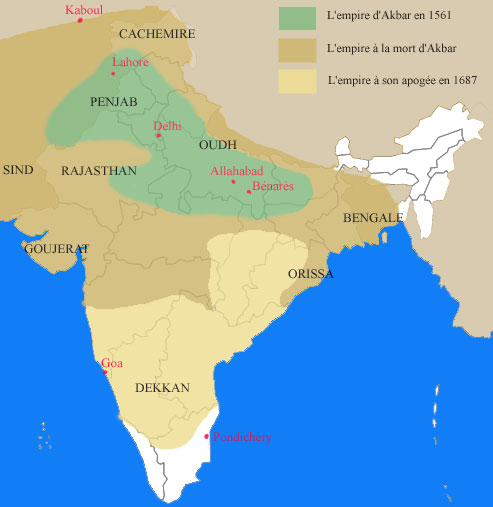



Early life and accession
Akbar was born in Umerkot and was the son of Humayun, the second Mughal ruler. He became emperor in 1556 at a young age following his father's death; initially a regency under the military leader Bairam Khan guided imperial affairs while Akbar matured as a sovereign. Early in his reign the Mughal state faced several powerful rivals; a crucial victory over the Afghan commander Himu at the Second Battle of Panipat helped secure the throne and set the stage for later expansion. For accounts of his youth and rise see early years and accession events.
Administration and governance
Akbar reformed the imperial administration to create a more centralized and professional state. He refined the mansabdari system, a graded bureaucracy that organized military officers and civil officials by rank and salary, and introduced measures to regularize revenue collection. These reforms increased the predictability and reach of Mughal rule across diverse regions. Many contemporary chroniclers and later historians detail these changes; relevant material can be found at administration and revenue reforms.
Religious policies and cultural patronage
Notable for his engagement with scholars and religious thinkers of many backgrounds, Akbar sought policies that reduced communal friction and encouraged dialogue. He promoted an official ideal often described as "universal tolerance" or sulh-i kul, invited debates among Muslim, Hindu, Jain, Christian, Zoroastrian, and other thinkers, and experimented with a syncretic doctrine sometimes called Din-i Ilahi—though this personal synthesis had limited direct disciples. Akbar was also a major patron of literature, painting, and architecture: the royal atelier produced illustrated manuscripts and courtly portraits, while architectural projects such as the new capital at Fatehpur Sikri and enhancements at Agra consolidated Mughal aesthetic influence. Read more on his cultural initiatives at religious policy and patronage and arts.
Military expansion and political relations
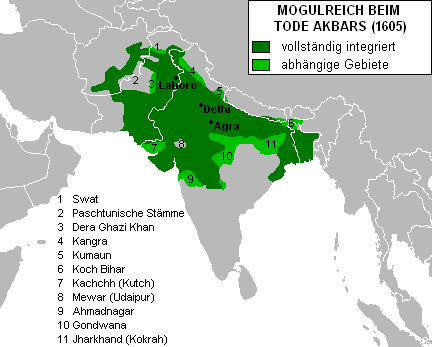
During his reign the empire expanded through a mix of military campaigns, strategic alliances, and negotiated submission. Akbar fought in the northwest and across the Gangetic plain, confronted various Rajput states—winning some by force and others through marriage and alliance—and extended Mughal influence into Gujarat, Bengal, and the Deccan fringes. Famous encounters include the Battle of Haldighati and prolonged diplomacy with regional rulers. These dynamics are discussed in military and diplomatic sources accessible at campaigns and alliances.
Legacy and historical significance
Akbar died in 1605 and was succeeded by his son Jahangir. His reign left enduring institutional and cultural marks: a durable bureaucratic framework, precedents for imperial tolerance and intellectual exchange, flourishing of Mughal art and architecture, and narratives recorded in sources such as the Akbarnama and Ain-i-Akbari. Scholars continue to debate aspects of his policies and their long-term effects, but his era is generally seen as central to the emergence of a distinctive Mughal state. For primary-source collections and further reading see sources and studies.
- Notable contributions: administrative centralization, mansabdari system, artistic patronage, architectural programs.
- Important distinctions: Akbar combined military expansion with diplomatic marriage alliances and religious discourse—an approach that blended force and accommodation.
- Further study: textual accounts, court chronicles, and material remains provide complementary perspectives on his reign.
Questions and answers
Q: Who was Akbar the Great?
A: Akbar the Great was the 3rd Mughal Emperor.
Q: When and where was Akbar born?
A: Akbar was born on October 15, 1542, in Umerkot, which is now part of Pakistan.
Q: Who was Akbar's father?
A: Akbar's father was the 2nd Mughal Emperor Humayun.
Q: How old was Akbar when he became the king?
A: Akbar became the de jure king at the age of 13 when his father died.
Q: Who was appointed as Akbar's regent and chief army commander?
A: Bairam Khan was appointed as Akbar's regent and chief army commander.
Q: Which battle did Akbar win soon after coming to power?
A: Soon after coming to power, Akbar defeated Himu, the general of the Afghan forces, in the Second Battle of Panipat.
Q: Which territories did Akbar conquer during his reign?
A: During his reign, Akbar's wars made the Mughal empire more than twice as big as it had been before, covering most of the Indian subcontinent except the south (excluding the Deccan Plateau).
Tags
Related articles
Author
AlegsaOnline.com Akbar: Emperor, Reformer, and Patron of Mughal India Leandro Alegsa
URL: https://en.alegsaonline.com/art/1775