
Axon: structure, function, and biological significance
Axons are the long, slender projections of neurons that transmit electrical impulses to other cells. This article explains axon anatomy, conduction, development, history, and medical relevance.
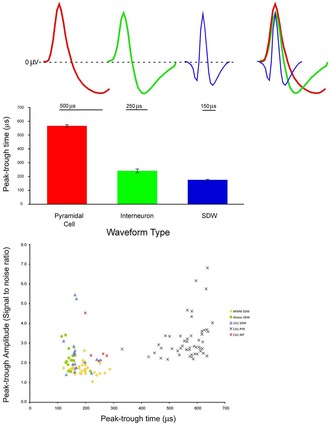
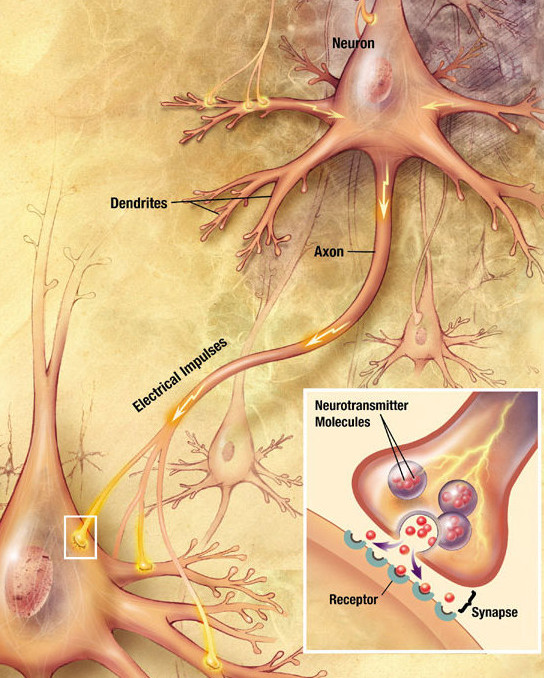
An axon is a specialized projection of a nerve cell that conducts electrical signals away from the cell body toward other neurons, muscle cells, or glands. Found on most types of neurons, an axon can be a fraction of a millimeter long or extend over a meter in large animals. Its primary role is signal transmission: converting local changes in membrane potential into brief, rapidly propagating nerve impulses known as action potentials.
Image gallery
9 Images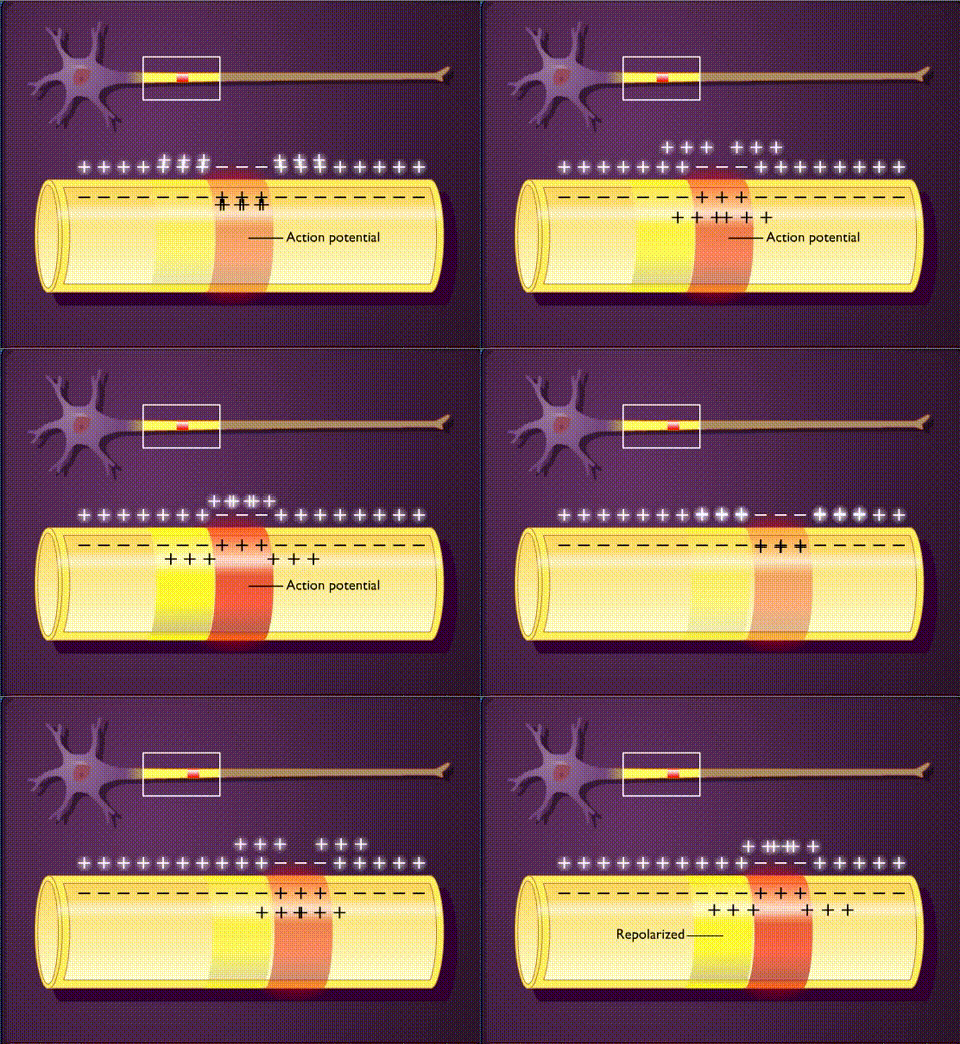




Structure and defining parts
Axons differ from other neuronal processes in form and function. Key regions include the axon hillock, the long axonal shaft, and the axon terminals (synaptic boutons) at the distal end. The hillock is where incoming signals are integrated and the decision to fire an action potential is made. The terminals contain vesicles of neurotransmitter that are released at synapses to communicate with target cells.
Characteristics and conduction mechanisms
Axonal conduction depends on membrane ion channels and the controlled movement of ions across the membrane. In many animals, axons are insulated by layers of myelin produced by glial cells: Schwann cells in the peripheral nervous system and oligodendrocytes in the central nervous system. This wrapping creates the myelin sheath and leaves short gaps called nodes of Ranvier, where ion exchange regenerates the action potential. This arrangement enables saltatory conduction, in which impulses jump between nodes and travel much faster than along non-myelinated fibers.
- Diameter: Thicker axons generally conduct faster than thinner ones.
- Myelination: Presence and thickness of myelin greatly increase conduction velocity.
- Length: Axons can range from micrometers to over a meter in large vertebrates.
Development, diversity, and evolutionary notes
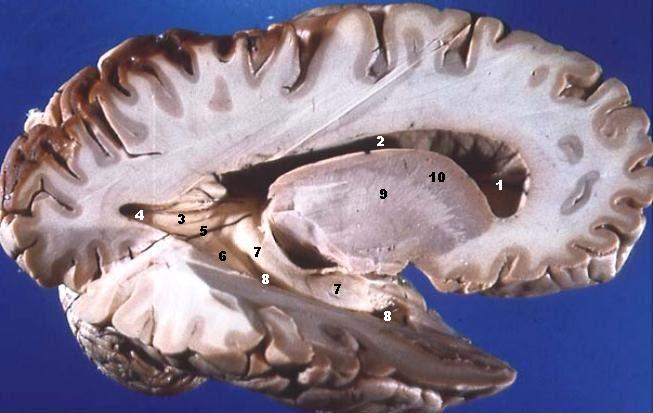
Axons develop from the neuron's cytoskeleton, guided by chemical cues during growth so they reach appropriate targets. Neurons display great diversity: some have a single long axon, others multiple collaterals, and some small interneurons have short axons adapted for local processing. Comparative anatomy shows long axons are common in larger-bodied animals to bridge greater distances between brain and periphery.
History, discovery, and naming
The axon was distinguished from other neuronal processes in the 19th century; early microscopists named and described its form and connectivity. Otto Deiters is credited with some of the first clear descriptions of axonal projections. The term "axon" derives from the Greek for "axis," reflecting its role as a principal conducting element of the neuron.
Physiological importance and clinical relevance
Axons are central to nervous system function: sensory information, motor commands, reflexes, and complex brain signaling rely on axonal transmission. Damage to axons or their myelin sheath underlies many neurological conditions. Demyelinating disorders impair conduction speed and reliability, while traumatic injury that severs axons can interrupt communication between brain and body. Research into axon regeneration and protection remains a major focus in neuroscience and medicine.
For more on basic neuronal anatomy see related neuron entries, for complementary descriptions of receiving processes see dendrites, for somatic integration see the cell body (soma), and for details on insulating cells consult material about myelin.
Related articles
Author
AlegsaOnline.com Axon: structure, function, and biological significance Leandro Alegsa
URL: https://en.alegsaonline.com/art/7842
Sources
- mult-sclerosis.org : "axon - multiple sclerosis encyclopaedia"