
B cell (B lymphocyte)
B cells are white blood cells of the adaptive immune system that recognize antigens, produce antibodies, present antigen to T cells, form memory, and differentiate into plasma cells and regulatory subsets.
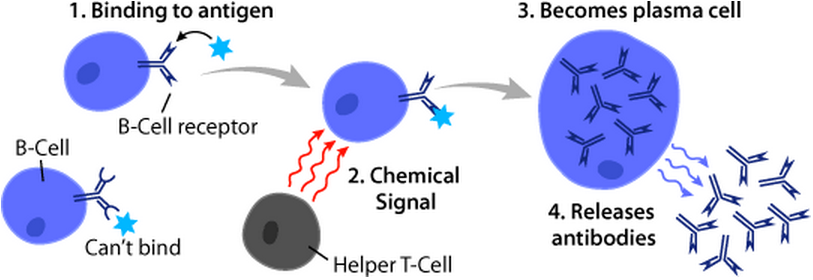
B cells are a class of white blood cell known as lymphocytes that play a central role in the adaptive immune system. They are specialized to detect molecular structures called antigens and to mount antigen-specific responses. When activated, many B cells differentiate into antibody-secreting plasma cells and into long-lived memory B cells that contribute to lasting immunity following infection or vaccination.
Image gallery
8 Images


Structure and distinguishing features
Each mature B cell displays a membrane-bound receptor called the B cell receptor on its surface. The receptor is essentially an anchored form of an immunoglobulin molecule that binds a specific antigenic structure presented on the surface of pathogens or in bodily fluids. The receptor sits in the cell membrane (cell surface) and associates with signaling proteins that transmit activating or inhibitory signals into the cell. Upon activation, the B cell can change the class of antibody it produces (class switching) and refine the antibody's affinity for antigen through somatic hypermutation and selection in germinal centers.
Development and subsets
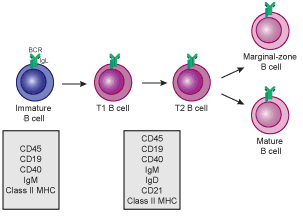
In mammals, B cells originate from hematopoietic stem cells in the bone marrow. Early development includes gene rearrangement events that assemble the immunoglobulin genes to create a diverse repertoire of antigen receptors. Mature B cells circulate and populate lymphoid tissues such as the spleen and lymph nodes. Several functionally distinct subsets exist, including follicular (conventional) B cells, marginal zone B cells, innate-like B-1 cells, and regulatory B cells that can suppress immune responses.
Principal functions
- Antibody production: Activated B cells differentiate into plasma cells that secrete large amounts of antibodies, which neutralize pathogens, opsonize targets for phagocytosis, or activate complement.
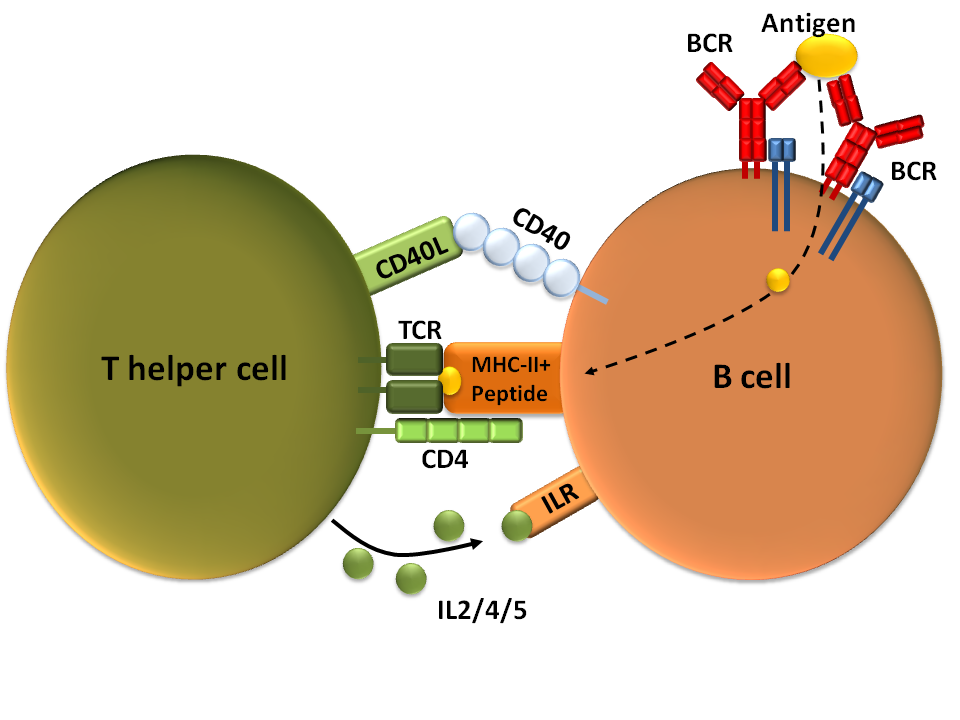
- Antigen presentation: B cells can internalize bound antigen, process it, and present peptide fragments on MHC class II molecules to helper T cells, supporting coordinated adaptive responses.
- Memory formation: Some B cells become memory B cells that persist long-term and respond rapidly upon re-exposure to the same antigen.
- Regulation: Certain B cell subsets produce cytokines or other mediators that limit immune activation and help maintain tolerance.
Importance and clinical relevance
B cells are central to the protective effects of most vaccines because the antibodies they produce can prevent infection or disease. Dysregulation of B cells is implicated in autoimmune disorders (where autoantibodies cause tissue damage), immunodeficiencies (where B cell function is impaired), and hematologic cancers such as leukemias and lymphomas. Therapeutic monoclonal antibodies and B cell–targeting drugs are widely used to treat cancers, autoimmune diseases, and inflammatory disorders.
Notable facts and distinctions
Unlike T cells, which recognize processed peptide fragments bound to MHC molecules, many B cells can bind native three-dimensional antigen structures directly through their B cell receptor. The capacity to switch antibody classes and to undergo affinity maturation gives B cell responses both flexibility and specificity. Research continues to refine understanding of less common B cell roles, such as their regulatory functions and contributions to chronic inflammatory conditions.
For more general background on related topics, see entries about lymphocytes, the adaptive immune system, the B cell receptor, the cell surface display of receptors, molecular antigens, the biology of antibodies, and hematopoiesis in the bone marrow.
Questions and answers
Q: What are B cells?
A: B cells are a type of white blood cell, also known as lymphocytes.
Q: What happens when a B cell is activated?
A: When a B cell is activated, it turns into a plasma cell and starts producing antibodies.
Q: What is the purpose of the protein on the outer surface of B cells?
A: The protein on the outer surface of B cells, known as 'B cell receptor', allows them to bind to specific antigens.
Q: What are the main functions of B cells?
A: The main functions of B cells are to make antibodies against antigens, act as antigen-presenting cells (APCs), and develop into memory B cells after activation by antigen interaction. Additionally, they have been found to have suppressive functions in mammals.
Q: Where do immature B Cells form in mammals?
A: In mammals, immature B Cells form in the bone marrow.
Tags
Related articles
Author
AlegsaOnline.com B cell (B lymphocyte) Leandro Alegsa
URL: https://en.alegsaonline.com/art/7978
Sources
- doi.org : 10.1146/annurev-immunol-020711-074934
- pubmed.ncbi.nlm.nih.gov : 22224776
- ncbi.nlm.nih.gov : Molecular biology of the cell