
Polonaises Op. 40 (Chopin)
Two celebrated piano polonaises by Frédéric Chopin, Op. 40 — the heroic A major 'Military' and the brooding C minor — noted for national feeling, virtuosity, and distinctive polonaise rhythm.
The two Polonaises of Op. 40 by Frédéric Chopin are among his most famous works for solo piano. Composed in the 1830s and published together in 1838, they present a striking contrast: the Polonaise in A major, Op. 40 no. 1, commonly nicknamed the "Military" polonaise, is bold and martial in character, while the Polonaise in C minor, Op. 40 no. 2, is generally darker and more tragic. Both pieces draw on the traditional Polish dance form but transform it through Chopin's harmonic language and pianistic invention.
Image gallery
3 Images
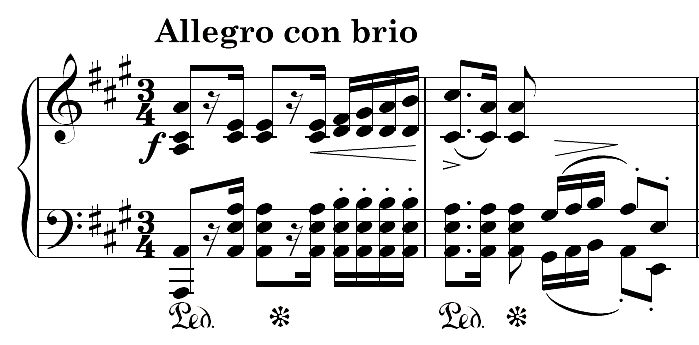

Musical character and basic form
The polonaise is a stately Polish dance in triple time with a characteristic rhythmic profile; Chopin treats that rhythm with dramatic intensity throughout Op. 40. The A major Polonaise is cast in an A–B–A layout: a robust opening section in A major, a contrasting middle Trio that modulates and lightens the texture, and a return of the opening material intensified by bravura passagework. The score bears the tempo marking Allegro con brio (fast, with spirit), and its opening is launched by a ringing A major chord followed by emphatic, often fanfare-like figures.
Among the features that lend the piece its "military" persona are broad left-hand octaves, strong dotted and accentuated rhythms, and a number of percussive effects that imitate drums and trumpets. In the Trio Chopin shifts to D major and inserts a brief passage in which low C-sharp trills are written an octave apart, a gesture that many commentators hear as resembling drum-rolls. The C minor companion is leaner and more somber, using the same national dance model to convey a sense of suffering and inward urgency.
Structure, technique and performance
- Form: clear ternary (A–B–A) designs with contrasting Trio sections and codas that amplify the main themes.
- Rhythm: persistent polonaise figures provide forward drive and a ceremonial quality.
- Technical demands: wide hand spans, rapid octave passages, precise articulation of dotted rhythms, and fine control of dynamics and rubato.
- Interpretation: performers vary the degree of bravura versus nobility; the A major demands both power and polish, the C minor careful shading and weight.
Because they combine dance idioms with piano virtuosity, the Op. 40 polonaises sit at the intersection of national music and salon concert display. They are staples of the recital repertoire, frequently recorded and often transcribed or orchestrated for larger ensembles. Short gestures in the A major—rumbling bass, trumpet-like fanfares, drum-imitating trills—make it especially effective in evoking martial imagery in concert programming and popular culture.
Historical context frames how these pieces have been heard. Chopin left Poland in 1830 and spent most of his life abroad; many listeners and critics have read patriotic feeling into his polonaises. Pianist and composer Anton Rubinstein famously contrasted the two Op. 40 pieces, calling the A major a symbol of Polish glory and the C minor a symbol of Polish tragedy, a reading that reflects the turbulent political atmosphere of nineteenth-century Poland and the émigré community's sensibilities.
Although polonaises had appeared in earlier European music, Chopin expanded the expressive range of the dance, bringing personal, national and pianistic voices into a compact but powerful form. The Op. 40 pair remains widely taught, studied and performed: they are valued both for their technical challenges and for the vivid dramatic contrast they present when heard together. For further musical examples and scholarly commentary on Chopin's polonaises, see resources and editions linked in specialist catalogs and recordings (polonaise studies and historical editions often provide contextual notes for these works).
Related articles
Author
AlegsaOnline.com Polonaises Op. 40 (Chopin) Leandro Alegsa
URL: https://en.alegsaonline.com/art/77823