
Pomp and Circumstance Marches
An encyclopedic overview of Edward Elgar's Pomp and Circumstance Marches: their music, history, cultural uses (including the 'Land of Hope and Glory' melody), and notable distinctions.
Overview
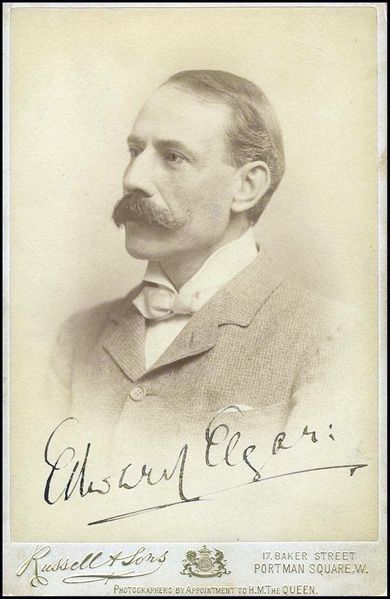
The Pomp and Circumstance Marches are a set of orchestral marches by Sir Edward Elgar, commonly known by their informal collective title. Published as a series of five completed marches, they carry the full heading "Pomp and Circumstance Military Marches" and are staples of ceremonial and concert repertoire. Elgar began work on a sixth march but never brought it to completion.
Image gallery
5 Images


Musical characteristics
Each march follows the broad outlines of late Romantic British orchestral writing: bold, march-like rhythms, a prominent brass and percussion presence, and richly scored string and woodwind textures. The marches contrast assertive opening material with a more lyrical middle section or trio. That lyrical tune from the first march is especially memorable and can be adapted for chorus or solo voice.
History and reception
Composed in the early twentieth century, the marches established Elgar's reputation beyond chamber and orchestral music into national ceremonial life. The first march achieved unusual popularity: its trio melody was later set to words and became widely known in Britain under the title "Land of Hope and Glory." Over the decades the set has been performed by full orchestra, military bands, and wind ensembles, and it remains frequently heard at public celebrations and formal occasions.
Uses and cultural importance
The first march has been adopted for a variety of public rituals. It is commonly used at graduation ceremonies in many countries, and in Britain the tune is associated with patriotic occasions and the Last Night of the Proms. Arrangements exist for choir, brass band, and solo instruments; conductors often adapt tempi and scoring for different ceremonial contexts.
Notable facts and distinctions
- The collective nickname "Pomp and Circumstance" has entered everyday English as a phrase meaning ceremonial display.
- Only five marches were completed and published; a planned sixth remained unfinished at Elgar's death.
- The first march's trio is frequently performed with lyrics, most famously as "Land of Hope and Glory," enhancing its visibility outside concert halls.
- Performances range from full symphony orchestra to wind band and organ transcriptions, illustrating the music's adaptability.
For listeners and performers alike, the Pomp and Circumstance marches offer a concise example of how a composer can create music that is both theatrically striking and widely embraced by public tradition. Further reading and score access can be sought via specialist music libraries and editions, or introductory resources on Pomp and Circumstance Marches.
Questions and answers
Q: Who composed the Pomp and Circumstance Marches?
A: Sir Edward Elgar composed the Pomp and Circumstance Marches.
Q: How many marches are there in the Pomp and Circumstance Marches?
A: There are five marches in the Pomp and Circumstance Marches.
Q: What is the full title of the Pomp and Circumstance Marches?
A: The full title of the Pomp and Circumstance Marches is "Pomp and Circumstance Military Marches".
Q: Did Elgar finish writing the sixth march of the Pomp and Circumstance Marches?
A: No, Elgar never finished writing the sixth march of the Pomp and Circumstance Marches.
Q: Which of the marches is the most famous and has a famous tune?
A: The first of the marches is the most famous and has a tune that is one of the best known tunes in Britain.
Q: What words are often sung to the tune of the first march?
A: The words "Land of Hope and Glory" are often sung to the tune of the first march.
Q: What kind of music are the Pomp and Circumstance Marches?
A: The Pomp and Circumstance Marches are marches for orchestra.
Related articles
Author
AlegsaOnline.com Pomp and Circumstance Marches Leandro Alegsa
URL: https://en.alegsaonline.com/art/77913
Sources
- william-shakespeare.info : "Othello, Act III"
- npr.org : Pomp and Circumstance NPR Music