
Pope Joan — the medieval legend of a female pontiff
Pope Joan is a medieval legend about a woman who allegedly disguised herself as a man and became pope. First recorded in the 13th century, the story is now regarded by most scholars as fictional.
Overview: Pope Joan (also called Johanna or Joanna) is a legendary figure said to have occupied the papal throne while concealing her sex. The tale circulated widely in medieval Europe and appeared in chronicles, sermons, and popular stories. Although the legend was long accepted by some readers, contemporary historians and church scholars generally consider it a myth because it lacks reliable contemporary evidence.
Image gallery
7 Images




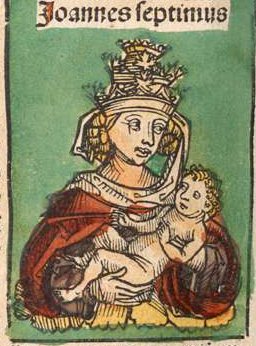
Core elements of the story
The common outline of the legend describes a woman who adopts male dress and a male name, rises through ecclesiastical ranks, and is eventually elected pope. In most versions she is exposed when she unexpectedly gives birth or is discovered to be female while traveling in procession. Variants differ on details such as her origin, how long she reigned, and her fate after exposure. Names associated with the tale include Johanna, Joanna, and the male name often rendered as "John Anglicus."
Origins and development
The earliest known written accounts of Pope Joan appear in 13th-century chronicles and later in popular preaching and retellings. A notable medieval chronicler recorded the story, and it spread throughout Europe as part of collections of moralizing or scandalous tales. Over time the legend acquired different settings and embellishments depending on local tastes and the purpose of the narrator.
Scholarly assessment
Modern historians evaluate the Pope Joan narrative with skepticism. Key reasons for doubting its historicity include the absence of contemporary papal records naming any female pope, the lack of mention in reliable, near-contemporary sources that carefully list popes, and the story's emergence centuries after the alleged event. Analysts propose that the legend likely arose as satire, anti-papal polemic, or confusion with other anecdotes, and that it was amplified by oral tradition and medieval chroniclers. For summaries of primary and secondary discussions see 13th-century chronicles, later legendary narratives, and modern reviews in modern scholarship.
Cultural impact and notable mentions
Whether true or not, the Pope Joan story influenced literature, popular imagination, and art for centuries. It was cited in medieval chronicles, referenced by Renaissance and early modern writers, and used in polemical debates about clerical authority and morality. The tale has continued to appear in novels, plays, and scholarly discussions as an emblematic example of how legends can shape perceptions of institutions.
Distinctions and final notes
Pope Joan should be regarded as a persistent legend rather than an established historical person. The story is useful for understanding medieval storytelling, the transmission of popular myths, and the interplay of satire and reputation in church history. Readers seeking primary medieval texts or critical analysis may consult the linked categories above for further investigation into how the narrative developed and why most historians reject it as factual.
Related articles
Author
AlegsaOnline.com Pope Joan — the medieval legend of a female pontiff Leandro Alegsa
URL: https://en.alegsaonline.com/art/78076
Sources
- newadvent.org : "Pope Joan"