
Plant Morphology — Study of Plant Form, Structure, and Development
Plant morphology examines the external form and visible structures of plants, their variation, development and role in identification, classification, ecology, agriculture and evolution.
Plant morphology (phytomorphology) is the branch of botany that describes and interprets the external form and visible structures of living and fossil plants. It treats whole-plant shapes, the arrangement and form of organs, and the developmental sequences that produce those forms. Morphology is concerned with observable characters such as leaf shape and arrangement, stem types, root systems, flower form and fruiting structures; these traits are used for identification, description and comparison in the field and in collections. For definitions of external features see external structure.
Image gallery
7 Images



Scope and main organs
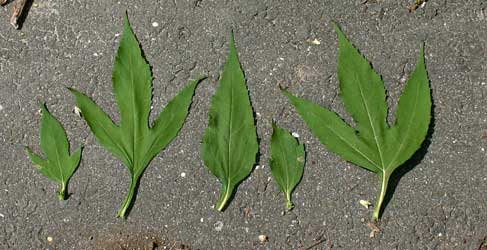
Morphological study typically distinguishes vegetative and reproductive organs. Vegetative organs include roots, stems and leaves, with attention to their architecture, growth habit and modifications (for example, rhizomes, tubers, succulents, or tendrils). Reproductive organs include flowers, inflorescences, fruits and seeds, with variation in symmetry, fusion, and position. Surface characters such as hairs, glands, spines and cuticle texture are also morphological traits. Many practical descriptions link to basic guides for identifying plants.
Developmental and comparative aspects
Plant morphology overlaps with developmental biology: it records how meristems, organ primordia and growth patterns yield adult form. Comparisons among taxa emphasize homology (shared origin) versus analogy (similar function or appearance) and recognize morphological plasticity, where a single species can produce different forms in different environments. Morphology is complemented by plant anatomy, which examines internal tissues, and by physiology, which addresses function. Together these perspectives help explain why forms appear as they do.
Methods and modern approaches
Traditional methods include field observation, herbarium study and detailed descriptive terminology. Modern approaches add imaging, morphometrics (quantitative shape analysis), developmental time series and integration with genetic and molecular data to interpret form and its evolution. Paleobotany relies on morphological characters preserved as fossils to reconstruct ancient vegetation and evolutionary transitions.
Applications and importance
- Taxonomy and systematics: morphology provides characters for identifying and describing species and for building keys.
- Ecology and agriculture: form relates to ecological strategy, resource capture and cultivation traits important in crop breeding.
- Horticulture and conservation: selection and management often use visible traits to choose varieties and conserve diversity.
For introductory summaries and further reading, consult standard botanical texts and online introductory guides that treat terminology, measurement and illustration conventions used by morphologists. Overall, plant morphology provides the primary vocabulary and framework for documenting plant diversity and linking observable structure to development, ecology and evolution.
Related articles
Author
AlegsaOnline.com Plant Morphology — Study of Plant Form, Structure, and Development Leandro Alegsa
URL: https://en.alegsaonline.com/art/77286
Sources
- books.google.com : page xv