
Plagues of Egypt (the Ten Plagues)
The Ten Plagues are a series of calamities described in the biblical Exodus; they confront Pharaoh and lead to the Israelites' departure. Accounts inspire religious observance, interpretation, and cultural representation.
Overview
The Plagues of Egypt are a sequence of ten extraordinary afflictions recounted in the biblical Exodus account. In that narrative, each plague is sent as a sign and judgment to persuade Pharaoh to release the Israelites from bondage. The story functions as a foundational element in Jewish and Christian traditions and is central to the origin story of Israel's liberation.
Image gallery
10 Images


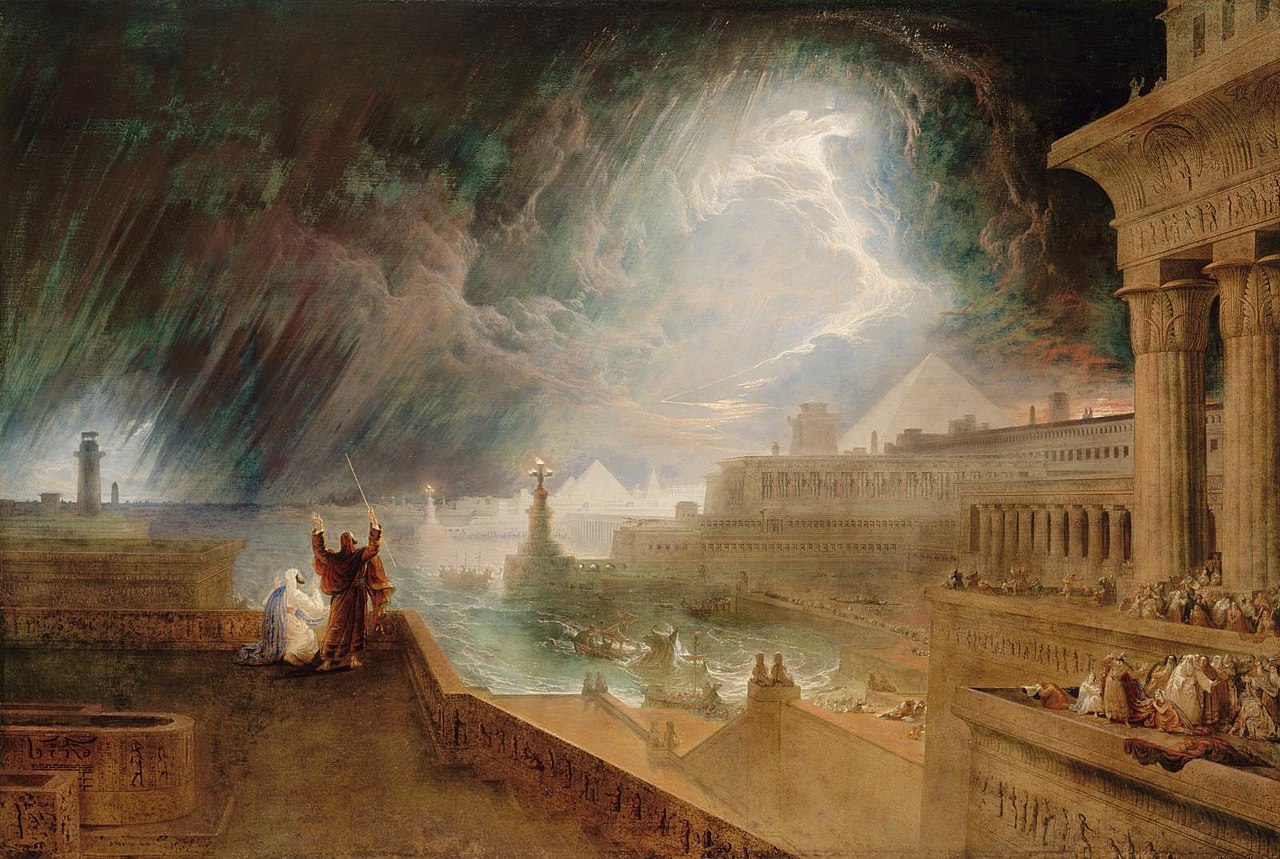


List of plagues
The traditional ordering given in Exodus names ten distinct calamities:
- Water turned into blood
- Frogs
- Lice (or gnats)
- Flies
- Death or disease of livestock
- Painful boils
- Thunderstorm of hail
- Locusts
- Darkness for three days
- Death of the firstborn
Origins and interpretations
Scholars and religious commentators treat the plagues in different ways. Traditional readings describe them as divine interventions tied to covenant and redemption themes. Other approaches see them as a theological retelling of historical or ecological events—disease outbreaks, climatic phenomena, or a chain of ecological consequences—used to explain dramatic social change. Ancient composers may have shaped the sequence to convey moral and liturgical meaning rather than provide a scientific report.
Religious and cultural importance
Within Judaism the plagues are central to the Passover observance, where elements of the narrative are remembered and liturgically recited as part of collective memory. In Christianity they appear in theological reflection on judgment, deliverance, and typology. The plagues have also influenced art, literature, and popular culture as evocative symbols of catastrophe and liberation.
Notable facts and distinctions
Different religious traditions and later commentators sometimes vary in how they count, order, or explain the plagues. Debates include the nature of certain afflictions (for example, lice versus gnats), their geographical scope, and whether they were miraculous or natural events interpreted theologically. Regardless of interpretation, the narrative serves as a lasting example of narrative theology and collective identity formation.
Related articles
Author
AlegsaOnline.com Plagues of Egypt (the Ten Plagues) Leandro Alegsa
URL: https://en.alegsaonline.com/art/77207