
Piccadilly: central London avenue, history, landmarks and cultural role
Piccadilly is a principal thoroughfare in central London linking Hyde Park Corner to Piccadilly Circus, known for landmark shops, hotels, galleries and its role in the city's social and commercial life.
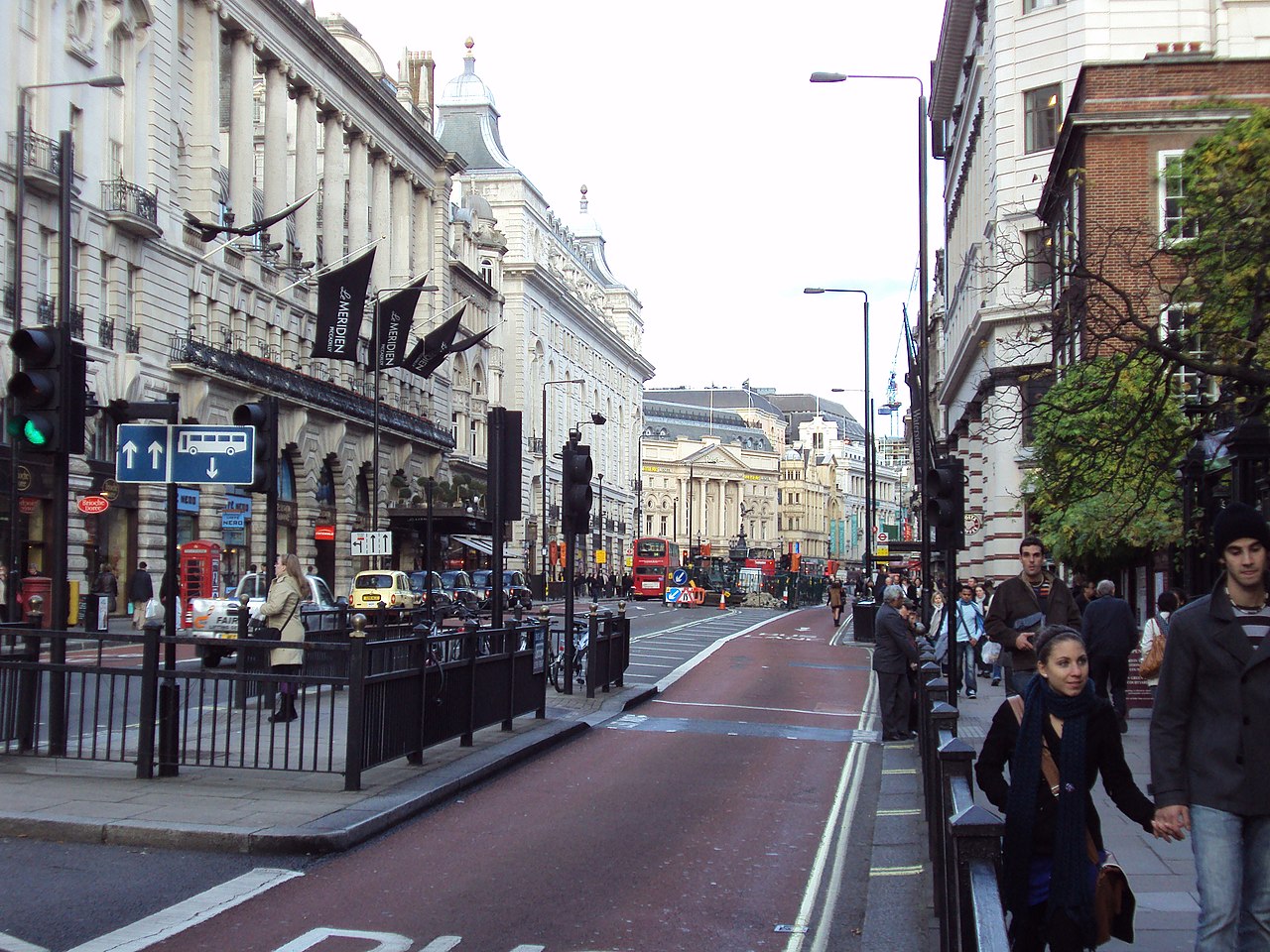
Piccadilly is a major street in central London that runs roughly east–west between Hyde Park Corner and Piccadilly Circus. Lying wholly within the City of Westminster, the road forms a boundary between several well known districts: Green Park and Hyde Park lie to the west, Mayfair is to the north and St. James's occupies parts of the southern side of its eastern length. Piccadilly functions today as both a traffic route and a focal point for shopping, hospitality and cultural attractions in the heart of the city.
Image gallery
10 Images





Origins and development
The street's name is commonly thought to derive from an early 17th‑century fashion accessory called a "piccadill" or "pickadil"—a stiff lace or collar—made by tailors who owned land in the area. Over subsequent centuries Piccadilly evolved from a semi-rural lane outside the medieval city into a fashionable address lined with townhouses, clubs and shops. Its prominence increased with the expansion of London westwards and the development of nearby parks and squares.
Notable buildings and institutions
Piccadilly hosts a mix of commercial and cultural institutions. Among the most widely recognised are:
- Fortnum & Mason — a historic grocer and department store noted for luxury foods and hampers.
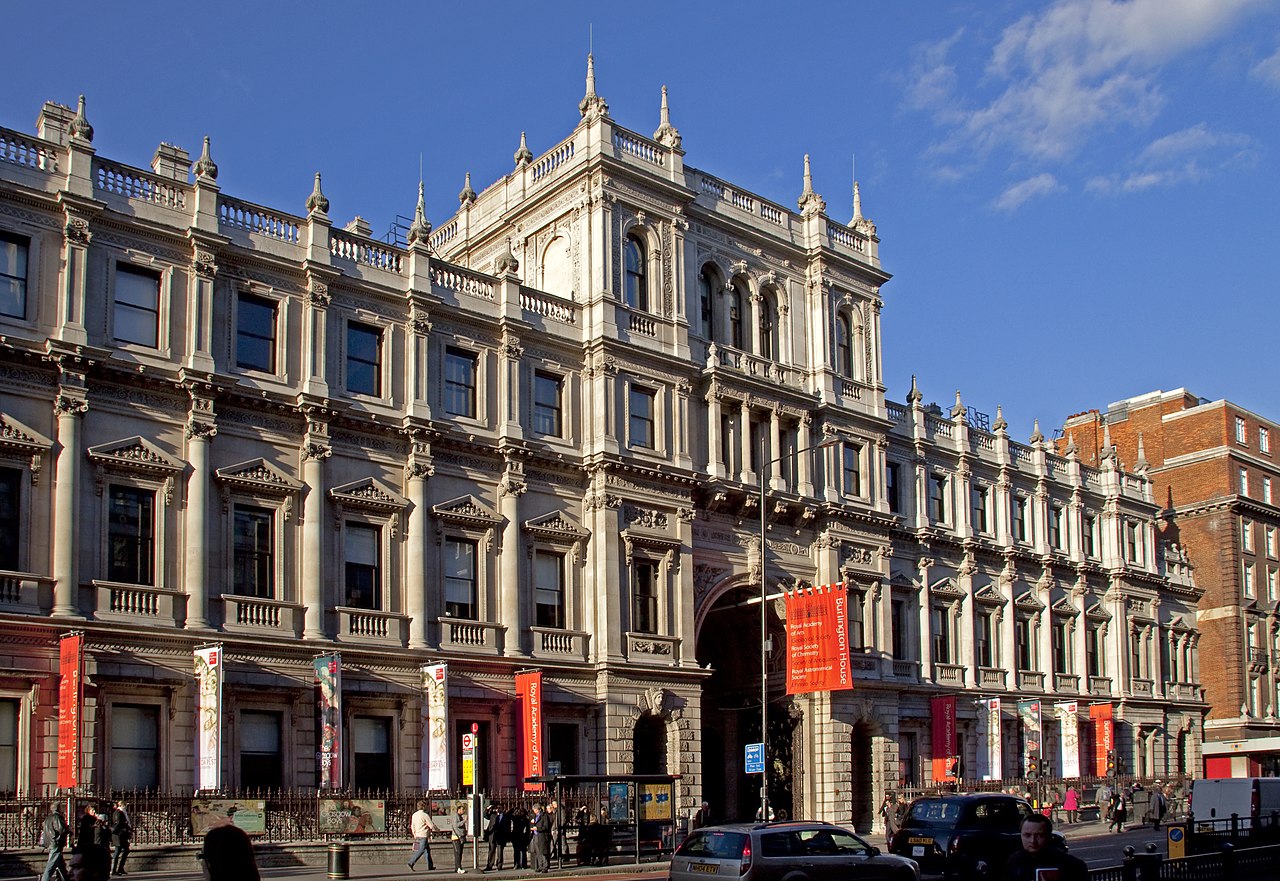
- The Royal Academy — the arts institution and exhibition venue located on the street at Burlington House (Royal Academy).
- The Ritz Hotel — an iconic luxury hotel associated with high society and formal dining.
- Hatchards — one of London's oldest bookshops, still trading near Piccadilly Circus.
- RAF Club and other private clubs that reflect the area's long association with elite social life.
- Former department and clothing stores such as Simpsons, whose site later became a flagship of the bookseller Waterstone's.
Transport, urban character and cultural role
Piccadilly is served by several London Underground stations nearby and is a conduit for buses and taxis crossing central London. The eastern terminus at Piccadilly Circus forms a major pedestrian and tourist hub known for illuminated signs and the meeting point beneath Eros; the western end connects with major arterial routes at Hyde Park Corner. Architecturally the street displays a variety of styles from Georgian terraces to early 20th‑century hotels and interwar commercial buildings.
Importance and distinctions
Beyond its commercial role, Piccadilly is notable for its concentration of long‑established British retailers and cultural venues that attract both residents and visitors. Its location next to parks, squares and prestigious neighbourhoods such as Mayfair makes it an enduring part of central London's identity. The street also reflects broader changes in urban life—retail patterns, transport improvements and shifting fashions—while retaining several historic institutions emblematic of London's civic and social history in the capital.
For visitors and researchers, Piccadilly offers an accessible cross‑section of London's commercial, cultural and architectural history and remains a busy, recognisable artery within the city centre, linking leisure spaces with business and hospitality destinations across the United Kingdom.


Places of interest
Fortnum & Mason (number 181), which specialises mainly in groceries, was founded in 1707 by William Fortnum and Hugh Mason. Today it is considered one of the most luxurious department stores in the city.
Opened in 1906, the Ritz Hotel (number 150) is considered one of the most prestigious luxury hotels in the world. The neoclassical architecture was based on the design of the houses on the Rue de Rivoli in Paris; the design came from the architects Arthur Davis and Charles Mewès and the engineer Sven Bylander. It was the first hotel in the country with a private bathroom by each hotel room.
Cambridge House, No 94, is a former 18th century Palladian style town palace.
The Royal Academy of Arts (number 50-52) has been located in Burlington House on Piccadilly since 1868.

Traffic
The Piccadilly Line of the London Underground runs under the street and opens it up with the stations Piccadilly Circus, Green Park and Hyde Park Corner. In addition, numerous bus lines run along the street, including lines 9, 14, 19, 22 and 38 (as of August 2005).
Questions and answers
Q: What is Piccadilly?
A: Piccadilly is a major street in central London.
Q: What is the location of Piccadilly?
A: Piccadilly is completely within the City of Westminster in London.
Q: What is located to the south of the eastern section of Piccadilly?
A: St. James's is located to the south of the eastern section of Piccadilly.
Q: What overlooks Green Park on Piccadilly?
A: The western section of Piccadilly overlooks Green Park.
Q: What is the area to the north of Piccadilly?
A: The area to the north of Piccadilly is Mayfair.
Q: What are some notable landmarks located on Piccadilly?
A: Fortnum & Mason, the Royal Academy, The Ritz Hotel, the RAF Club, Hatchards book shop, and Waterstone's flagship shop (formerly the Simpsons clothing store) are notable landmarks located on Piccadilly.
Q: When did Simpsons clothing store close on Piccadilly?
A: Simpsons, once amongst the United Kingdom's leading clothing stores, closed on Piccadilly in 1999.
Related articles
Author
AlegsaOnline.com Piccadilly: central London avenue, history, landmarks and cultural role Leandro Alegsa
URL: https://en.alegsaonline.com/art/76715