
Photoreceptor cell
Specialized sensory neurons that detect light and begin visual signaling. Includes vertebrate rods and cones, diverse in other animals, and central to vision, phototransduction, disorders and bioengineering.
Overview
A photoreceptor cell is a specialized nerve cell that detects light and converts it into an electrical signal. Photoreceptors are tuned to particular wavelengths and intensity ranges, enabling organisms to sense brightness, motion and color. They form the first stage of visual processing in eyes and simple light-sensing organs.
Image gallery
5 Images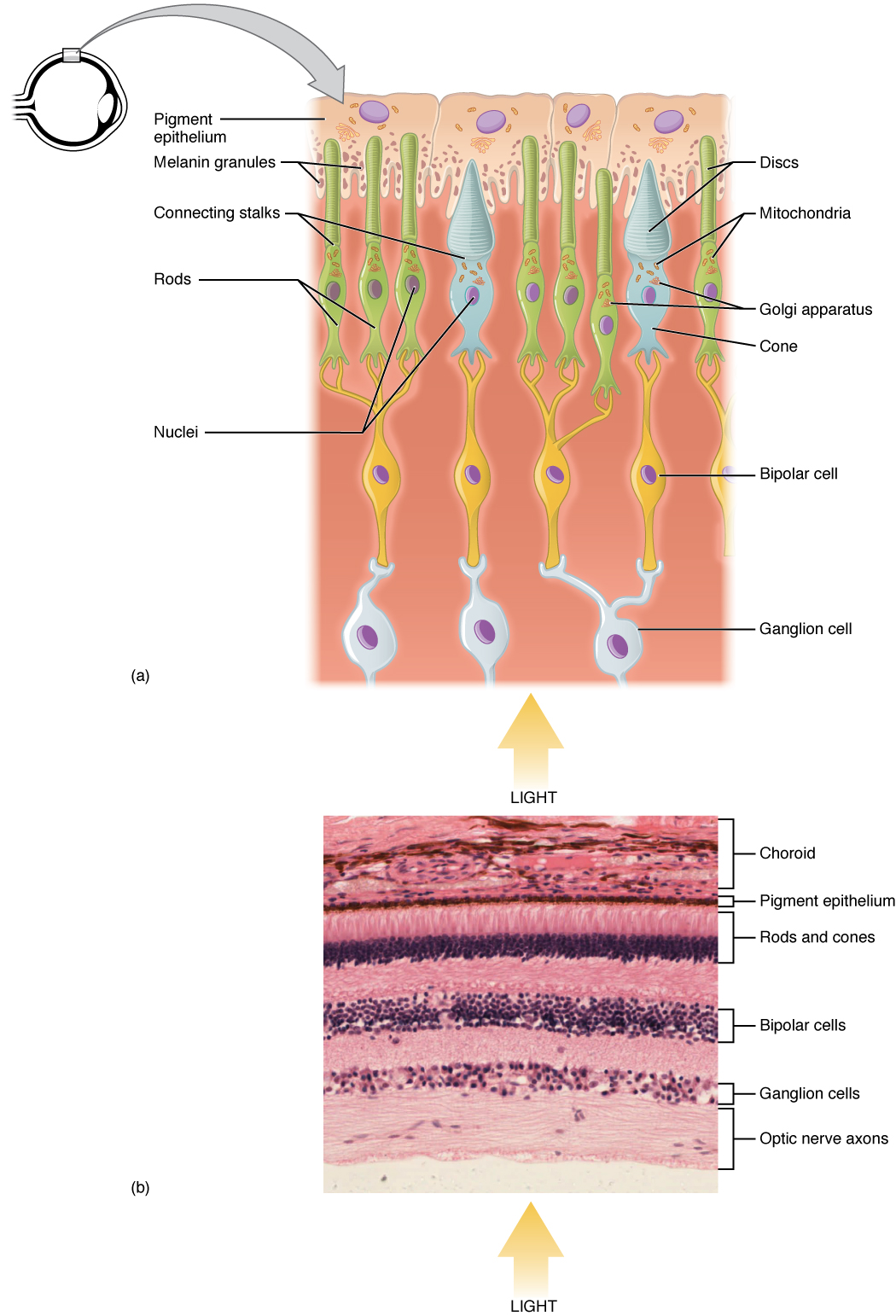


Structure and main types
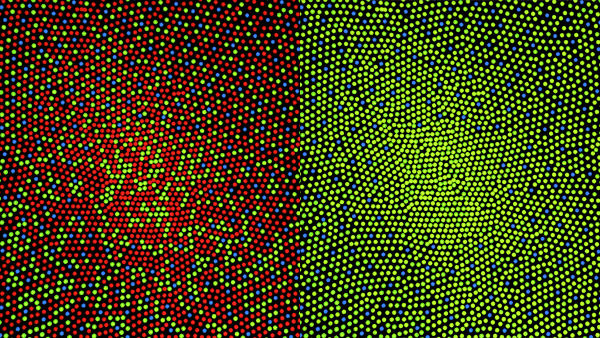
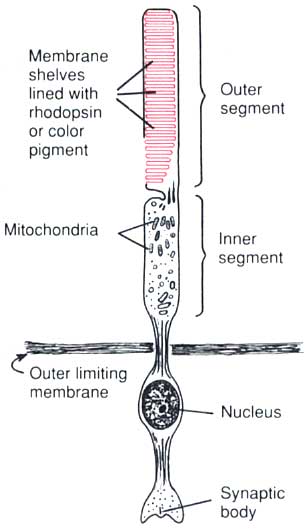
In vertebrates the two principal kinds are rods and cones. Rods are highly light-sensitive and mediate dim-light (scotopic) vision, while cones support bright-light (photopic) vision and color discrimination; humans typically have three cone types sensitive to different parts of the spectrum. Each photoreceptor contains a light-sensitive pigment (an opsin protein bound to a retinal chromophore) within stacked membrane discs or folds.
Phototransduction and signaling
Absorption of a photon changes the shape of retinal, alters the opsin, and triggers a biochemical cascade that changes ion channel activity and the cell's membrane potential. In vertebrate rods and cones this leads to a change in neurotransmitter release onto bipolar and horizontal cells in the retina, beginning neural circuits that produce perception.
Variations, evolution and distribution
- Many invertebrates use rhabdomeric photoreceptors with different cellular architecture and signaling molecules.
- Opsin gene families are ancient and diversified across animal lineages, giving rise to different spectral sensitivities.
- Within vertebrate retinas, photoreceptor density and type vary (for example, a high cone density in the fovea supports high visual acuity).
Importance, disorders and applications
Photoreceptors are essential for vision; their dysfunction causes conditions such as color vision deficiencies, retinitis pigmentosa and age-related macular degeneration. They are also focal points for biomedical technologies: retinal implants, gene therapies, and optogenetics aim to restore or manipulate light sensitivity. Researchers study photoreceptor physiology to understand sensory coding and to design light-sensitive tools for neuroscience and medicine.
Notable facts
- Multiple photoreceptor types and pigments underlie color vision across species.
- Rods and cones differ not only in sensitivity but in response kinetics and synaptic connections.
- Study of photoreceptors bridges molecular biology, neurophysiology and evolutionary biology.
Related articles
Author
AlegsaOnline.com Photoreceptor cell Leandro Alegsa
URL: https://en.alegsaonline.com/art/76610