
Phylogeny: the study and representation of evolutionary relationships
Phylogeny describes hypotheses about how organisms are related through common descent and the methods used to reconstruct those relationships from fossils, anatomy, and molecular data.
Overview
Phylogeny is the scientific inference of how organisms are related through their evolutionary history. It frames those relationships as patterns of descent from common ancestors and produces hypotheses that can be tested and revised as new data appear. The discipline that builds and evaluates these hypotheses is often called phylogenetics.
Image gallery
10 Images




Evidence and methods
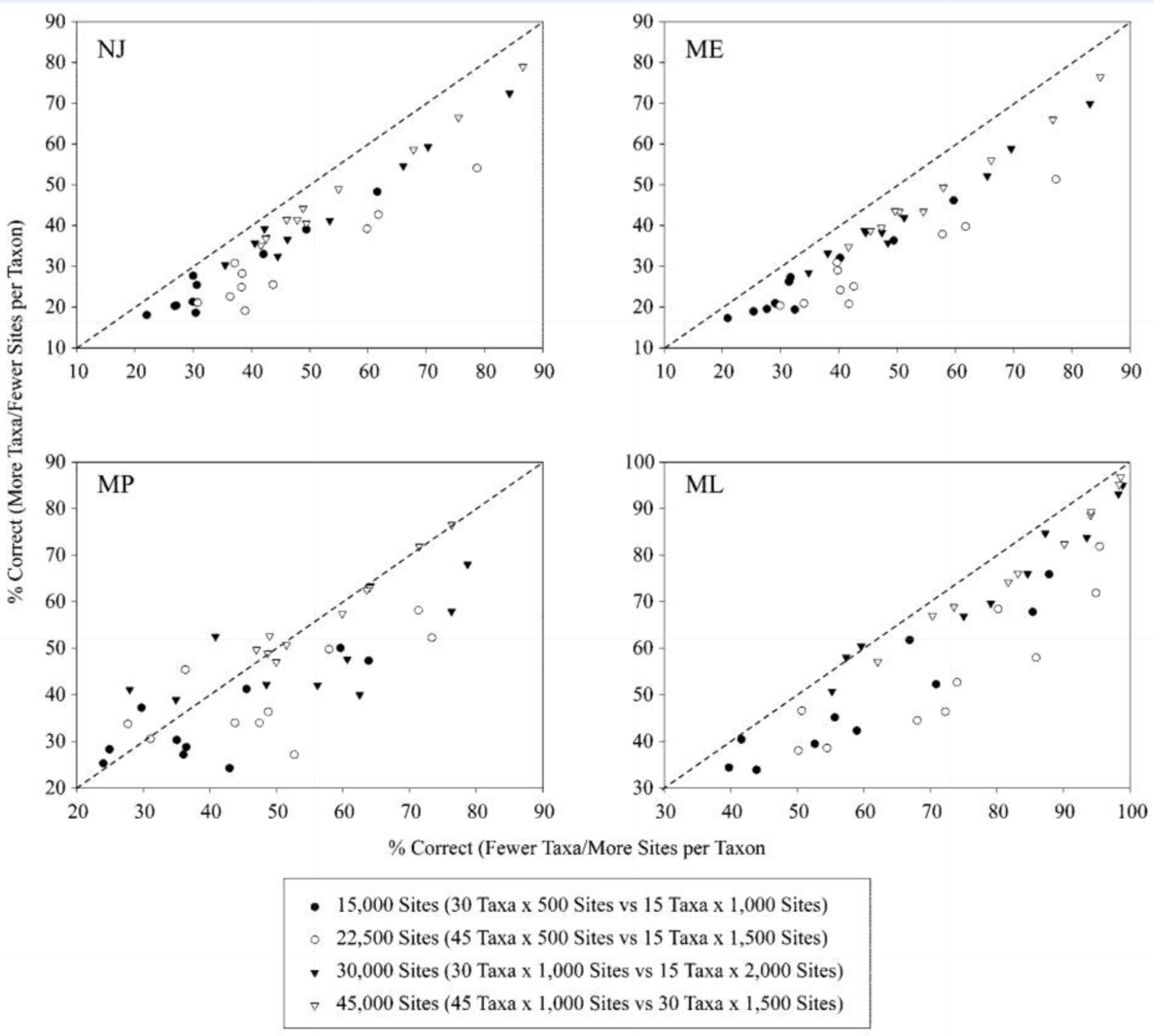
Information supporting phylogenies comes from multiple sources. Paleontology supplies fossil evidence of extinct forms and temporal context. Comparative anatomy records shared structures and developmental patterns. Molecular biology contributes DNA and protein data, especially through DNA and sequence analysis. Researchers combine these strands of evidence using statistical and computational methods to infer branching patterns and to estimate when divergences occurred.
Trees and their interpretation
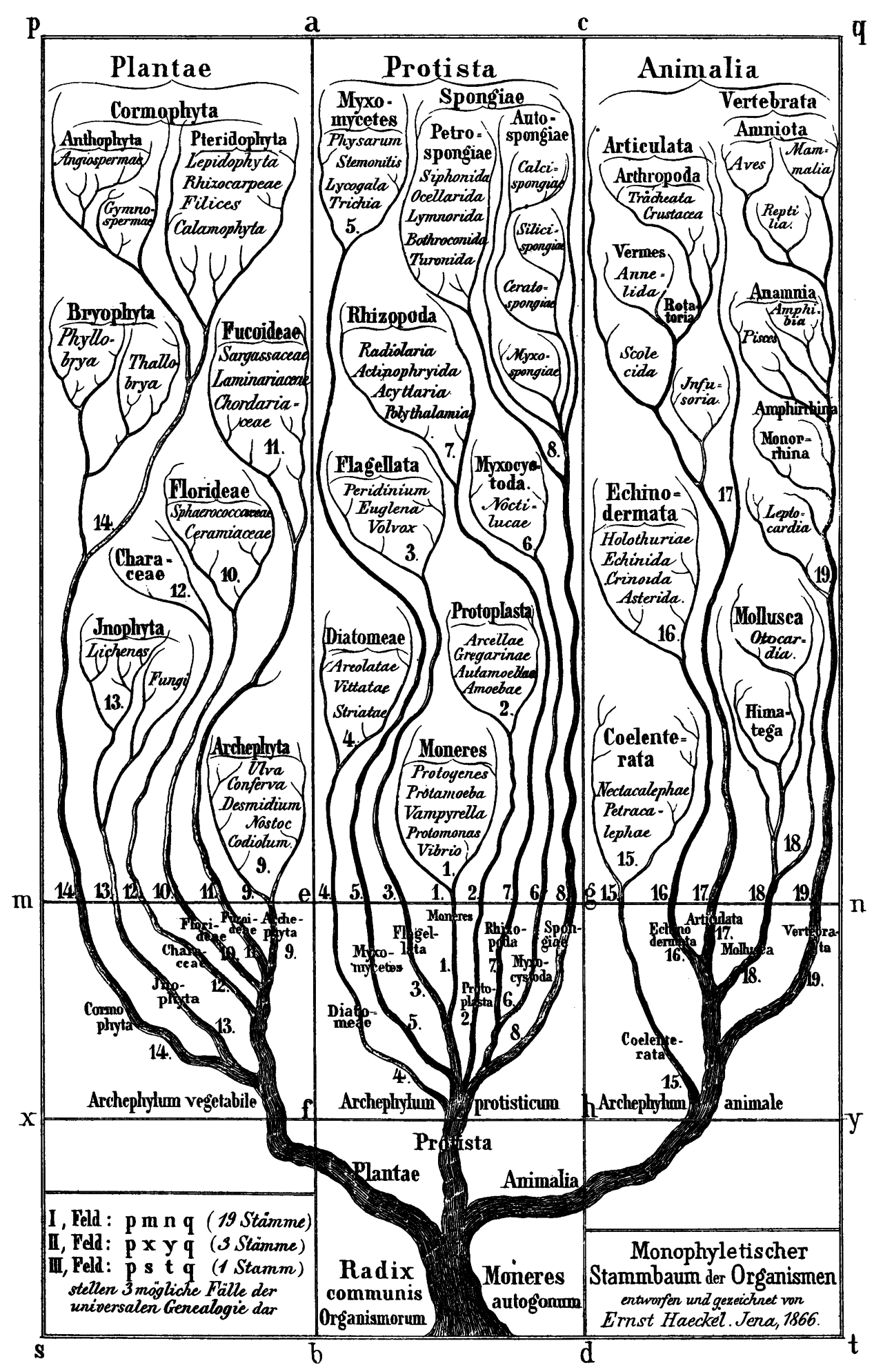
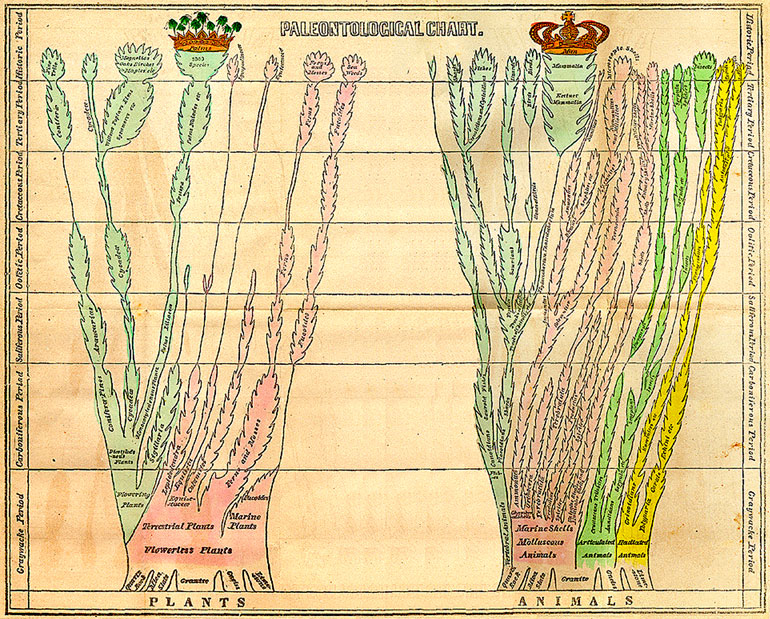
The primary output is a phylogenetic tree or a tree of life representation. Trees show hypothesized ancestor–descendant relationships: nodes represent common ancestors, branches represent lineages, and tips represent living or sampled taxa. Different diagram types (cladograms, phylograms, chronograms) emphasize relationships, branch length, or time. Trees may be rooted to indicate direction of descent or left unrooted when the root is uncertain.
History and development
Ideas about relatedness predate modern genetics; classification systems aimed to group similar organisms. The concept of common descent became central after evolutionary theory matured, and later methodological advances—especially numerical methods and molecular sequencing—transformed phylogenetics into a quantitative science. Modern phylogenetics blends traditional comparative approaches with algorithmic tree-building and model-based inference.
Uses, examples, and importance
- Biological classification: phylogeny informs natural groupings used in biological classification.
- Conservation biology: identifying distinct evolutionary lineages can guide preservation priorities.
- Epidemiology and public health: molecular trees track pathogen spread and origin.
- Biogeography and comparative biology: phylogenies help reconstruct trait evolution and geographic history.
Challenges and notable distinctions
Phylogenetic reconstruction faces limits: incomplete fossil records, conflicting signals among genes, and processes such as horizontal gene transfer or hybridization can obscure simple branching patterns. Important distinctions include the difference between taxonomy and phylogeny (classification versus inferred relationships) and the concepts of monophyly, paraphyly and polyphyly used to evaluate groups. As methods and data improve, phylogenies are refined, but they remain testable hypotheses rather than final truths.
Researchers and readers can follow summaries and technical resources to explore methods and case studies; for foundational terms see common descent, comparative anatomy, and broader summaries of evolutionary history or general evidence collections.
Phylogeny is therefore both a framework for organizing biological diversity and a dynamic field that integrates fossils, form, and molecules to trace life's history.
Questions and answers
Q: What is a phylogeny?
A: A phylogeny is a proposal of how organisms are related by their evolutionary history.
Q: What is the evidence for phylogeny?
A: The evidence for phylogeny comes from palaeontology, comparative anatomy, and DNA sequence analysis.
Q: What is the main product of phylogenetics?
A: The main product of phylogenetics is a phylogenetic tree or tree of life.
Q: What is a phylogenetic tree or tree of life?
A: A phylogenetic tree or tree of life is a diagram showing a pattern of ancestor/descendent relationships.
Q: What information may be related to geological periods or estimated dates in a phylogenetic tree?
A: Information related to geological periods or estimated dates may be shown in a phylogenetic tree.
Q: What is another type of product of phylogenetics?
A: Another type of product of phylogenetics is a biological classification.
Q: How are all living things related?
A: All living things are related by common descent.
Related articles
Author
AlegsaOnline.com Phylogeny: the study and representation of evolutionary relationships Leandro Alegsa
URL: https://en.alegsaonline.com/art/76634