
Phonology: the study of sound systems in language
Phonology examines the sound systems of languages: how sounds are organized, contrast to create meaning, and the patterns of syllables, stress, and intonation across languages.
Overview
Phonology is a subfield of linguistics concerned with how sounds function within particular languages. Rather than describing individual physical events, phonology analyzes the abstract, systematic properties that allow speakers to distinguish meaning. It asks which differences in sounds are contrastive, how those contrasts are organized into inventories, and how sounds pattern together to form syllables, words, and larger prosodic units.
Image gallery
3 Images

Core concepts
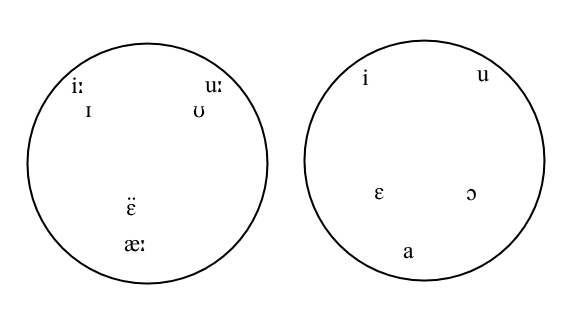
Central notions include the phoneme, a minimal contrastive unit (often discussed in introductions to phonemes), and the phone, an actual instance of a sound produced in speech. When two phones can distinguish two words in a language, they are considered separate phonemes. Variants of a phoneme that do not change meaning are allophones. Phonology also deals with distinctive features (such as voicing or place of articulation), syllable structure, stress patterns, tone, and intonation.
Methods and data
Phonologists use native speaker judgments, field recordings, corpus analysis, and laboratory experiments to identify contrasts and distributions. They draw on acoustic and articulatory evidence from phonetics to inform abstract accounts, but retain a focus on the language-specific rules and constraints that govern sound alternations, neutralization, and assimilation.
Theoretical perspectives
The field encompasses several frameworks. Classical structural approaches emphasized inventories and minimal pairs. Rule-based models described alternations with ordered transformations. Constraint-based theories propose ranked universal constraints that languages satisfy to varying degrees. Autosegmental and nonlinear representations handle multi-tier phenomena such as tone and vowel harmony.
Change, acquisition, and application
Phonology intersects with historical linguistics in studies of sound change, with language acquisition in research on how children learn sound categories, and with applied areas like orthography design, speech-language pathology, and speech technology. Practical outcomes include better literacy materials, diagnoses for speech disorders, and improved speech recognition and synthesis systems.
Further reading and practice
- Introductory textbooks and surveys that contrast phonology and phonetics.
- Field reports documenting phoneme inventories and allophonic rules for understudied languages.
- Experimental work linking perception and production data to formal analyses.
- Teaching materials that illustrate contrasts at the level of words and sentences.
For accessible summaries, consult general references in linguistics and discipline-specific overviews on sound systems and sound organization. Practical corpora and datasets for phonological analysis are available through many research portals and archives (speech resources), while targeted discussions of phoneme theory and contrasts remain central to teaching and research (phonemes). For applied aspects, resources on writing systems and clinical practice are helpful starting points (language care and literacy).
Related articles
Author
AlegsaOnline.com Phonology: the study of sound systems in language Leandro Alegsa
URL: https://en.alegsaonline.com/art/76562