
Speech (spoken language): production, characteristics and disorders
Concise overview of human speech: how spoken language is produced, its components and features, developmental and clinical aspects, and how it differs from other animal communication.
Overview
Speech is the human use of spoken language to convey thoughts and information. It relies on coordinated biological systems to generate sound and on learned linguistic structures to organize meaning. While many animals communicate using calls, gestures or signals, human speech is typically characterized by complex, rule-governed combinations of discrete sound units that express abstract and compositional meanings; see also public speaking for formal spoken presentation.
Image gallery
1 Image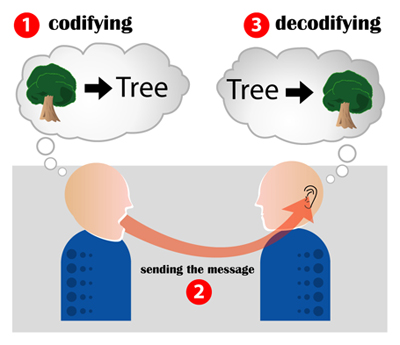
How speech is produced
Physiologically, speech begins with airflow from the lungs. The airflow passes through the larynx, where the vocal folds (vocal cords) vibrate to create voiced sound. This source signal is then modified by the vocal tract — the configuration of the jaw, tongue, teeth, hard and soft palate, lips and nasal passages — to produce the distinctive speech sounds of a language. These physical structures are often called articulators; the soft palate is one important articulator for directing sound into the mouth or nose (palate).
Key components and processes
Producing intelligible speech requires several linked operations. A common way to describe them is as a sequence of stages:
- selection of the appropriate speech sounds or units (phonemes) for the intended message;
- sequencing these units into syllables and words according to the language's phonology and grammar;
- phonation — generating sound by vibration of the vocal folds;
- articulation — shaping that sound with the tongue, lips, teeth, palate and nasal cavity.
Beyond segmental sounds, speech also depends on prosody: pitch, loudness, rhythm and timing, which convey emphasis, emotion and sentence type (for example, statement vs question).
Development, history and distinctions
Children typically acquire speech gradually as they learn the sound system and grammar of their language and gain motor control of the articulators. Historically, humans have used speech for everyday interaction, ritual, storytelling and governance; recorded study of speech informed fields such as phonetics, linguistics and communication sciences. Important distinctions in the study of speech include speech (the physical production of sound), language (the abstract system of symbols and rules), and voice (the acoustic and perceptual qualities of a speaker's sound).
Uses, disorders and support
Speech is essential for social interaction, education, and many professions. Some people experience difficulties at one or more stages of speech production: problems selecting or sequencing sounds, producing vocal fold vibration, or articulating with the oral structures. These difficulties can arise from developmental conditions, neurological injury, hearing loss, structural differences, or temporary issues. A trained professional such as a speech and language therapist assesses which stage is affected and recommends intervention.
- Common goals in therapy include improving fluency, accuracy, flexibility and comprehensibility.
- Therapies may target muscle control, sound discrimination, motor planning, or language strategies.
Comparisons and notable facts
Non-human animals use signals and gestures to convey information, and some species show impressive vocal learning or referential signaling, but their communication systems typically lack the same level of combinatorial grammar found in human languages (animals and sounds and gestures). For readers seeking more on spoken language as a broader topic, see resources on spoken language and on human communication and semantics (communication).
Research in phonetics, neurolinguistics and speech science continues to refine our understanding of how speech is produced, perceived and impaired, and how technology — from amplification devices to speech synthesis and recognition — can support communication across different contexts.
Questions and answers
Q: What is speech?
A: Speech is the use of spoken language to communicate.
Q: Which creatures have speech?
A: Only humans have language and therefore, speech.
Q: How do animals communicate with each other?
A: Although animals do not have speech, they can communicate with each other using various sounds and gestures.
Q: How is speech produced?
A: Speech is produced by the vibration of sounds through the vocal folds, with shaping by the jaw, tongue, teeth, palate, lips, and nose.
Q: What are the stages in the process of making speech?
A: There are four stages in the process of making speech: choosing speech sounds, putting them into a sequence, producing sound in the voice box, and using the lips, tongue, teeth, nose, and palate to shape the sounds.
Q: What can happen if there are difficulties in the process of making speech?
A: Difficulties can happen at any of the four stages of the process of making speech. A speech and language therapist can help identify the stage that has difficulties and provide therapy.
Q: What are the elements of effective speech?
A: The elements of effective speech include fluency, flexibility, accuracy, and comprehensibility.
Related articles
Author
AlegsaOnline.com Speech (spoken language): production, characteristics and disorders Leandro Alegsa
URL: https://en.alegsaonline.com/art/92593