
Philip Larkin: English poet, novelist and librarian
Philip Larkin (1922–1985), English poet and novelist noted for spare diction, wry realism and themes of mortality and ordinary life; long-serving University of Hull librarian and major post‑war literary figure.
Philip Arthur Larkin (9 August 1922 – 2 December 1985) was an English poet and novelist whose work became central to post‑war British letters. He combined precise, unadorned language with recurring concerns about time, death, solitude and the disappointments of everyday life. Larkin received public honours in his lifetime and remains widely taught and anthologized; for institutional and biographical references see honours and records and an overview entry at official notices.
Early life and education. Larkin was born and raised in Coventry in the English Midlands and spent his childhood in that region; further local context is available at Coventry and Warwickshire. He studied English at St John’s College, Oxford, where he read widely in language and literature; see the college pages at St John’s College and the university overview at Oxford for institutional background.
Career and style. Although Larkin wrote two early novels, he is best known for his poetry: compact, formally controlled, often conversational and darkly comic. He served for many years as a librarian at the University of Hull, a post that allowed him time for writing and editorial work; the university library and its history are documented at University of Hull Library and the city context at Hull. Critics place him among the post‑war writers who favoured clarity and sceptical tone; concise discussions of his poetic approach can be found at English studies entries and poetry surveys.
Image gallery
10 Images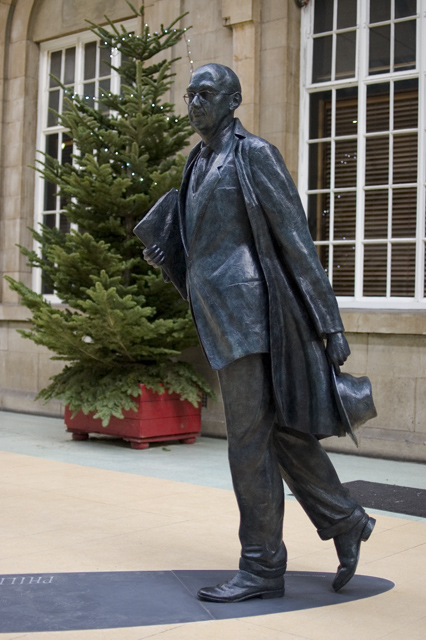
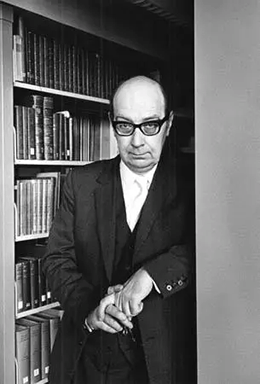




Selected works and forms
- Early novels — two interwar/postwar novels that show narrative interest in ordinary lives.
- Major poetry collections — volumes of short, formally attentive poems that made his reputation.
- Notable poems frequently anthologized include pieces often taught under titles such as "The Whitsun Weddings," "Church Going," "Aubade" and "This Be The Verse"; critical notes are available at poems and criticism.
Legacy and reception. Larkin’s reputation is twofold: he is celebrated for technical control, tonal range and memorable lines, yet his personal correspondence and some public statements have prompted debate about his attitudes and provoked reassessment by readers and scholars. He died in Hull; local notices and biographical summaries appear at death and legacy and the broader cultural appraisal is discussed in general reference guides at Hull cultural pages.
Further resources. For biographies, collected editions and archives consult institutional and bibliographic guides: biographical resource 1, biographical resource 2, academic introductions at academic overview, poetry anthologies and editorial notes at anthology entry, the university special collections at Hull Special Collections, and other reference materials listed at bibliography, local history, college records, university archives, and critical essays.
Related articles
Author
AlegsaOnline.com Philip Larkin: English poet, novelist and librarian Leandro Alegsa
URL: https://en.alegsaonline.com/art/76438
Sources
- britannica.com : Encyclopedia Britannica