
Order of the Companions of Honour
A British order established in 1917 to recognise remarkable contributions to arts, science, public life and other fields across the Commonwealth; limited membership and distinctive insignia.
Overview
The Order of the Companions of Honour is a British honour created to recognise long-term, distinguished service in a wide range of fields across the Commonwealth. It celebrates achievement rather than rank and is intended for people whose work has had a sustained, national or international impact. The order emphasises service in creative, intellectual and public spheres including arts, literature, music, science, politics, industry and religion.
Image gallery
9 Images




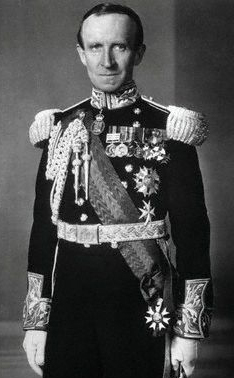


Origins and development
The order was instituted by King George V in 1917 during the First World War as part of a wider modernisation of honours. It was created to complement existing orders by providing recognition for individuals whose contributions did not fit neatly into other honours systems. Over time it has been conferred on artists, scientists, public servants and community leaders from across the realms.
Membership, limits and types
Membership is deliberately exclusive. The number of Companions of Honour is limited in statute to 65 living members, a figure that preserves the order's selectivity. Early allocations allowed a majority from the United Kingdom with specific places reserved for other dominions — originally including representatives from Australia and New Zealand and additional places for other Commonwealth countries. Persons who are not subjects of the Crown may be appointed as honorary members.
Insignia and styles
The badge is an oval medallion depicting an oak tree, from which hangs a shield of the royal arms and, to the left, the figure of a mounted knight in armour. Around the light-blue border is the order's motto: "IN ACTION FAITHFUL AND IN HONOUR CLEAR." Men traditionally wear the badge suspended from a ribbon around the neck while women wear it on a bow at the left shoulder. Membership does not confer a title or entitlement to a specific place in formal precedence, but members may use the post-nominal letters CH.
Purpose and significance
The order recognises a lifetime or career of achievement rather than a single act. Recipients are often cited for the way their work has influenced public life, culture, or the advancement of knowledge. Because the list is small, induction is considered a high honour and is usually announced in conjunction with national honours lists or royal announcements.
Practical notes and notable features
- The order is senior to many other civil distinctions but is itself non-titular.
- Appointments can be recommended by government ministers, cultural bodies, or the Crown.
- Honorary members remain recognised but do not count towards the statutory limit of 65 living Companions.
- Design details and modes of wear are traditional and vary little between male and female recipients.
The Order of the Companions of Honour remains an important mechanism for acknowledging exceptional contribution to cultural, scientific and civic life across the Commonwealth and continues to be awarded to figures whose influence is judged to be enduring and of broad benefit.
For official descriptions, lists of members and appointment procedures consult institutional resources and honours lists via authoritative sources: Commonwealth resources, cultural reference sites such as those covering the arts and science, and governmental pages on national honours in the United Kingdom and other realms. Additional background appears in biographies of recipients and historical summaries of honours systems.
See also: nomination processes, insignia descriptions and guidance on wearing royal honours from official protocol offices and national archives for further detail.
Questions and answers
Q: What is the Order of the Companions of Honour?
A: The Order of the Companions of Honour is a British award given to citizens of the Commonwealth founded in 1917 by King George V.
Q: Who is eligible to become a Companion of Honour?
A: Citizens of the Commonwealth and honorary members from outside the realm are eligible to become a Companion of Honour.
Q: What fields are recognized for outstanding achievements?
A: Outstanding achievements in the arts, literature, music, science, politics, industry or religion are recognized.
Q: What is the maximum number of Companions of Honour?
A: The order is limited to 65 Companions of Honour.
Q: Can recipients of the order use a title?
A: Membership of the order gives no title or precedence, but recipients can put the post-nominal letters "CH" after their names.
Q: What is the insignia of the Order of the Companions of Honour?
A: The insignia of the Order consists of an oval medallion with an oak tree, a shield with the royal arms hanging from one branch, and on the left a mounted knight in armor.
Q: How do men and women wear the badge of the Order?
A: Men wear the badge on a ribbon (red with golden border threads) around their necks, and women on a bow at the left shoulder.
Related articles
Author
AlegsaOnline.com Order of the Companions of Honour Leandro Alegsa
URL: https://en.alegsaonline.com/art/73018
Sources
- direct.gov.uk : Order of Wear