
Petrified Wood: Fossilized Trees and the Process of Petrification
Petrified wood is wood that has undergone mineral replacement and permineralization, preserving original structure in stone. This article covers formation, composition, uses, and notable occurrences.
Petrified wood is wood that has been transformed into stone through natural processes of mineralization. Unlike flattened or impression fossils, petrified wood preserves three-dimensional cellular structures, growth rings and bark detail. It is a type of fossilized remains in which the organic tissues are replaced or filled by inorganic minerals, most commonly silicate compounds. The result can range from a faithful replica of the original wood to material whose chemistry and color are dominated by trace elements.
Image gallery
10 Images

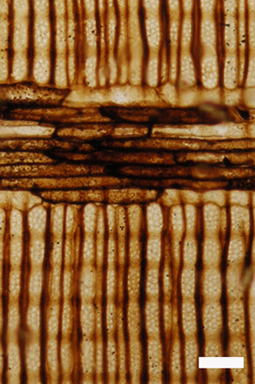


Formation and Processes
The typical pathway to petrifaction begins when wood is buried rapidly—by volcanic ash, sediment, or flood deposits—so that air and microbial decay are limited. Low availability of oxygen helps preserve cellular detail long enough for mineral-bearing waters to penetrate. Two main mechanisms operate: permineralization, where pore spaces are infilled by minerals, and replacement, where cell walls are gradually substituted by minerals. Silicification, a form of permineralization involving dissolved silica, is especially common; silica is a type of silicate and often crystallizes as quartz or chalcedony within the wood matrix.
Characteristics and Identification
Petrified wood retains anatomical features such as growth rings, vessel and tracheid patterns, and occasionally bark or root structures. When cut and polished it often displays vivid colors from iron, manganese, copper and other elements. Surface texture, density and the presence of crystalline minerals distinguish petrified specimens from regular rocks. Microscopic study of cell patterns is used to identify the original plant group.
Uses, Scientific Value, and Notable Sites
- Scientific research: preserves details of ancient forests, climate indicators and plant evolution.
- Educational and display: museum specimens illustrate fossilization processes.
- Decorative and lapidary uses: polished slabs, jewelry and ornamental pieces are common.
Renowned concentrations of petrified wood occur worldwide and are important both geologically and culturally. Field collections and protected parks allow study and public viewing while rules and conservation efforts prevent commercial destruction. For more background on the general terminology and classification used by paleobotanists, see a basic reference on fossil wood structure.
Distinctions and Notable Facts
Petrified wood differs from other fossil types such as compressions or casts because it preserves three-dimensional cellular detail rather than just surface impressions. Variants include opalized wood, where silica occurs as hydrated amorphous opal, and coalified wood, where carbonization dominates. Because mineral content varies, not all petrified wood has the same hardness or appearance: some pieces are suitable for cutting and polishing while others remain more friable.
Careful handling, documentation of locality, and adherence to legal protections are important when collecting or studying petrified wood. Interested readers can consult geological surveys and park resources for guidance and further reading on preservation and local regulations; additional contextual information is available through broader resources on fossils and mineralogy (fossils overview, mineral types, silicates, quartz varieties, wood anatomy, oxygen's role).
Related articles
Author
AlegsaOnline.com Petrified Wood: Fossilized Trees and the Process of Petrification Leandro Alegsa
URL: https://en.alegsaonline.com/art/76223