
Peridotite: an ultramafic igneous rock of the Earth's mantle
Peridotite is a coarse-grained, ultramafic igneous rock dominated by olivine and pyroxene; it is a major constituent of the upper mantle and important for mantle processes and mineral resources.
Overview: Peridotite is a coarse-grained igneous rock classified as ultramafic because it contains very low silica and abundant iron‑ and magnesium‑bearing minerals. In petrology texts it is described as a type of igneous rock composed primarily of mafic minerals rather than quartz or feldspar. The name is related to the gem peridot, which is gem-quality olivine, a dominant mineral in many peridotites: peridot.
Image gallery
8 Images
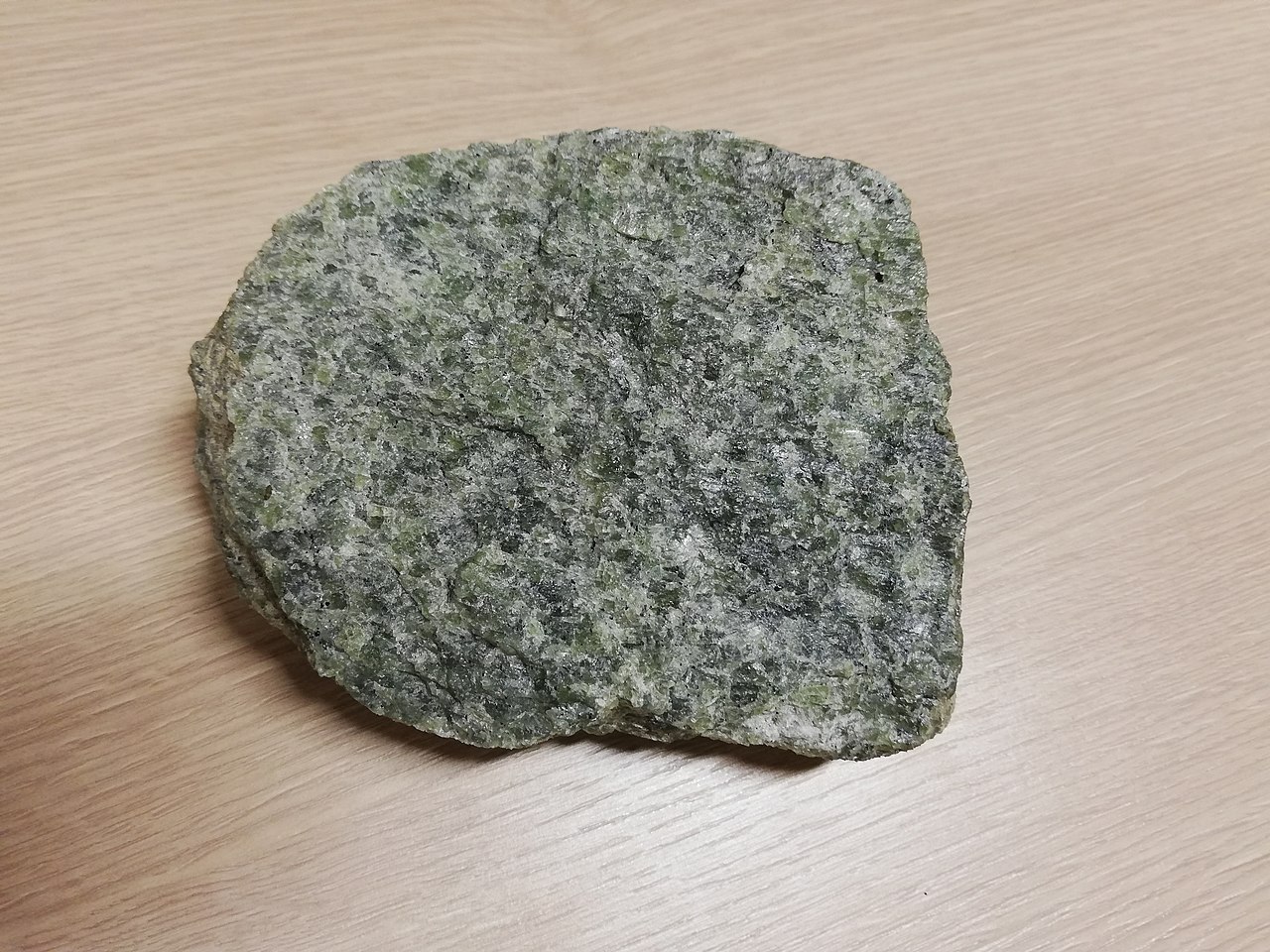


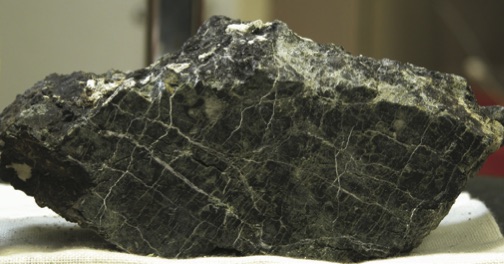
Characteristics and composition
Peridotite typically has a coarse, phaneritic texture and a dark green to black appearance. Its principal constituents are olivine and one or more types of pyroxene, and it may include accessory phases such as spinel or garnet. More generally, it is rich in the magnesium‑iron silicates classed as minerals that define mafic and ultramafic rocks. Textural and mineralogical variations produce named subtypes (for example dunite, harzburgite, and lherzolite).
Formation and occurrence
Peridotite forms deep in the Earth’s upper mantle as a residue left after partial melting; the melt products may ascend to form basaltic magma while the residual peridotite remains. It is the dominant rock of the upper mantle and is brought to the surface as fragments (xenoliths) in volcanic rocks, in tectonic slices called ophiolites, or in rare mantle‑derived intrusions. At the surface it often alters to serpentinite when hydrated.
Uses, importance and examples
Although not widely used as a building stone, peridotite is important scientifically and economically. It preserves direct evidence of mantle composition and processes, and peridotitic xenoliths are studied to understand melting, metasomatism, and mantle convection. Chromite and other ore minerals can occur in ultramafic bodies, and olivine crystals from peridotite are the source of the gem peridot. Peridotite interaction with seawater and atmosphere also plays a role in natural carbon sequestration through mineral carbonation.
Varieties and distinctions
Petrologists separate peridotite varieties by their dominant minerals: dunite is nearly all olivine, harzburgite is rich in olivine and orthopyroxene, and lherzolite contains olivine plus both orthopyroxene and clinopyroxene. Distinguishing peridotite from other igneous rocks hinges on its very low silica content and high magnesium/iron composition, which contrast with basaltic or granitic compositions.
For further background on rock classification and mineral details, consult introductory guides and field references. Peridotite provides a direct window into mantle chemistry and tectonic history and connects mineralogy, volcanology, and geodynamics in a single, widely studied rock type.
More on igneous rocks | Mineral groups | Olivine information | Pyroxene information | Peridot (gem)
Related articles
Author
AlegsaOnline.com Peridotite: an ultramafic igneous rock of the Earth's mantle Leandro Alegsa
URL: https://en.alegsaonline.com/art/75803