
Pareidolia: perceiving familiar patterns in ambiguous stimuli
Pareidolia is the tendency to perceive meaningful images, sounds, or patterns—especially faces—in ambiguous or random sensory input. It reflects normal pattern recognition and differs from hallucination.
Pareidolia is a perceptual phenomenon in which a real but ambiguous external stimulus is interpreted as a familiar object, face, or pattern. The term derives from Greek roots and describes how the human mind organizes noisy sensory information into recognizable shapes. Common everyday examples include seeing faces in clouds, rock formations, electrical outlets, or the so-called "man in the moon," and hearing words or melodies in background noise or reversed recordings.
Image gallery
10 Images
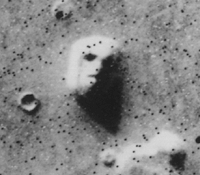


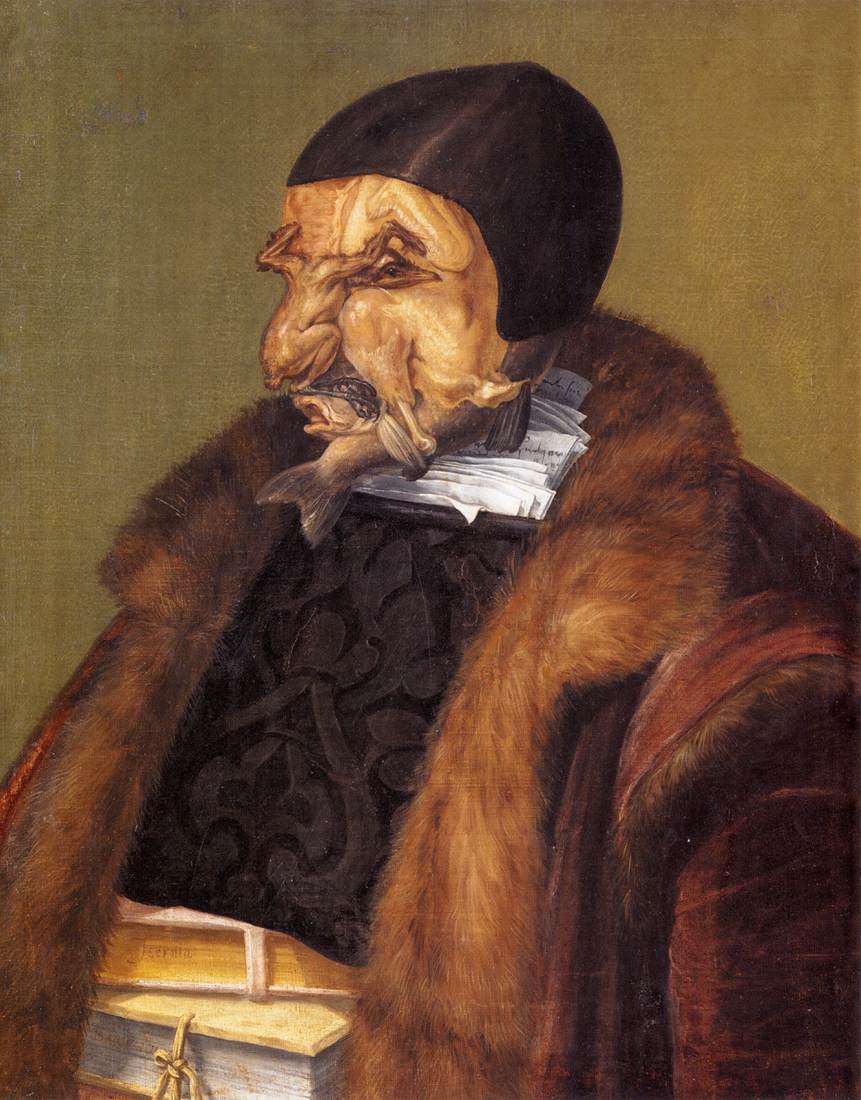
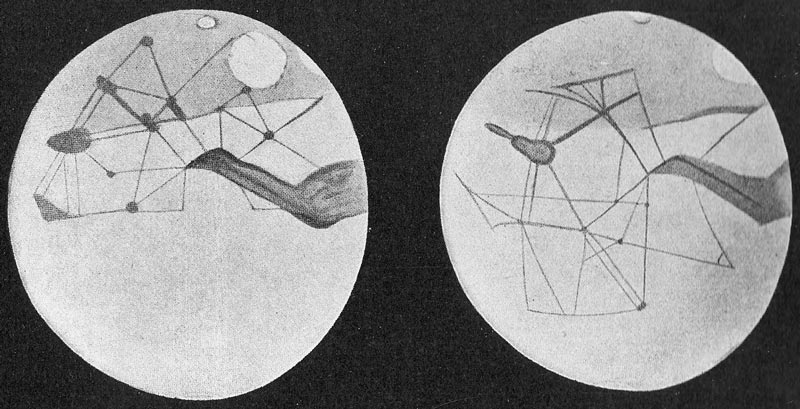

How pareidolia arises
Pareidolia reflects the brain’s bias toward rapid pattern recognition. Visual and auditory systems emphasize likely and behaviorally important interpretations of incomplete or noisy input. This tendency is shaped by prior experience, expectation, attention and the statistical regularities of the environment. Evolutionary accounts propose that fast detection of faces and agents offered survival advantages, so perceptual systems err on the side of detecting meaningful forms even when they are only suggested.
Neural and psychological basis
Neuroscientific studies link pareidolic face perception to face-sensitive areas of cortex and to top-down influences from memory and expectation. Experimental work distinguishes pareidolia from hallucination by the presence of an external stimulus that is misinterpreted rather than entirely created by the perceiver. Laboratory tasks measure the conditions that increase pareidolia, for example low-contrast images, ambiguous sounds, or priming with related concepts.
Examples and cultural significance
- Visual: faces in clouds, stains, tree bark, or everyday objects; symbolic images in natural patterns.
- Auditory: perceived words in noise, illusions in sped-up or reversed recordings, or hidden messages suggested by expectation.
- Cultural: instances of pareidolia have been interpreted religiously or artistically across cultures, influencing iconography, folklore and art.
Applications and distinctions
Understanding pareidolia matters for vision science, design and technology. Computer vision and pattern-recognition systems can produce pareidolia-like false positives, so engineers study these effects to reduce errors. Clinically, pareidolia is generally a normal perceptual bias and differs from hallucination, which lacks an external trigger. It is a specific form of apophenia and closely related to the clustering illusion: a tendency to find order in randomness.
For overviews and empirical summaries of research methods and findings, see related research summaries. Careful experimental work continues to refine how sensory information and cognitive expectations interact to produce the impressions we call pareidolia.
Related articles
Author
AlegsaOnline.com Pareidolia: perceiving familiar patterns in ambiguous stimuli Leandro Alegsa
URL: https://en.alegsaonline.com/art/74617