
Pathankot: Gateway City in Northern India
Pathankot is a city in Punjab, India, serving as a transport and military hub at the junction of Punjab, Jammu and Kashmir, and Himachal Pradesh and as a gateway to the western Himalaya.
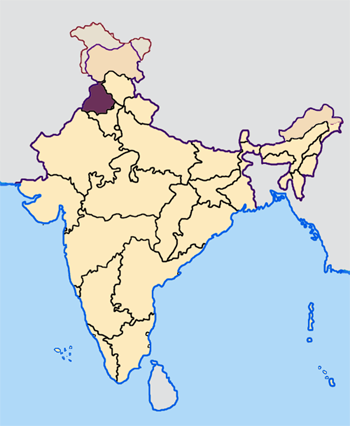
Pathankot is a city and municipal committee in the Gurdaspur district of the Indian state of Punjab. Locally it is known by its Punjabi name ਪਠਾਨਕੋਟ and appears in other regional scripts such as Pashto پټان کوټ. Administratively it sits in northern Punjab and is often described as a gateway between the plains of Punjab and the hill states to the north. The city is part of the broader Gurdaspur district and connects several important cultural and economic zones of the Punjab region.
Image gallery
7 Images


Geography and role
Located near the foothills where the plains meet the lower Himalaya, Pathankot occupies a strategic transit position. It lies close to state and international boundaries and has long served as a staging point for travel into the mountains. Because of its location and transport links it has featured in wider border and security discussions that have drawn international attention at times (see related records). The city is near the Chakki and Ravi river valleys and functions as a transport hub for travelers heading to hill destinations.
Infrastructure and institutions
Pathankot has developed significant transport and service infrastructure. Road and rail lines converge there, making it a common rail junction and highway node for routes toward Jammu, Kashmir and Himachal Pradesh. Its transport role supports commerce, tourism, and logistics. The city also hosts important defence establishments: it is home to various Indian defence units and has a sizeable military footprint, which underscores its strategic value strategic importance. Major defence organizations and units maintain a presence in and around the city defence forces, including army formations Indian Army and air force facilities air force, as well as large military installations military bases.
History and development
The modern settlement grew where routes from the plains entered the hills. Over time it evolved from a regional market town into an administrative and logistical centre. Its growth was shaped by trade, transport improvements and its proximity to hill stations and pilgrimage routes. Historical patterns of migration and commerce in the greater Punjab area contributed to the city’s multi‑cultural character.
Economy, tourism and travel
Pathankot’s economy blends services, defence‑related activity, and trade. It acts as a staging area for tourists traveling into the western Himalaya, including destinations in the Kangra valley, Dalhousie and nearby districts. Travelers commonly use Pathankot as a restful stop before ascending into the hills and mountain passes leading to the Jammu and Kashmir region and other scenic areas in the Himalayan foothills. Local markets supply goods for travelers and for surrounding rural communities.
Notable facts and distinctions
- Pathankot serves as a junction city connecting plain and hill regions, which gives it enduring logistical importance.
- The presence of defence units contributes significantly to the local economy and infrastructure (defence forces).
- Its multi‑modal links—rail, road and a regional airport—make it a preferred transit point for tourism into the western Himalaya.
For travellers and researchers alike, Pathankot represents a practical example of a regional hub shaped by geography, infrastructure and security considerations. Further reading and official resources can provide up‑to‑date details on administration, transport schedules and visitor services local name, regional script, district information and strategic context international notes.
Related articles
Author
AlegsaOnline.com Pathankot: Gateway City in Northern India Leandro Alegsa
URL: https://en.alegsaonline.com/art/75000