
Paris Peace Treaties (1947)
Multilateral agreements signed February 10, 1947, that settled wartime relations with Italy, Romania, Hungary, Bulgaria and Finland and defined territorial, military, and reparations arrangements after WWII.
Overview
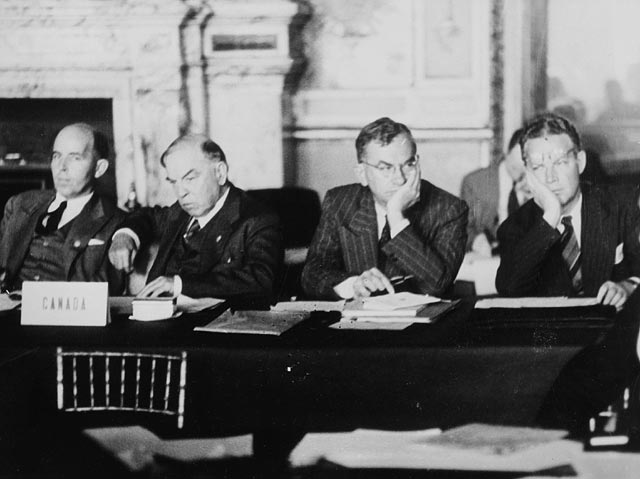
The Paris peace process began with the postwar conference held from July 29 to October 15, 1946 and culminated in the Paris Peace Treaties signed on February 10, 1947. Negotiated by the principal wartime Allies — notably the United States, United Kingdom, France and the Soviet Union — the agreements were intended to establish formal peace terms with former Axis or Axis-aligned states.
Image gallery
3 Images

Main treaties and parties
The treaties were concluded with five governments: Italy, Romania, Hungary, Bulgaria and Finland. Each document combined common elements and state-specific provisions to address the particular wartime conduct and postwar situation of the addressee.
Typical provisions
- Territorial adjustments: transfer or confirmation of borders and sovereignty over particular areas.
- Reparations and economic clauses: obligations to make payments or transfers of goods, often measured to compensate wartime damage.
- Military restrictions: limits on armed forces, bases and certain categories of weapons.
- Political and minority protections: commitments to respect minority rights and to prohibit aggressive or revisionist policies.
- Legal and procedural matters: extradition, custody of war criminals, and implementation schedules.
Context and negotiating dynamics
The conference took place in a Europe already divided by occupation zones and growing political tensions. Allied priorities differed: Western powers emphasized stability and democratic reconstruction, while the Soviet delegation sought security guarantees and influence in Eastern Europe. Those differences shaped treaty language and enforcement mechanisms and helped frame the early Cold War balance.
Consequences and significance
By defining formal peace obligations, the Paris treaties restored the five states to recognized international status and allowed them to resume full diplomatic relations and qualify for membership in the United Nations (UN). They also set concrete postwar arrangements — from border delineations to reparations — that influenced domestic politics and regional alignments for decades. Although they did not address defeated major powers such as Germany or Japan, these treaties were a key step in converting wartime settlements into peacetime institutions.
Notable distinctions and legacy
Unlike comprehensive unconditional surrenders, the Paris instruments were negotiated settlements that varied by country. Their mixed approach—combining punitive measures with pathways back to sovereignty—meant that implementation depended heavily on local governments and the geopolitical climate. Over time, some provisions were modified by later agreements or by changing political realities, but the 1947 treaties remain a reference point for the legal end of hostilities between the Allies and the five addressed states.
For further reading on the conference proceedings and treaty texts consult archival collections and modern scholarship; contemporary documents and analysis are available through national archives and scholarly repositories (see conference papers and treaty appendices for full details).
Additional references and primary documents: conference dates and summary, delegation lists, minutes and reports, signing records, ratification notes, U.S. position papers, British briefs, French submissions, Soviet proposals, Italy treaty text, Romania treaty text, Hungary treaty text, Bulgaria treaty text, Finland treaty text, United Nations membership notes.
Related articles
Author
AlegsaOnline.com Paris Peace Treaties (1947) Leandro Alegsa
URL: https://en.alegsaonline.com/art/74677