
Papal conclave
A papal conclave is the closed assembly of cardinals convened to elect the bishop of Rome (the pope). It follows ritual, legal rules and centuries of development intended to secure a free, secret and legitimate choice.
The papal conclave is the formal, secret assembly of the College of Cardinals convened to choose the next bishop of Rome, commonly known as the pope. A conclave is called when a reigning pope dies or, in rare circumstances, resigns; the resignation of Pope Benedict XVI in 2013 and the subsequent election of Pope Francis are recent, widely noted examples. The process is intended to provide an orderly means of succession and to preserve the independence of the choice from outside pressure.
Image gallery
10 Images





Purpose and general character
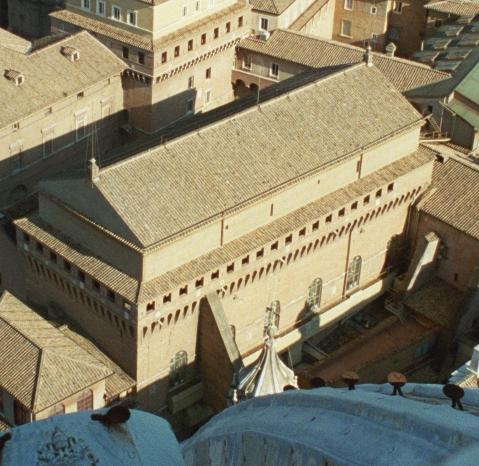
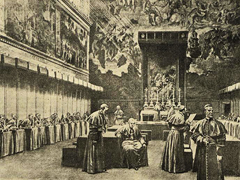
By design the conclave combines spiritual practice and institutional decision-making. Electors gather for communal prayer and deliberation before and during the balloting. The term "conclave" comes from Latin and reflects the practice of locking the electors together until a decision is reached; the linguistic origin and its implications are often discussed in treatments of the procedure (Latin). In modern practice the meeting usually takes place in the Sistine Chapel and adjacent areas of the Apostolic Palace; the location has practical and symbolic significance and is commonly mentioned in accounts of the event (Sistine Chapel).
Who participates
Only members of the College of Cardinals serve as electors. Contemporary rules disqualify cardinals above a specified age from voting; in modern practice cardinals above eighty years are excluded from the elector body. Any baptized man, in principle, may be chosen as pope, though in practice the pool of electors is the decisive constituency. During the interregnum the Roman curia is administered under regulations supervised by the camerlengo and other officials, who oversee preparations and practical arrangements.
Procedure and voting methods
The conclave follows a structured sequence of prayer, oaths, discussion and repeated balloting. Historically several methods were used to select a candidate: acclamation (open acclaim by the electors), compromise (a committee or selected electors decided), and scrutiny (secret ballot). Modern conclaves center on the scrutiny method, with written ballots cast in successive rounds until a candidate attains the required supermajority, traditionally two‑thirds of the votes cast. Electors take solemn oaths to preserve secrecy and to resist external influence.
- Preparation: formalities, oaths and practical arrangements preceding the first ballot.
- Balloting: secret written ballots are cast, collected and counted according to established procedures.
- Acceptance: when a candidate receives the required majority, the chosen cardinal is asked whether he accepts and what name he will take.
- Announcement: traditional signs—such as chimney smoke and the public proclamation—inform the faithful whether a choice has been made.
Symbols and ceremony
Several symbolic acts accompany the outcome. The burning of ballots generates smoke that signals to the public whether an election has produced a pope; bells and public declarations follow acceptance. The formal proclamation and the new pope's first appearance and blessing mark the end of the conclave. Throughout, secrecy and ceremony underline the distinct character of the event as both a spiritual and constitutional act of the church.
Origins and historical development
The practice of secluding electors has parallels in municipal and communal procedures of medieval Italian city‑states and in broader efforts during the High Middle Ages to limit secular interference in ecclesiastical appointments. Episodes such as the Investiture Controversy encouraged reforms intended to reduce outside pressure on important ecclesiastical elections. Local experiments in closed or regulated selection appeared in several cities in the 12th century, with documented examples in communes such as Pisa and Pistoia. Within the church, key early measures shaped the process: papal legislation in the 11th century restricted election to the cardinals, and later medieval reforms — including measures promulgated after church councils — further developed the rules. A notable medieval regulation, aimed at accelerating and regulating papal elections, introduced measures for seclusion and discipline; subsequent centuries saw ongoing adjustments of the procedures to meet changing needs.
Reforms and modern practice
Rules governing the conclave have been revised at various times to clarify voting procedures, to set eligibility and age rules, and to strengthen safeguards against outside influence. Popes in the modern era revised aspects of timing, the role of officials and the conditions of seclusion. Contemporary accounts emphasize continuity with historic forms while noting adaptations intended to ensure an orderly, transparent and canonical election process.
Because the conclave interweaves ritual, law and politics, it has been the subject of historical study, canonical commentary and public interest. For background on the geographical and linguistic elements see links on the role of the city of Rome and on the Latin origin of the term (Latin); for comparative municipal examples consult studies that discuss early communal elections in places such as Pisa and Pistoia. The Investiture Controversy remains a helpful context for understanding wider medieval concerns about authority and election (Investiture Controversy).
Related articles
Author
AlegsaOnline.com Papal conclave Leandro Alegsa
URL: https://en.alegsaonline.com/art/74429