
Pantograph — mechanical duplicator and railway current collector
A pantograph is a mechanical linkage used to copy and scale drawings and, by extension, a roof-mounted current collector on electric trains. This article explains types, operation, history and uses.
A pantograph is a device built from hinged rods that transfers motion from one point to another, commonly used to copy, scale or reproduce lines and shapes. The same name is applied by analogy to the spring-loaded overhead current collector found on many electric trains and trams. For a general introduction to the concept see related overview.
Image gallery
8 Images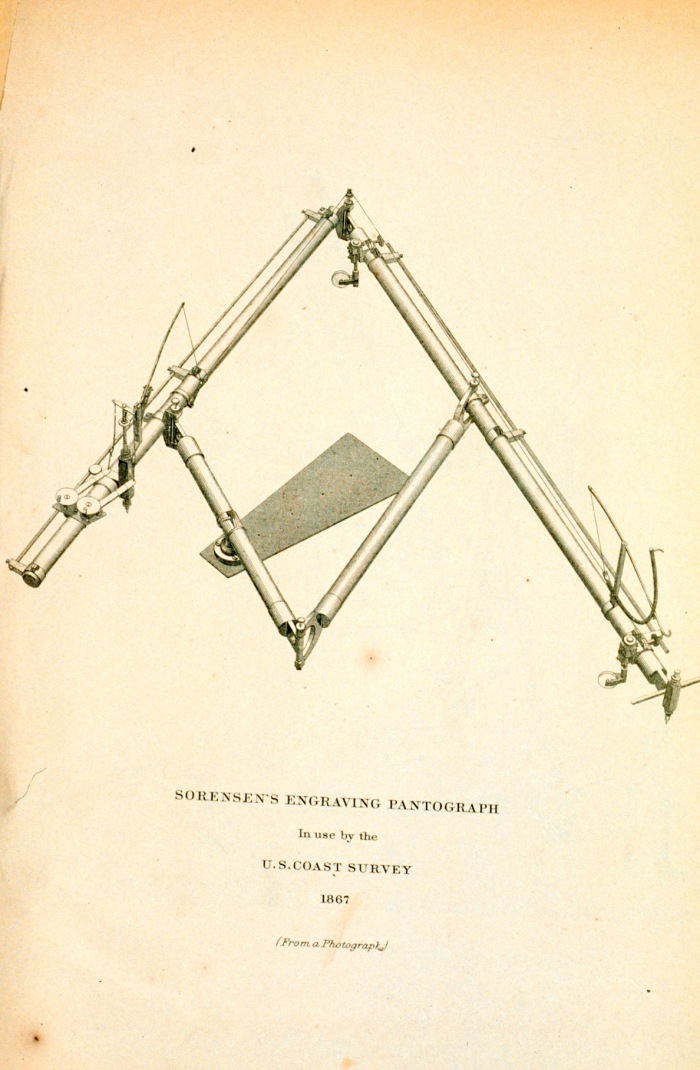


How the drawing pantograph works
The classical pantograph uses a parallelogram of rigid bars with a tracing point and a drawing point set at fixed positions. Moving the tracing point over an original image causes the drawing point to follow a similar path, scaled up or down according to the arrangement. Key features include:
- Linkage geometry — controls the scale factor and orientation.
- Tracing and drawing points — one follows the original, the other reproduces it.
- Fixed pivot — determines absolute placement and limits movement.
Origins and development
The device is credited to early 17th‑century instrument makers and became a practical tool for artists, cartographers and engineers. Over centuries it evolved into specialised forms for engraving, map copying and educational demonstrations. Mechanical variants include reversible designs that can both enlarge and reduce diagrams.
Railway pantographs
By shape and motion the name was adopted for the overhead current collectors used on electric rolling stock. A railway pantograph is a hinged, spring- or pneumatic-loaded arm that presses a contact shoe against the live catenary wire, maintaining electrical contact while the vehicle moves. Modern systems often use a single-arm design with a carbon contact strip to reduce wear. For technical and operational details see railway current collectors.
Applications of the mechanical pantograph remain practical for tactile copying and precision scaling; in contrast, the railway pantograph is essential to electric traction. For comparisons between types and further reading on usage and construction see additional resources.
Related articles
Author
AlegsaOnline.com Pantograph — mechanical duplicator and railway current collector Leandro Alegsa
URL: https://en.alegsaonline.com/art/74399