
Perforation: purpose, methods, history and common applications
Perforation is the creation of repeated holes, slits or cuts in a material to allow tearing, airflow, filtration, decoration or function. This article covers types, methods, history and typical uses.
Overview
Perforation is the deliberate creation of repeated holes, slits or cuts in a sheet, film, plate or other material to produce a weakened line, allow passage of air or fluids, control light transmission, reduce weight, or provide a textured or decorative surface. The feature is used where controlled tearing, ventilation, filtration or appearance is required, and appears across industries from stationery and packaging to metalwork and motion-picture film.
Image gallery
7 Images


Types and production methods
Common perforation styles are distinguished by the shape and spacing of openings and by production technique.
- Punched perforation: mechanical punches create regular round or shaped holes using pins or die sets. It is common in paper, card and thin plastic film.
- Rouletting: makes small slits or disconnected cuts instead of holes; it can produce a neat tear without displacing material.
- Die-cutting: produces precise shaped cuts, tabs or ornamental edges and is widely used for labels and packaging.
- Microperforation and laser perforation: very fine holes or slits produced by precision rollers or lasers, useful for modified-atmosphere packaging, controlled tearing and filtration.
Tools and machinery
Perforating equipment ranges from hand tools and bench punches to rotary and continuous-feed perforators for high-speed production. Modern systems may combine perforating rolls, die stations and lasers, and include tension control to avoid material distortion. Tooling selection depends on material, desired hole geometry and production speed.
Applications
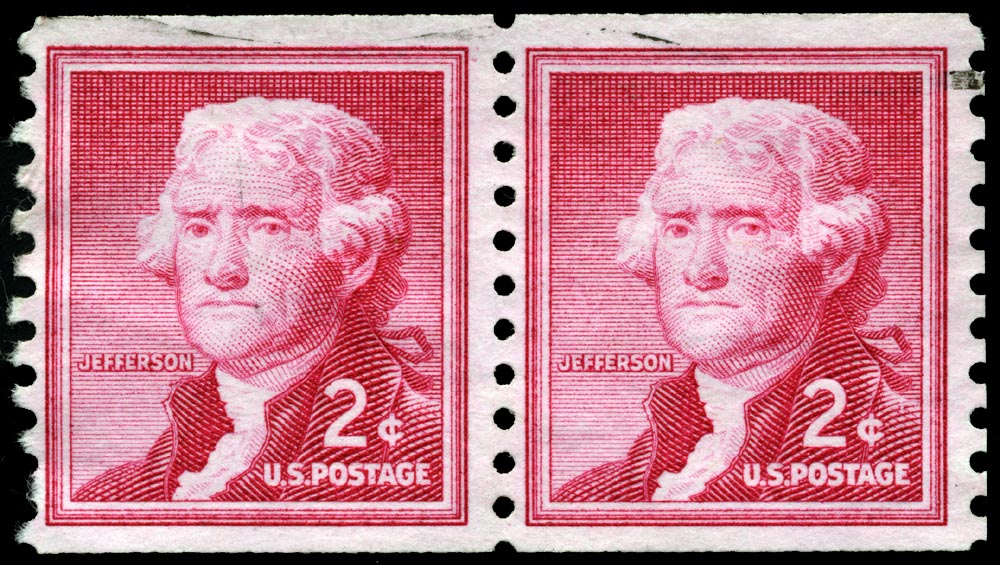
Everyday examples include postage stamps and tear-off tickets, as well as notepads, paper towels, postage and receipt rolls. Motion-picture and photographic film have sprocket perforations along the edges to guide transport through cameras and projectors. Perforated metal and plastic are common in ventilation grilles, acoustic panels, speaker covers and decorative façades. In food packaging, microperforation can help exchange gases to extend shelf life of fresh produce.
Perforation in philately
In stamp collecting, perforation describes the lines of separation between stamps and is an important identifying feature. Collectors and catalogues record perforation patterns and measurements, often using a perforation gauge to compare spacing and number of holes along an edge. See more about stamp collecting and identification in philately.
Material behaviour and design considerations
Perforation alters mechanical properties: it reduces the local tensile strength and guides tear propagation. Designers choose hole size, pitch and pattern to balance ease of tearing with remaining structural integrity. Different materials (paper, film, metal, textiles) require tailored approaches: for example, metal perforation uses larger tooling and attention to burrs, while films may be heat-sealed after perforation to maintain barrier properties.
History and notable facts
Perforation became a deliberate manufacturing feature in the nineteenth century as industries sought faster, cleaner methods to separate printed items such as stamps and tickets. The technology evolved from manual punching to mechanised rotary systems; later innovations introduced lasers and microperforation for specialised applications.
Standards, quality and environmental factors
Quality control inspects hole uniformity, alignment and edge condition because inconsistent perforations can cause premature tearing or product failure. Waste considerations include removal of perforation slug material and recycling. In packaging, appropriate perforation design can reduce food waste by improving gas exchange for fresh produce. For historical items such as stamps, perforation characteristics are often used to authenticate and date pieces; collectors examine patterns on items like stamps and compare to references.
Further reading and examples
Perforated film edges are visible on older photographic formats and motion picture prints; these sprocket holes are a functional example of perforation in media transport and handling. Related subjects include scoring and die-cutting; unlike scoring, perforation weakens rather than merely creases a line, and unlike a full cut it preserves connected areas for controlled separation. For practical examples see tickets, coupons and film strips such as those used historically in projection (film).
Questions and answers
Q: What is perforation?
A: Perforation refers to lines of punching holes made in any material.
Q: Where is perforation commonly used?
A: Perforation is commonly used in making paper objects like stamps or tickets, and along the edges of movies.
Q: What are the three types of cutting of postage stamps for stamp separation?
A: The three types of cutting of postage stamps for stamp separation are not specified in the given text.
Q: What is the purpose of perforation in philately?
A: The purpose of perforation in philately is to separate postage stamps.
Q: Is perforation only used in philately?
A: No, perforation is not only used in philately.
Q: What other materials besides paper can be perforated?
A: Any material can be perforated depending on the object that needs to be created.
Q: How is the perforation created?
A: The perforation is created by lines of punching holes in the materials being used.
Related articles
Author
AlegsaOnline.com Perforation: purpose, methods, history and common applications Leandro Alegsa
URL: https://en.alegsaonline.com/art/75785