
Panthera — genus of large wild cats: tiger, lion, jaguar, leopard, snow leopard
Panthera is a genus of the cat family Felidae comprising five living species, including the largest extant cats. Members are known for size, specialized vocal anatomy and roles as apex predators; many are threatened.
Overview
Panthera is a genus of large felids in the family Felidae. It includes the world’s largest living cats and is defined by a combination of skeletal, soft-tissue and genetic characters. Species of Panthera are distributed across Africa, Asia and the Americas and occupy a wide range of habitats from tropical forests and savannas to montane and tundra edge environments.
Image gallery
10 Images



Species and identification
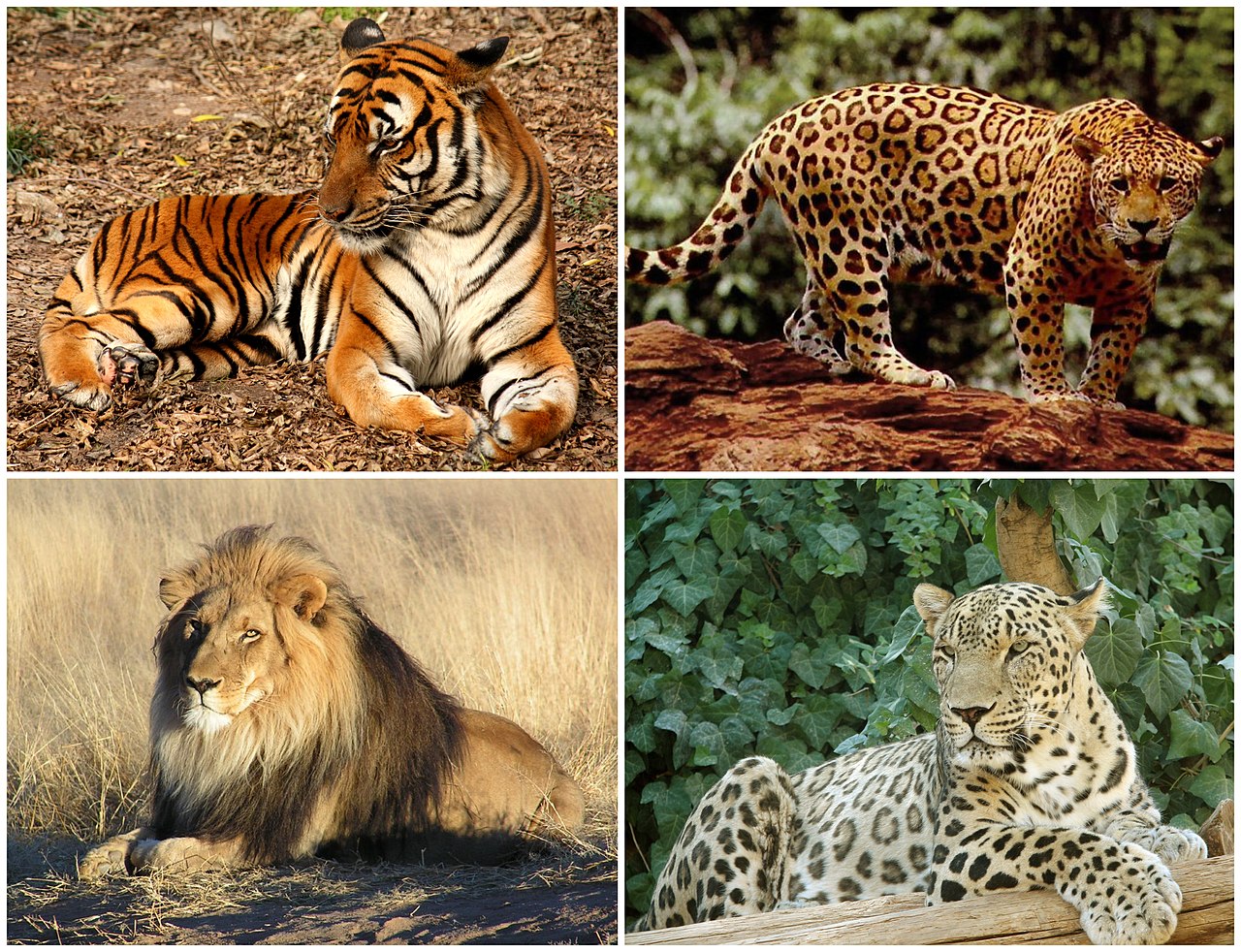
The genus comprises five extant species: the tiger (Panthera tigris), the lion (P. leo), the jaguar (P. onca), the leopard (P. pardus) and the snow leopard (P. uncia). These species vary in size and build: the tiger is the largest, while the leopard is the smallest of the group. Coat patterns, head shape and body proportions help distinguish species and subspecies in the field and in museum specimens.
Anatomy and vocalization
Members of Panthera share adaptations for powerful predation: robust skulls, strong jaws, muscular bodies and retractable claws. A well-known trait is the ability of most species to produce a deep, far-carrying call commonly described as a roar; this is linked to specialization in the larynx and hyoid apparatus, though the expression of roaring and related vocal behaviour differs among species. The snow leopard shows some anatomical differences that affect its vocalizations compared with the other four species.
Taxonomy and evolutionary history
Traditional classification relied on morphology, but molecular studies over recent decades have clarified relationships within Panthera and between Panthera and related genera such as Neofelis (clouded leopards). Genetic evidence led to the acceptance of the snow leopard within Panthera by many taxonomic authorities. Fossil records indicate several extinct Panthera species and close relatives, showing the group’s greater past diversity and wider historical ranges.
Ecology and conservation
Panthera species are apex predators that regulate herbivore populations and influence ecosystem structure. They face common threats: habitat loss, fragmentation, illegal hunting and conflict with people. Population sizes and trends vary: some subspecies and regional populations are critically endangered, while others are more stable. Conservation responses include protected areas, anti-poaching efforts, population monitoring and transboundary management of migratory populations.
Research, management and cultural significance
Ongoing scientific work examines genetics, disease, ecology and human-wildlife interactions to guide conservation planning. Panthera species also play prominent roles in human culture, mythology and film, shaping public interest in wildlife protection. For authoritative species accounts and taxonomic details consult dedicated resources on the genus Panthera, family Felidae classification, and individual species pages such as those for the snow leopard and clouded leopards (Neofelis).
Further reading
- General genus overview and species summaries: see genus pages at major mammal and conservation databases (Felidae, species accounts).
- Genetic and taxonomic studies concerning the placement of the snow leopard and relationships with Neofelis: consult current mammalogy literature and conservation assessments (taxonomic reviews).
Related articles
Author
AlegsaOnline.com Panthera — genus of large wild cats: tiger, lion, jaguar, leopard, snow leopard Leandro Alegsa
URL: https://en.alegsaonline.com/art/74396
Sources
- sciencemag.org : sciencemag.org/content/311/5757/73
- iucnredlist.org : "Panthera uncia"
- commons.wikimedia.org : Panthera
- species.wikimedia.org : Panthera