
Paradise-crow (Lycocorax pyrrhopterus)
A medium-sized, all-dark bird-of-paradise from Indonesia's Maluku Islands. Known as the silky crow, it is largely monogamous, eats fruit and arthropods, and is noted for its silky plumage and barking call.
Paradise-crow (Lycocorax pyrrhopterus), sometimes called the silky crow, is a medium-sized passerine traditionally placed among the birds-of-paradise. It is notable for its uniformly dark, soft and silky plumage, a somewhat crowlike silhouette, and relatively plain appearance compared with many other paradisaeids. The species' common names reflect both the texture of its feathers and its general body form. For an overview of the species, see species overview.
Image gallery
3 Images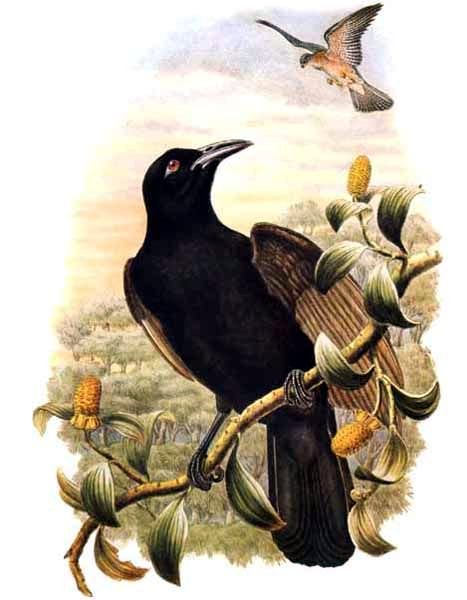


Identification and characteristics
The paradise-crow measures around 30–35 cm in length and shows little sexual dimorphism: males and females have similar plumage, with the female slightly smaller. Plumage is glossy black or very dark brownish-black and lacks the elaborate plumes and bright colors typical of some relatives. The bill is stout and black, and the eyes are a distinctive crimson to reddish color. Its vocal repertoire includes a distinctive, doglike barking call which is often mentioned by field observers.
Distribution and habitat
This species is endemic to the Maluku (Moluccas) archipelago of eastern Indonesia. It occupies humid lowland and hill forests, including primary and mature secondary forest, and can be found in canopy and subcanopy layers as well as along forest edges. Local habitat preferences and elevational limits are described in regional accounts: Maluku avifauna notes and regional bird list.
Diet and foraging
The paradise-crow feeds mainly on fruit and also takes arthropods and other small animal prey. As a frugivore it likely contributes to seed dispersal in its island forests. Foragers are typically seen alone or in pairs, moving through fruiting trees and foliage and occasionally gleaning from bark and leaves; further details on feeding behavior and bill function appear in specialized notes: bill and feeding notes.
Behavior, breeding and social life
The species is generally described as monogamous, forming stable pairs that may defend feeding territories or nesting areas during the breeding season. Nests are built in trees; both sexes are thought to contribute to nest construction and parental care, though detailed studies of breeding biology are limited. The relatively plain plumage and pair-bonding system contrast with the extreme sexual displays and lekking behaviors seen in other members of the paradisaeidae.
Taxonomy and relationships
Although placed with the birds-of-paradise, the paradise-crow's crowlike appearance and subdued ornamentation make it an important species for understanding variation within the family. Taxonomic and family treatments provide broader context: birds-of-paradise family.
Conservation and research
The paradise-crow's restricted island range makes it potentially vulnerable to habitat loss and fragmentation. While not among the most intensely studied paradisaeids, it is of interest to ornithologists and conservationists monitoring island forest ecosystems. Field observations and local checklists supply additional records and distribution notes: field observations and regional bird list. Continued habitat protection and targeted study of its breeding and population trends would improve understanding of its conservation needs.
Related articles
Author
AlegsaOnline.com Paradise-crow (Lycocorax pyrrhopterus) Leandro Alegsa
URL: https://en.alegsaonline.com/art/74502
Sources
- iucnredlist.org : Lycocorax pyrrhopterus