
Pallas's cat (Otocolobus manul)
Pallas's cat is a small, stocky wild cat of Central Asian grasslands and montane steppes, noted for its dense fur and flattened face. Near Threatened due to habitat loss, reduced prey and hunting.
Overview
Pallas's cat (Otocolobus manul), commonly called the manul, is a small wild feline native to the open landscapes of Central Asia. It occupies a broad but patchy range across montane steppes and grasslands where cold, arid conditions prevail. The species was first described by the German naturalist Peter Simon Pallas in 1776.
Image gallery
10 Images




Appearance and adaptations
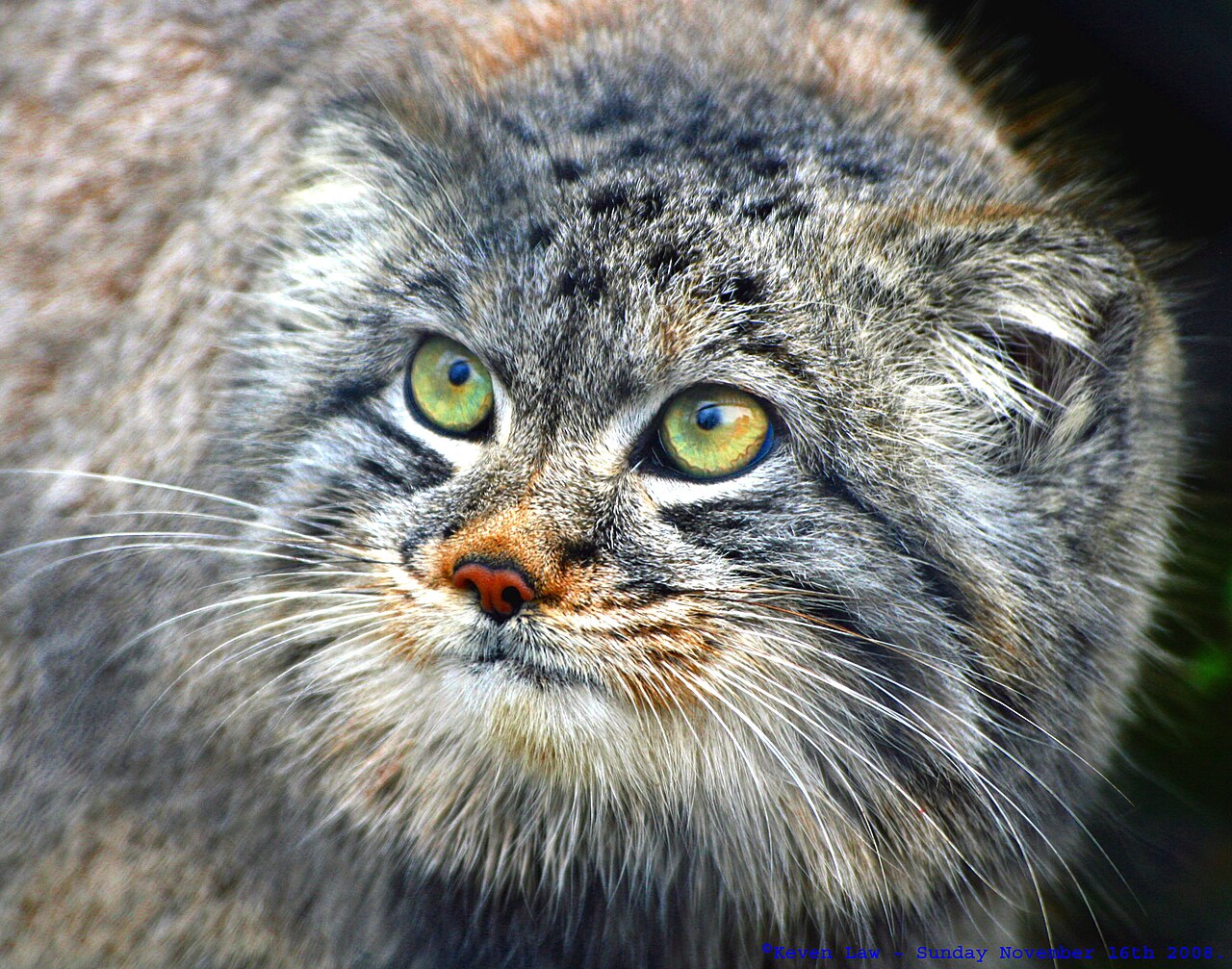
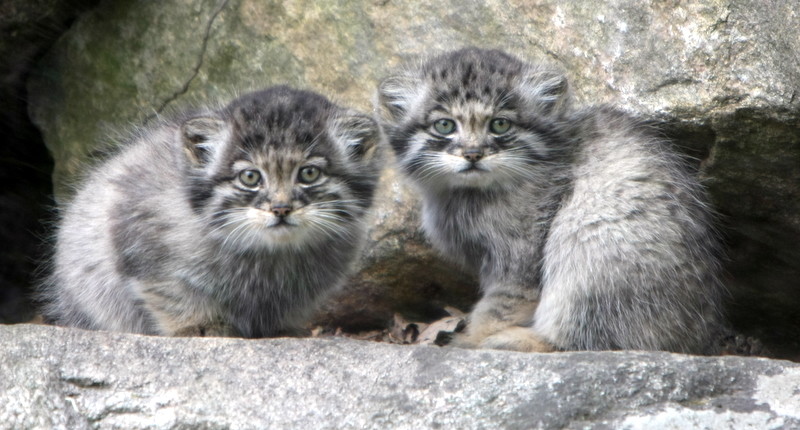
Manuls are similar in size to a domestic cat but appear stockier because of extremely dense, long fur that provides insulation against harsh winters. They have a flattened, broad face, low-set ears and short legs. Seasonal changes in coat density and colouring help with camouflage among rocks and sparse vegetation. Their tail is bushy with faint bands and is used for balance and warmth when wrapped around the body.
Distribution, habitat and diet
Pallas's cats inhabit high-elevation plateaus, rocky outcrops and steppes across countries of Central Asia, extending into parts of Tibet and southern Siberia. They favor habitats with abundant small mammals and ground-dwelling birds. Typical prey includes pikas, voles and other rodents; manuls are primarily ambush hunters and are often active at dawn and dusk.
Behaviour and reproduction
These cats are generally solitary and territorial. They use natural rock crevices and abandoned burrows for shelter and rearing young. Breeding usually occurs seasonally; litters commonly contain several kittens which remain dependent on the mother as they develop hunting skills. Detailed life-history data vary by region and remain a focus of field research.
Threats and conservation
Pallas's cat faces multiple threats including reduction and fragmentation of its habitat, declines in prey populations, and direct persecution. In some areas the species is listed as Near Threatened, reflecting population decreases and continuing pressures. Local hunting and trapping remain problems, and feral or domestic predators and diseases can also affect populations. Conservation responses include protected area management, monitoring programs, community outreach and captive-breeding efforts in zoos.
Human interactions and notable facts
- Common names: manul, Pallas's cat; taxonomic placement has varied but it is generally placed in the genus Otocolobus.
- Because of its specialized habitat and camouflage, the species is difficult to study; camera traps and field surveys are widely used for research (species data).
- Threat drivers include habitat degradation (habitat loss), direct hunting or trapping (hunting) and illegal collection by poachers (poachers).
- Conservation bodies and researchers collaborate across the species' range to improve knowledge and protection (montane steppes initiatives, regional programs).
Pallas's cat remains an emblematic species of Central Asian highlands: distinctive in appearance and vulnerable in many parts of its range, it continues to attract scientific and conservation attention.
Questions and answers
Q: What is Pallas's cat?
A: Pallas's cat is a small wild cat with a wide distribution in the grasslands and montane steppes of Central Asia.
Q: What is another name for Pallas's cat?
A: Pallas's cat is also known as the manul.
Q: How is Pallas's cat affected by its habitat?
A: Pallas's cat is affected by its habitat getting smaller due to destruction, which results in fewer prey.
Q: Is Pallas's cat hunted by poachers?
A: Yes, Pallas's cat is also hunted by poachers.
Q: What is the IUCN Red List classification of Pallas's cat?
A: Pallas's cat is classified as Near Threatened on the IUCN Red List.
Q: Who first described Pallas's cat?
A: Pallas's cat was first described in 1776 by the German naturalist Peter Simon Pallas.
Q: In what regions can Pallas's cat be found?
A: Pallas's cat has a very wide distribution in the grasslands and montane steppes of Central Asia.
Related articles
Author
AlegsaOnline.com Pallas's cat (Otocolobus manul) Leandro Alegsa
URL: https://en.alegsaonline.com/art/74198
Sources
- bucknell.edu : "Felis manul"
- google.com : Mammal Species of the World
- worldcat.org : 62265494
- iucnredlist.org : "Otocolobus manul"
- doi.org : 10.2305/IUCN.UK.2016-1.RLTS.T15640A87840229.en
- gdz.sub.uni-goettingen.de : "Felis manul" · archive.org