
Outsider in the White House
A political memoir by Bernie Sanders and Huck Gutman tracing Sanders’s career, ideas, publication history and the book’s themes, including its treatment of gun policy and populist politics.
Outsider in the White House is a political memoir co-written by Huck Gutman and Bernie Sanders. First issued in 1997 under the title Outsider in the House, it was reissued in 2015 during Sanders’s run for national office to bring the author’s earlier account to a wider readership. The book combines autobiographical material with argumentation about American politics, governance, and the role of a self-described outsider in federal institutions.
Image gallery
4 Images
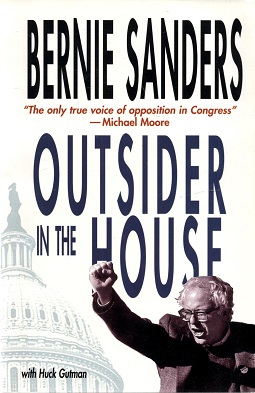


Scope and structure
The work mixes personal narrative, political memoir, and policy discussion. It charts Sanders’s path from local Vermont politics to the U.S. House of Representatives and sketches central themes of his public life: criticism of economic inequality, skepticism toward concentrated corporate power, and advocacy for working-class interests. The text interleaves episodes from Sanders’s career with reflections on how the U.S. political system functions and what reforms he believed were necessary.
Themes and notable topics
- Populism and outsider status: how a politician from a small state positions himself against party establishments.
- Legislative experience: recollections of Congress and the mechanics of lawmaking.
- Policy positions: discussions of economic policy, healthcare, and civil liberties.
- Gun policy and constitutional rights: the book addresses Sanders’s views in the context of the Second Amendment and debates over the right to own firearms, situating those remarks within his broader record.
The text also contains an afterword by journalist John Nichols and has been cited in media profiles of Sanders as a primary-source account of his beliefs and political evolution. The 2015 reissue was timed to coincide with Sanders’s national campaign, offering readers historical context for his candidacy and policy stances.
Readers and scholars often treat the book both as a personal memoir and as a statement of political identity. It differs from a purely academic work by foregrounding anecdotes and first-person voice, while still engaging with concrete policy questions. For additional background on the title and its place in Sanders’s career see the original book entry here and discussions of his campaign here.
For those studying modern American politics, the book is useful as a window into the thinking of a long-serving progressive lawmaker and as an example of how political memoirs are used to shape public image and explain policy priorities.
Related articles
Author
AlegsaOnline.com Outsider in the White House Leandro Alegsa
URL: https://en.alegsaonline.com/art/73680
Sources
- msnbc.com : "The 25 best things we learned from Bernie Sanders' book"
- publishersweekly.com : "A Surge of Bernie Sanders Books Are Coming"
- rollingstone.com : "Weekend With Bernie"