
OXO (video game)
OXO is a 1952 computer version of tic-tac-toe created by Alexander S. Douglas for the EDSAC; an early example of interactive computing and human–computer interaction research.
Overview
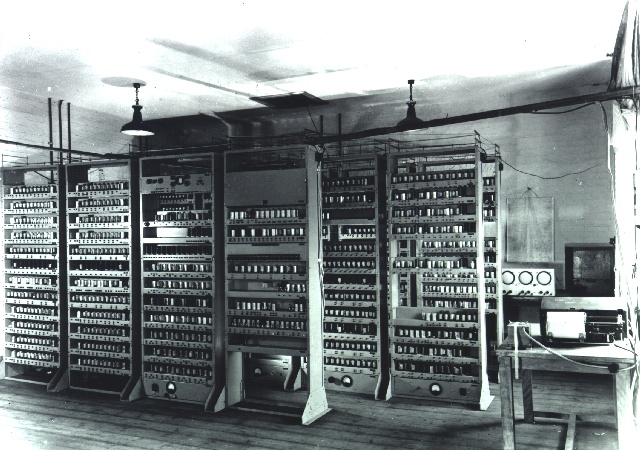
OXO, often called a pioneering video game, is a digital version of tic-tac-toe (noughts and crosses) created in 1952. It was written as part of Alexander S. Douglas’s doctoral research into human–computer interaction at the University of Cambridge. The program ran on the early stored‑program machine known as the EDSAC, and allowed a human to play against the machine on a three‑by‑three grid.
Image gallery
3 Images
Design and gameplay
The game presented a simple grid and accepted moves from a human player, responding with its own moves to continue the match. While minimal by modern standards, OXO demonstrated interactive, turn‑based play and a visual presentation of game state. It is frequently cited in histories of electronic games because it combined program control, display output, and user interaction on an early computer.
Technical and historical context
Developed in 1952, OXO was created during a period when researchers were exploring what stored‑program computers could do beyond pure calculation. The EDSAC environment provided the hardware platform for running experiments and demonstrations; OXO was one of several contemporary efforts that used games to explore computation and interface concepts.
Importance and legacy
OXO is important less as entertainment than as an early illustration of interactive computing and of using simple games to investigate user behavior and program design. It is regularly mentioned alongside other early electronic games in surveys of computing history and is used as an example of how researchers applied machines to problems of communication between people and computers.
Notable facts
- OXO was part of a PhD thesis in human–computer interaction by Douglas.
- The program ran on the Cambridge EDSAC machine and is often referenced in accounts of early computer games (EDSAC, computer).
- The project dates to 1952 and is linked to work at the University of Cambridge.
For readers seeking original sources or further reading, academic histories and museum descriptions frequently cite OXO as an early interactive program; brief entries or reproductions can be found in collections that document the earliest uses of electronic computers and their interfaces (OXO).
Related articles
Author
AlegsaOnline.com OXO (video game) Leandro Alegsa
URL: https://en.alegsaonline.com/art/73822