
Oscar (Astronotus ocellatus) — popular South American cichlid
Astronotus ocellatus, the oscar, is a large, intelligent South American cichlid kept in aquaria. Known for distinctive eye-spots, varied color morphs and strong territorial behavior; it needs ample space and careful care.
Overview
The oscar (Astronotus ocellatus) is a freshwater cichlid native to river basins of South America. It is widely kept in the aquarium hobby because of its striking appearance and reputed intelligence. Common names include oscar, tiger oscar, velvet cichlid and marble cichlid. For basic taxonomic and species details consult general species information and broader fish resources.
Image gallery
9 Images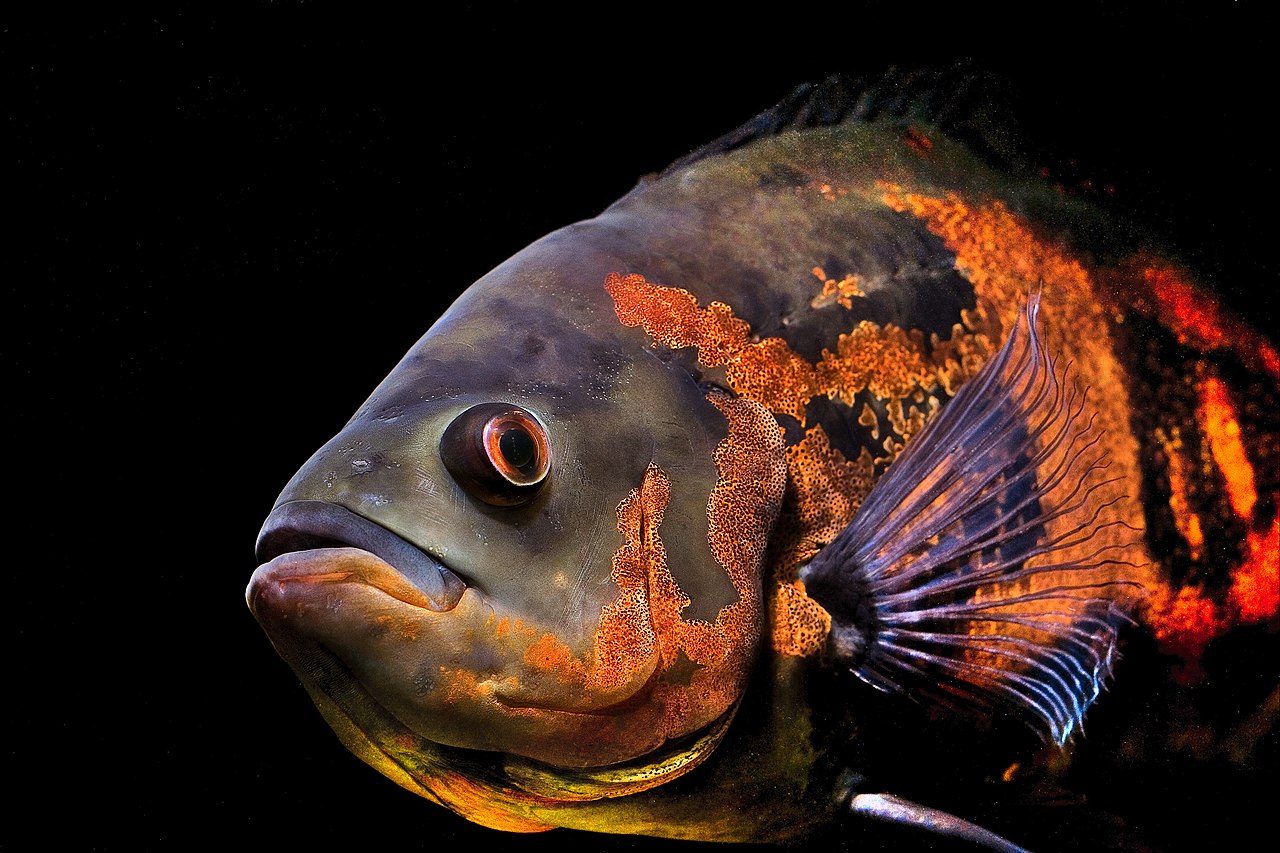


Distribution and habitat
In the wild oscars inhabit slow-moving rivers, floodplain lakes and tributaries in parts of the Amazon, Orinoco and other South American drainages. They are typically found over soft substrates and among submerged wood and vegetation. Seasonal flooding influences feeding and breeding behaviour in native habitats.
Appearance and varieties
Oscars are relatively large cichlids, commonly reaching around 40 cm (about 16 inches) in favorable conditions. Wild individuals tend to be dark with orange or red markings and a distinctive ocellus (eye-like spot) on the caudal peduncle. Captive-bred forms include tiger, marble and albino varieties produced by selective breeding. The body is laterally compressed with a continuous dorsal fin and strong jaws typical of cichlids.
Behaviour and cognition
Oscars are noted for their bold, individual personalities. Hobbyists report that they can learn feeding routines, recognize caretakers and display problem-solving behaviour. They are territorial and can be aggressive toward conspecifics and smaller tankmates, particularly when defending a nesting site or during breeding.
Aquarium care
Because of their size and waste production, oscars require a large tank, stable water quality and efficient filtration. Many care guides recommend spacious aquaria with robust filtration and regular maintenance; see practical care guides for setup suggestions. Provide hiding places and durable decor, as oscars may rearrange substrate and move objects. Water temperature and chemistry should be kept stable and appropriate for tropical South American species.
Diet and health
Oscars are omnivorous with carnivorous tendencies. In captivity they accept high-quality pellets formulated for large cichlids, supplemented with frozen or prepared meaty foods and occasional vegetable matter. Avoid low-quality diets and overfeeding. Like other large cichlids they can be prone to health issues if water quality is poor; good husbandry and a varied diet help prevent common problems.
Reproduction and social structure
Oscars commonly form monogamous pairs and are substrate spawners. Both parents typically guard eggs and fry aggressively. In aquaria, breeding pairs prepare a flat surface or cleared site and defend offspring until fry are free-swimming.
Significance and conservation
Oscars are important in the aquarium trade and occasionally used in studies of fish behaviour. They are not generally regarded as globally threatened, though local populations can be affected by habitat change. Responsible ownership, ethical sourcing and appropriate tank conditions are important to reduce pressure on wild stocks and to ensure animal welfare. For information on the broader cichlid family see material on the cichlid family.
Further reading: For species-specific summaries and practical husbandry tips consult linked resources above and specialist literature.
Related articles
Author
AlegsaOnline.com Oscar (Astronotus ocellatus) — popular South American cichlid Leandro Alegsa
URL: https://en.alegsaonline.com/art/73331