
Cichlid — diverse freshwater fishes of the family Cichlidae
Cichlids are a large, diverse family of freshwater fishes known for varied forms, complex parental care (including mouthbrooding), rapid speciation in African rift lakes, and importance in aquaculture and aquaria.
Cichlids are a widespread group of freshwater fishes that belong to the Cichlidae family. Taxonomically they are placed within the larger grouping of percomorph fishes, historically associated with the order Perciformes. Members of the family occupy rivers, lakes and floodplains across Africa, Central and South America, Madagascar and parts of Asia, exhibiting a wide range of body shapes and behaviors.
Image gallery
10 Images




Key characteristics
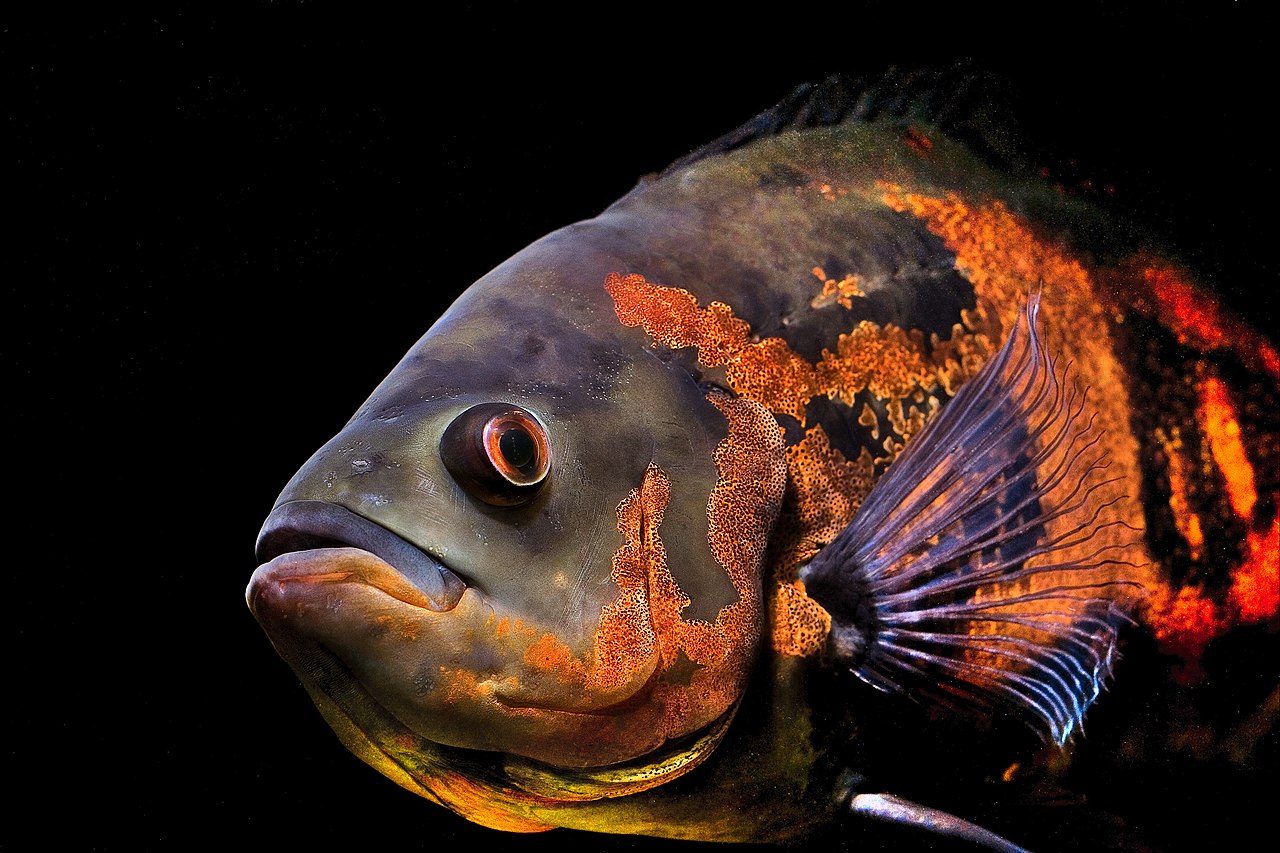
Cichlids show a set of anatomical and behavioral traits that distinguish them from many other freshwater fishes. Notable features include an often laterally compressed body, a single nostril per side, and a specialized set of bones known as pharyngeal jaws that allow processing of varied diets. Many species display bright coloration and distinct sexual dimorphism.
- Diversity: more than 2,500 described species and many more awaiting description.
- Size range: small species starting around 2.5 cm to large species approaching one metre in length.
- Reproduction: complex parental care including substrate guarding and mouthbrooding.
Reproduction and behavior
All cichlids show some form of parental investment. Strategies vary from both parents guarding eggs and fry at a nest site to species in which one parent (often the female) carries eggs and young in the mouth until they are ready to fend for themselves. These behaviors contribute to higher juvenile survival and have influenced social systems, mating displays and territoriality seen in aquarium and wild populations.
Speciation and notable habitats
Cichlids are famous for rapid adaptive radiation, especially in the East African rift region. The great lakes of the rift—most prominently Lake Victoria, Lake Malawi and Lake Tanganyika—are hotspots where hundreds of endemic forms evolved in relatively short geological time. These lakes illustrate how ecological opportunity and sexual selection drive explosive diversification.
Human use, examples and conservation
Cichlids are important in subsistence and commercial fisheries (tilapias), highly prized in the aquarium trade (angelfish, discus, convict cichlids, oscars), and used in evolutionary and ecological research. Many species face threats from habitat loss, overfishing, pollution and introduced species; several lake endemics are considered vulnerable or endangered. Conservation efforts combine habitat protection, captive breeding and fisheries management to sustain wild and cultured populations.
- Common examples: Pterophyllum (angelfish), Symphysodon (discus), Oreochromis (tilapia), Astronotus (oscar).
- Distinctive biology: pharyngeal jaws, parental care, rapid speciation in isolated lakes.
Related articles
Author
AlegsaOnline.com Cichlid — diverse freshwater fishes of the family Cichlidae Leandro Alegsa
URL: https://en.alegsaonline.com/art/20354
Sources
- species.wikimedia.org : Cichlidae
- commons.wikimedia.org : Cichlidae
- biomedcentral.com : "Out of Tanganyika: genesis, explosive speciation, key-innovations and phylogeography of the haplochromine cichlid fishes"
- doi.org : 10.1186/1471-2148-5-17
- ncbi.nlm.nih.gov : 554777
- pubmed.ncbi.nlm.nih.gov : 15723698
- arjournals.annualreviews.org : "African Cichlid fishes: model systems for evolutionary biology"
- doi.org : 10.1146/annurev.ecolsys.31.1.163