
Øresund Bridge: road and rail link between Denmark and Sweden
A combined bridge–tunnel crossing the Øresund strait connecting Copenhagen and Malmö. A major cross-border transport link carrying road and rail traffic that shaped regional integration and commuting.
Overview
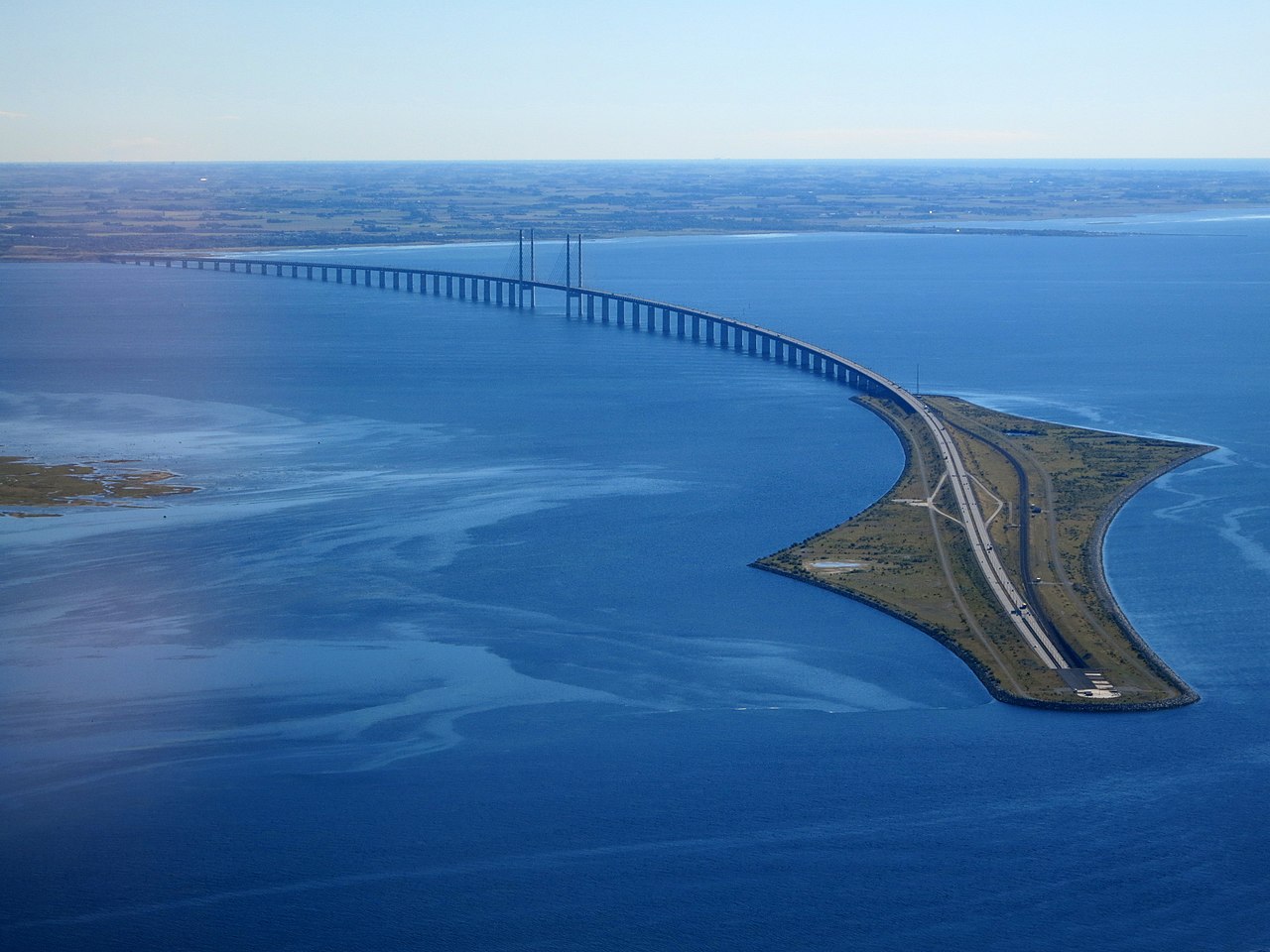
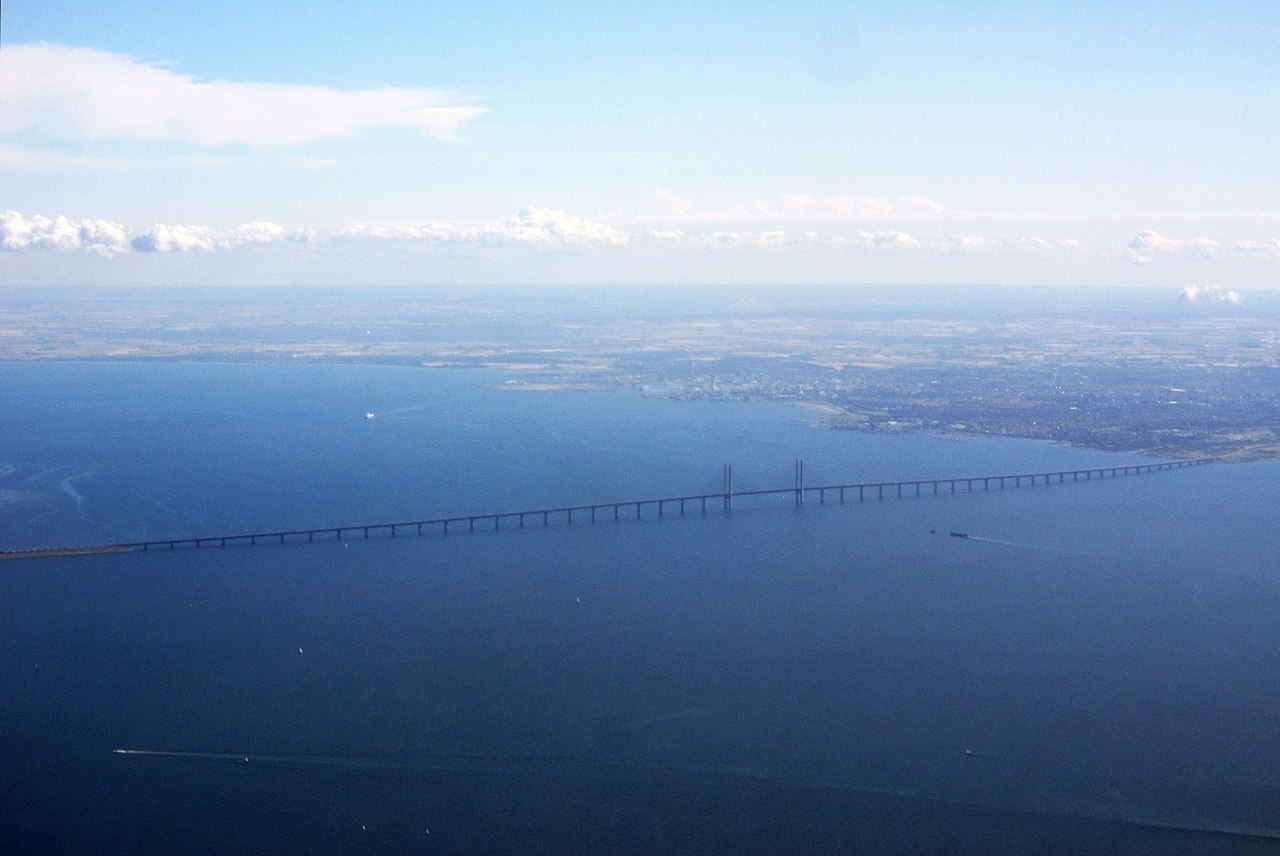
The Øresund connection is a hybrid fixed link combining a long bridge, an artificial island and an immersed tunnel across the Øresund strait. It provides a continuous road and rail route between Denmark and Sweden, linking major urban areas on both sides and enabling everyday commuting as well as international travel and freight movements.
Image gallery
10 Images





Design and components
The crossing consists of three principal parts: a cable-stayed and approach bridge, a man-made island that serves as the junction, and an immersed tunnel section that preserves shipping lanes. The route uses a dual-level cross-section with motorway lanes on the upper deck and electrified rail tracks below, allowing uninterrupted mixed traffic while accommodating maritime needs at the main navigation channel.
History and purpose
Planned in the late 20th century to strengthen economic and social ties across the strait, the link was built through cross-border cooperation and opened to traffic around the turn of the century. Its completion shortened travel times, made daily cross-border commuting feasible and supported closer integration of labour and housing markets in the region.
Operations and services
The crossing carries regional commuter trains, long-distance services and freight trains alongside private vehicles and buses. Road users generally pay a toll, and rail services are scheduled to integrate with the national networks on both sides. Routine maintenance and monitoring are required because the structure is exposed to marine conditions and changing weather.
Environmental and regional impact
Beyond engineering, the project has been discussed for its environmental planning, including the artificial island's role in habitat creation and measures to limit disturbance to marine traffic. The connection is often cited as a case study in how transport infrastructure can influence cross-border urban development and regional labour markets.
- Function: Continuous road and rail link across the Øresund strait.
- Components: Main bridge, artificial island, immersed tunnel.
- Connections: Direct link between Denmark and Sweden, used by commuters and international services.
- Significance: Engineering landmark and driver of regional integration and cross-border mobility.
The Øresund crossing remains an important example of cooperative infrastructure planning between neighbouring countries and continues to influence transport policy and regional development discussions in northern Europe.
Related articles
Author
AlegsaOnline.com Øresund Bridge: road and rail link between Denmark and Sweden Leandro Alegsa
URL: https://en.alegsaonline.com/art/73079
Sources
- nytimes.com : "Crossing The Oresund,"
- dr.dk : "Danmark og Sverige landfast" (in Danish),
- bt.dk : "Øresundsbroen indviet" (in Danish),