
Auditory system
The auditory system is the biological sensory system for hearing. It includes the ear as the sense organ and neural pathways that transduce sound into perception and enable localization, speech, and balance-related reflexes.
Overview
The auditory system is the biological network that enables hearing. It detects pressure waves in air (sound), converts them into electrical signals, and transmits those signals to the brain where they are interpreted as pitch, loudness and location. The primary sense organ responsible for this is the ear, but the system also includes neural pathways and brain regions that process complex auditory information.
Image gallery
5 Images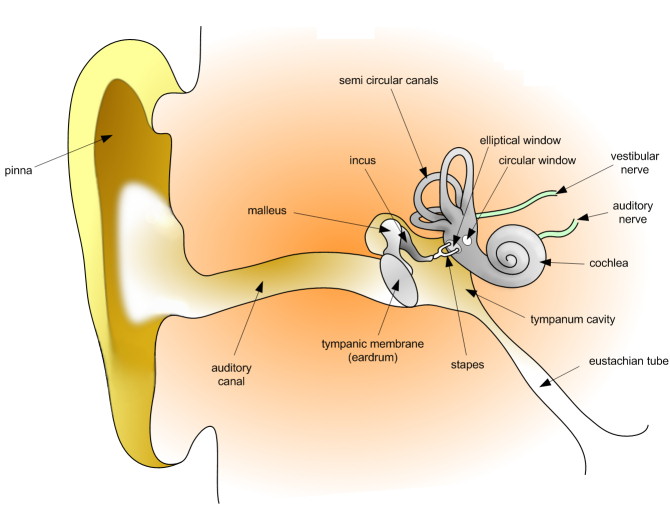


Anatomy and parts
The ear is commonly divided into outer, middle and inner sections. Key components include:
- Outer ear: pinna and ear canal, which collect and direct sound.
- Middle ear: tympanic membrane (eardrum) and three ossicles (malleus, incus, stapes) that amplify vibrations.
- Inner ear: cochlea for converting vibrations into neural impulses, and the vestibular system that contributes to balance.
Processing and pathways
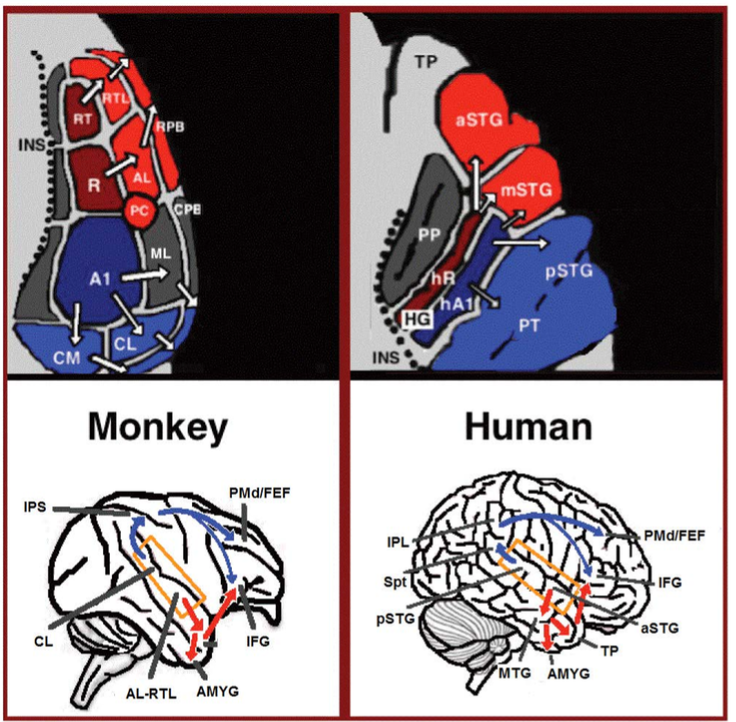
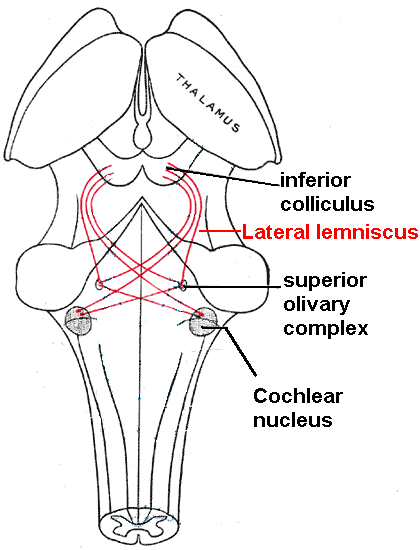
Hair cells in the cochlea transduce mechanical motion into electrical signals carried by the cochlear nerve to brainstem nuclei. From there, ascending pathways project to the midbrain and thalamus, and finally to the auditory cortex, where features such as timbre, frequency and temporal patterns are analyzed. Parallel circuits support sound localization and reflexive responses.
Function, applications and clinical relevance
The auditory system is essential for communication, environmental awareness and aspects of cognition. Common clinical issues include conductive or sensorineural hearing loss, tinnitus and auditory processing disorders. Diagnostic methods include hearing tests and imaging; interventions range from medical or surgical treatment to hearing aids and cochlear implants.
Notable facts: audition integrates with other senses for speech and spatial orientation, and its study spans anatomy, physiology, neuroscience and practical audiology.
Related articles
Author
AlegsaOnline.com Auditory system Leandro Alegsa
URL: https://en.alegsaonline.com/art/7259